
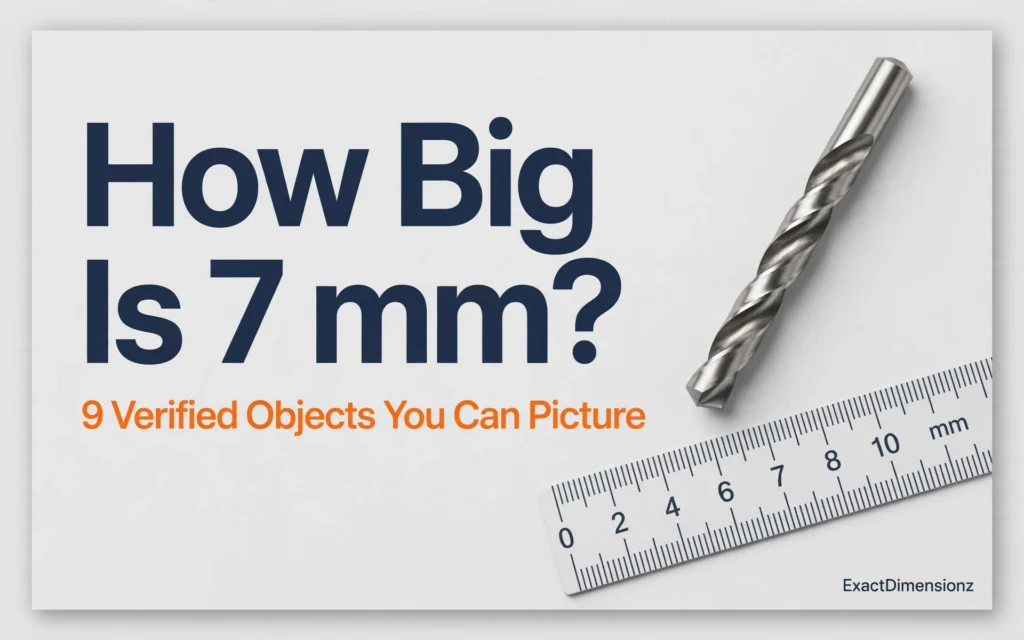
How big is 7mm? It’s the in-between millimeter — the size that skips the usual preferred number series, less standard than 6 or 8, yet it keeps turning up where precision meets the personal. It is exactly 0.7 centimeters, about 0.27559 inches, and seven times the length of a single millimeter. On a ruler it’s seven ticks past zero — the body of the motor buzzing inside your phone, the tip of a knitting needle, the neoprene between you and cold water.
This article gives you nine verified real-world references for 7 mm, each one tied to a named product and a primary source. Every reference carries an evidence label — official specification, published dimension, standardized measurement, or nominal/toleranced size — so you always know exactly what kind of “7 mm” you’re looking at. If 5 mm is the size you hold, 7 mm is the size that hides in plain sight: inside your gadgets, on your craft table, against your skin.
How big is 7mm?
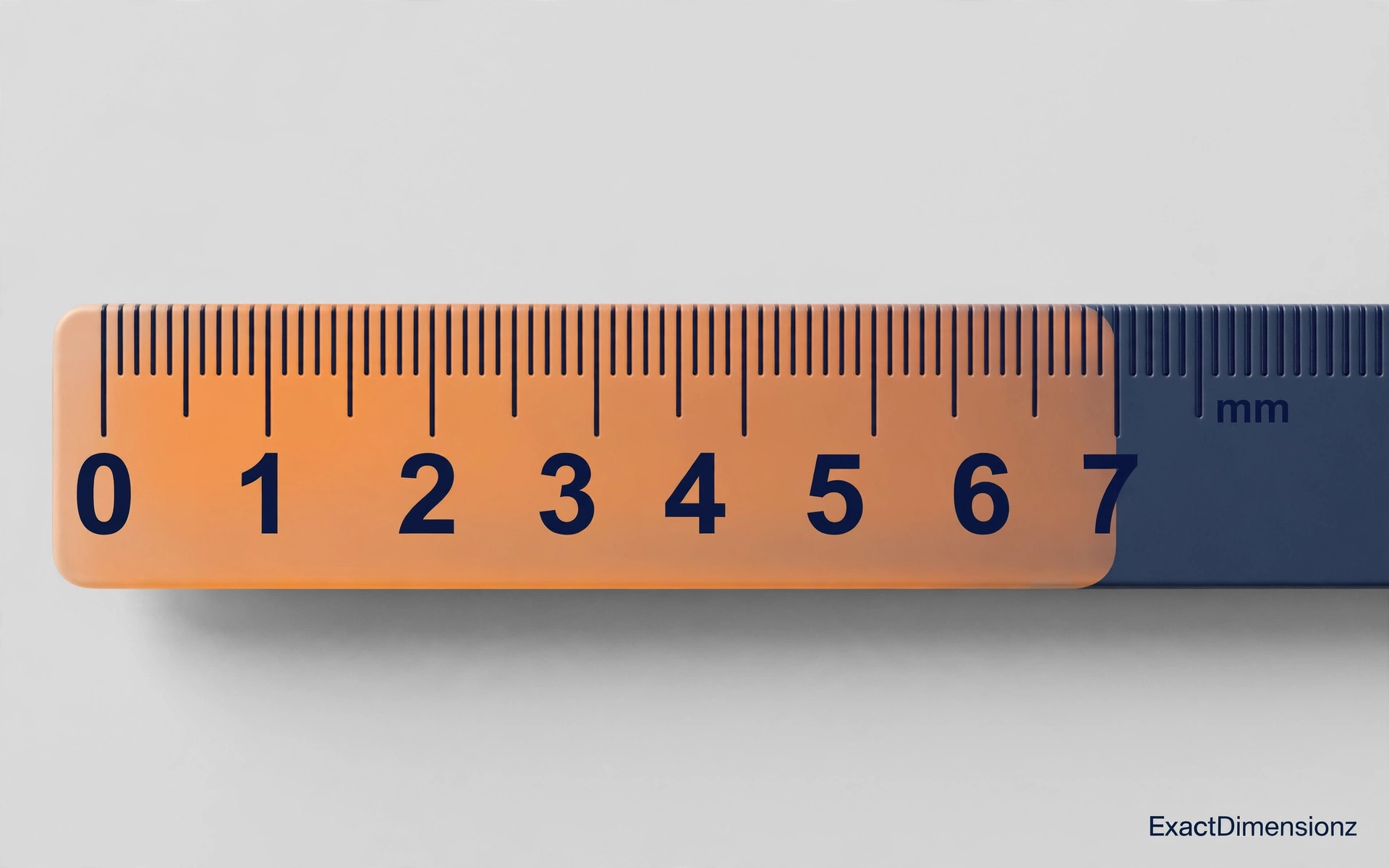
Seven millimeters is exactly 0.7 centimeters — about 0.27559 inches. On a metric ruler, it is seven millimeter ticks past zero.
Total: 7 mm
The scale explains the measurement but is not physically calibrated on every screen. Screen size and browser zoom can change its displayed length.
What Does 7 mm Look Like on a Ruler?
Find the centimeter marks and count the small millimeter ticks between any two of them. Seven millimeters is seven ticks: past the halfway point from 0 to the 1 cm mark, closer to the next centimeter than to zero. Since 1 cm contains 10 mm, 7 mm is simply 0.7 cm — and it is three and a half times the length of 2 mm, if you want a smaller anchor you already know.
Try this: lay a strip of 7 mm silk ribbon against the ruler with one edge at zero and read the far edge. It lands on the seventh tick — which is the whole point of sizing ribbon by width, as you will see below. And if 7 mm still feels abstract next to those centimeter marks, our guide on how big 2 cm is gives you a larger anchor — just under three times this length.
7 mm Conversion Table
| Unit | 7 mm equals | Exact or rounded |
|---|---|---|
| Centimeters | 0.7 cm | Exact |
| Meters | 0.007 m | Exact |
| Micrometers | 7,000 µm | Exact |
| Inches (fraction) | 35/127 in | Exact |
| Inches (decimal) | 0.27559 in | Rounded display |
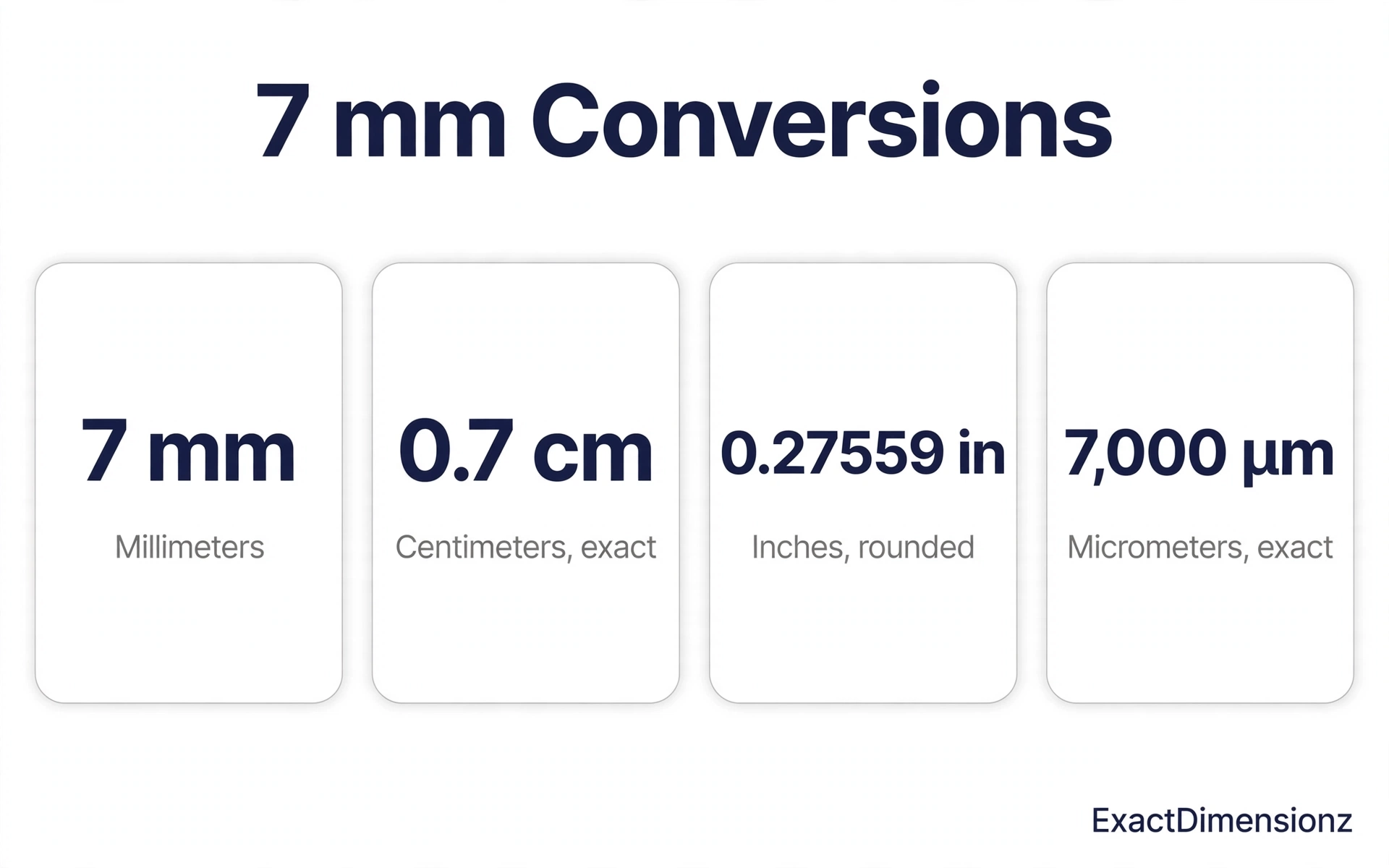
The inch is defined as exactly 25.4 millimeters, so 7 mm works out to the exact fraction 35/127 of an inch. The familiar decimal 0.27559 is a rounded display of that fraction — fine for quick math, but not mathematically exact. Our guide on how long 1 inch is covers the imperial side in full.
One conversion trap to clear up early: 9/32 of an inch equals 7.14375 mm, which is 0.14375 mm over 7 mm. In conversation the two get treated as the same size, but on paper they are different numbers — and at this scale, a seventh of a millimeter is a gap you can feel with calipers.
Thickness vs Diameter vs Width vs Bore vs Length
Before the references, one piece of honesty. A “7 mm” value can describe different axes, and this article names each one explicitly:
- Thickness is the distance through a flat object — a wetsuit’s neoprene panel.
- Diameter is the distance straight across a round face — a drill bit’s cutting end, a motor’s body, a lens, a needle tip.
- Width is the distance edge to edge across a flat strip — a silk ribbon. This list’s freshest axis, and the reason it gets its own word.
- Bore is the diameter of an inner hole — the opening a shaft passes through. Worth knowing: none of this list’s nine is a bore, which is itself a useful fact about where 7 mm does and doesn’t show up.
- Length is the end-to-end extent along an axis — a socket’s 50.0 mm body, where 7.0 mm describes the hex opening, not how long the tool is.
The circlip below adds one more wrinkle: a nominal shaft size — a number that describes the shaft the part fits, not any measured feature of the part itself. Every section says which axis it means.
9 Objects and Products Listed at 7 mm
A note on evidence before we begin. The nine references below come from different kinds of sources. An official specification comes from an authority. A published dimension is printed in a manufacturer’s own catalog or datasheet for a specific model. A standardized measurement is defined by an industry standard. A nominal/toleranced size is a manufacturer’s size designation that real units only approximate.
A published 7 mm designation does not mean every manufactured unit measures 7.000 mm. The label on each reference tells you which kind of evidence you are looking at, and each section states the limitation in plain words.
These nine fall into three scenes. First, grip and turn: the tools where 7 mm does physical work. Then inside your gadgets: the 7 mm you carry around without ever seeing. Finally, craft, thread, and skin: the 7 mm your hands know from making things and wearing things.
Grip and turn. Start where 7 mm earns its keep — drilled into material, turned onto a bolt, snapped into a groove.
1. Bosch PRO Metal HSS-G Twist Drill Bit, 2 608 577 653
Bosch Professional’s own page for its PRO Metal HSS-G twist drill bits lists the specification plainly in the spec table: “Diameter 7.00.” Part number 2 608 577 653 is the 7.00 mm member of the diameter family — the row a metalworker reaches for when a hole needs to be just over nine-thirty-seconds of an inch wide. (It is not, as you now know, exactly 9/32.)
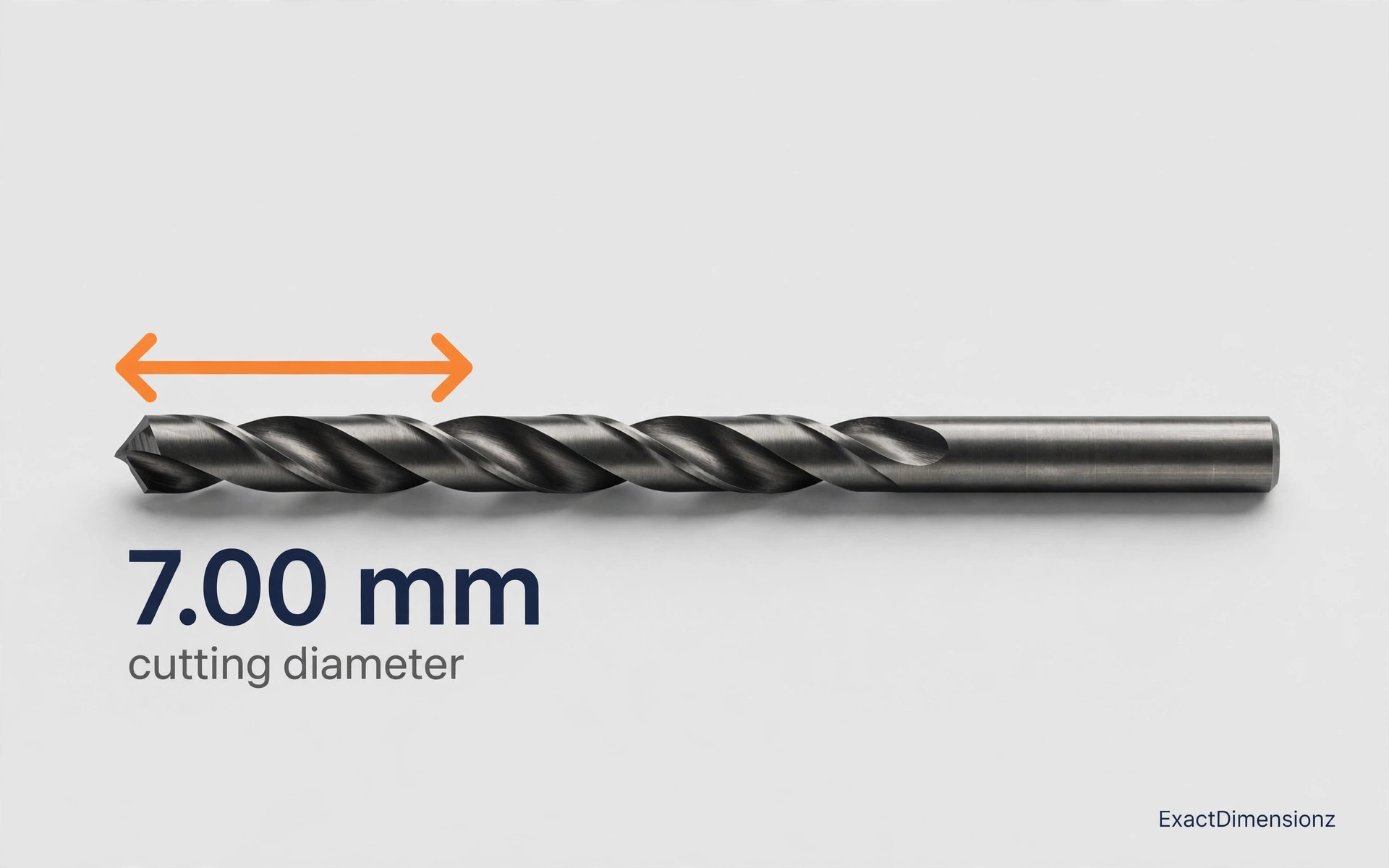
The 7 mm is the cutting diameter across the flutes: the width of the hole the bit leaves behind. Picture the split-point tip biting into steel — the measurement arrow belongs across that cutting end, never along the bit’s length. A 7 mm bit sits in the comfortable middle of the twist-drill range: big enough to see the flutes clearly, small enough to drill by hand.
Twist drills are made to DIN/ISO manufacturing tolerances, and no diameter tolerance is published on this page, so the honest label is official specification with a real-world caveat — the manufacturer’s own listed diameter, never 7.000 mm on every bit. What the Bosch page gives us is a manufacturer-primary number for this exact part, and the article treats it as exactly that.
Source: Bosch Professional PRO Metal drill bit page — Official specification.
2. Wera 8790 HMA Deep 1/4″ Socket, 05004504001
The tool that follows the drill bit’s hole. Wera’s datasheet for the 8790 HMA Deep 1/4″ socket, part 05004504001, names the size plainly: a 7.0 mm hex opening on a 50.0 mm long deep socket. Slip it over a bolt head and the 7.0 mm is the opening doing the gripping.
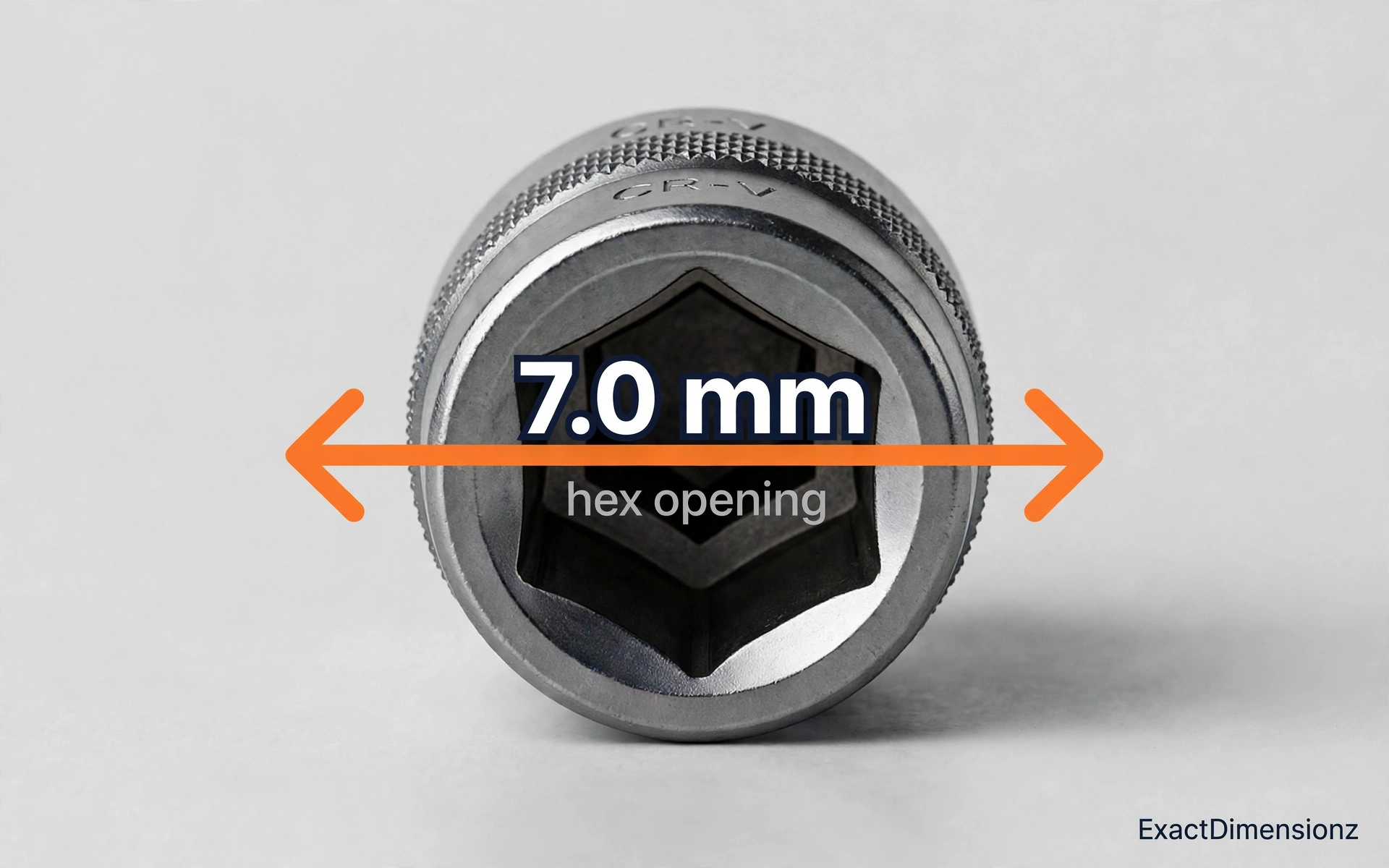
The axis is the across-flats of the hex opening: the distance between two opposite faces inside the socket. That is the dimension that matters, because it is the dimension that fits a 7 mm bolt head — and it is not the 50.0 mm length, which is a separate fact about how deep the socket reaches. Confusing the two would mean measuring the wrong feature entirely.
The honest framing is official specification: the manufacturer’s own listed size for this exact part, with no across-flats tolerance published. Real sockets vary microscopically around the designation, so never read 7.0 mm here as a physical guarantee — it is the size the maker names and the mechanic shops for.
Source: Wera 8790 HMA datasheet (PDF) — Official specification.
3. Würth Circlip for Shafts DIN 471, Art. No. 0438 7
The smallest object in the list, and the one that demands the most careful reading. Würth’s catalog lists article 0438 7 as a circlip for shafts made to DIN 471 — and the “7” is the nominal shaft diameter: this ring snaps into a groove on a 7 mm shaft. The ring itself measures differently on every feature: a 6.7 mm groove diameter, a 6.5 mm ring inner diameter, a 0.8 mm thickness.
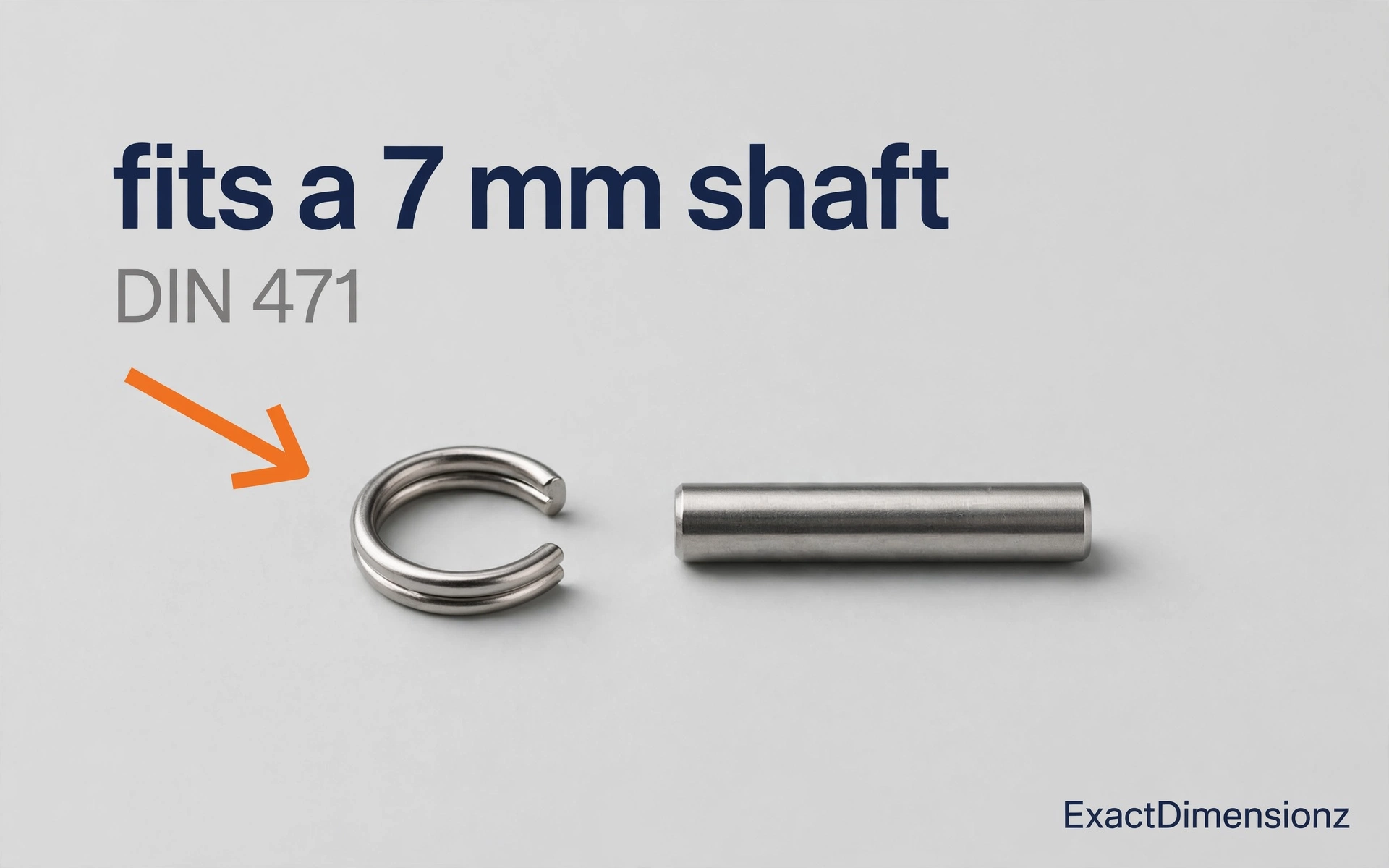
The axis is the shaft, not the ring. That is the whole lesson of this reference: the 7 mm describes the shaft the circlip fits, the way a shoe size describes the foot, not the shoe. An arrow drawn across the ring itself would teach the wrong fact — no feature of the ring measures 7 mm, and that is precisely what the standard intends.
Two qualifications travel with this one. First, the evidence label is standardized measurement: the 7 mm comes from DIN 471, an industry standard, not a catalog approximation. Second, Würth is a brand distributor one step removed from the factory — the standard is authoritative, the seller is a middleman, and the article states both plainly.
Source: Würth DIN 471 circlip catalog (PDF) — Standardized measurement.
Inside your gadgets. Shrink down and step inside the equipment you carry. A motor the width of a pencil eraser buzzes against your skin on every notification, and a lens the size of a pea bends light inside instruments — a 7 mm you will probably never see, but your devices notice.
4. Precision Microdrives 307-105 Vibration Motor
This is the 7 mm in your pocket right now. Precision Microdrives’ 307-105 is a coin-style vibration motor — the component that buzzes when your phone gets a message — and the manufacturer’s datasheet lists the body diameter as 7 mm. The body length is a separate 2.05 mm; the 7 mm lives strictly across the coin’s face.
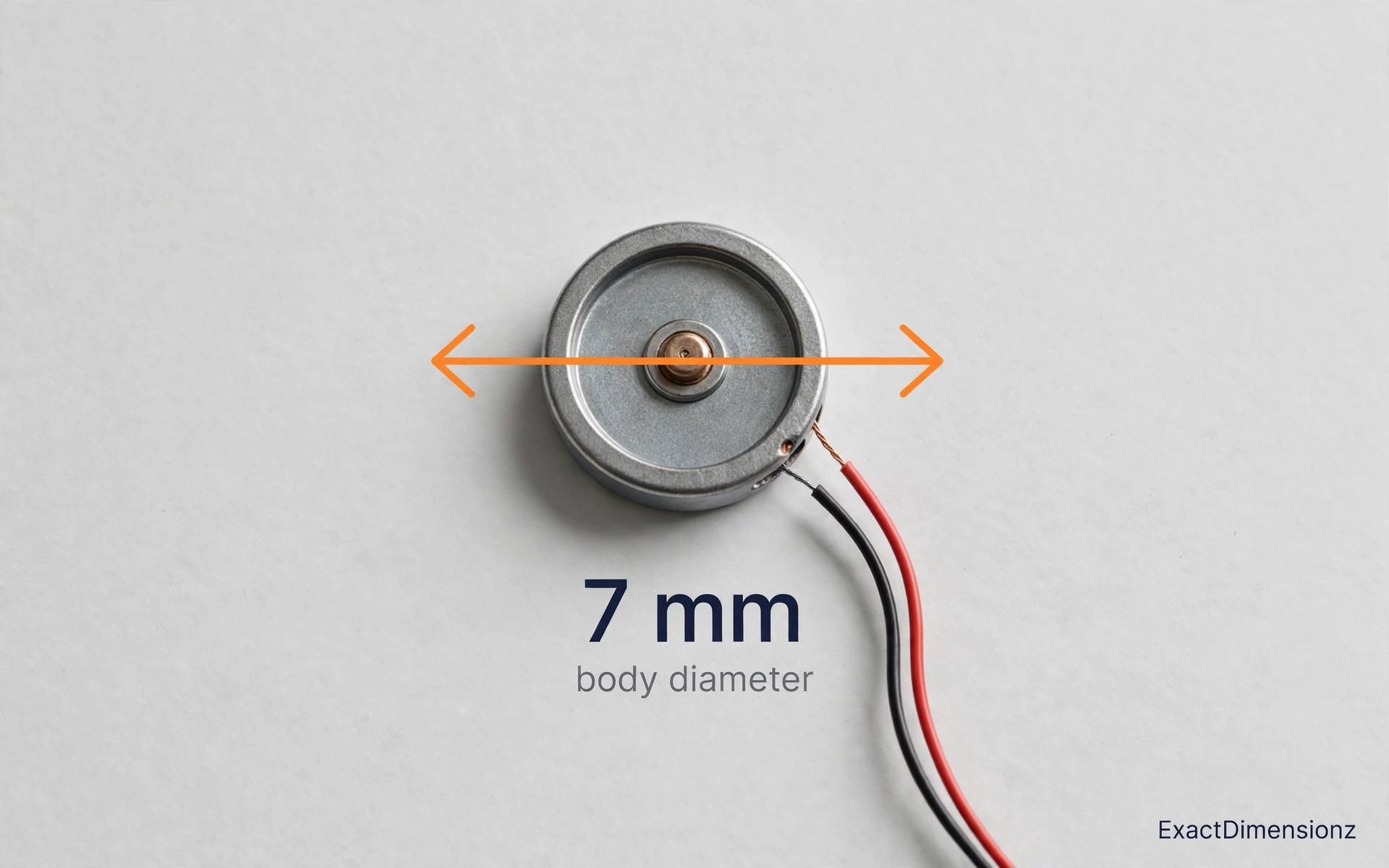
Picture a metal disc smaller than a shirt button, sealed inside your phone. The measurement arrow belongs straight across that disc — the diameter your fingertip would span if you could hold it. At this scale the body diameter is the working envelope, the part the motor is actually *for*: it has to fit the cavity the phone designer left for it.
The datasheet prints the tolerance, which is exactly what you want from a reference: the body diameter is toleranced ±0.1 mm, so the honest label is official specification with its real tolerance alongside. Not exactly 7.00 mm on every motor — but the manufacturer’s own number, stated without inflation.
Source: Precision Microdrives 307-105 datasheet (PDF) — Official specification.
5. Edmund Optics #28-946 Plano-Convex Lens
This part number is a small trap for the careless, which is exactly why it belongs here. Edmund Optics sells the TECHSPEC #28-946 as a “7.0mm Dia. x 7.0mm FL” uncoated plano-convex lens — two different 7.0-ish numbers on two different axes: the diameter is 7.00 mm (tolerance +0.0/−0.025 mm), and the focal length is a separate 7.00 mm. This section is about the diameter only.
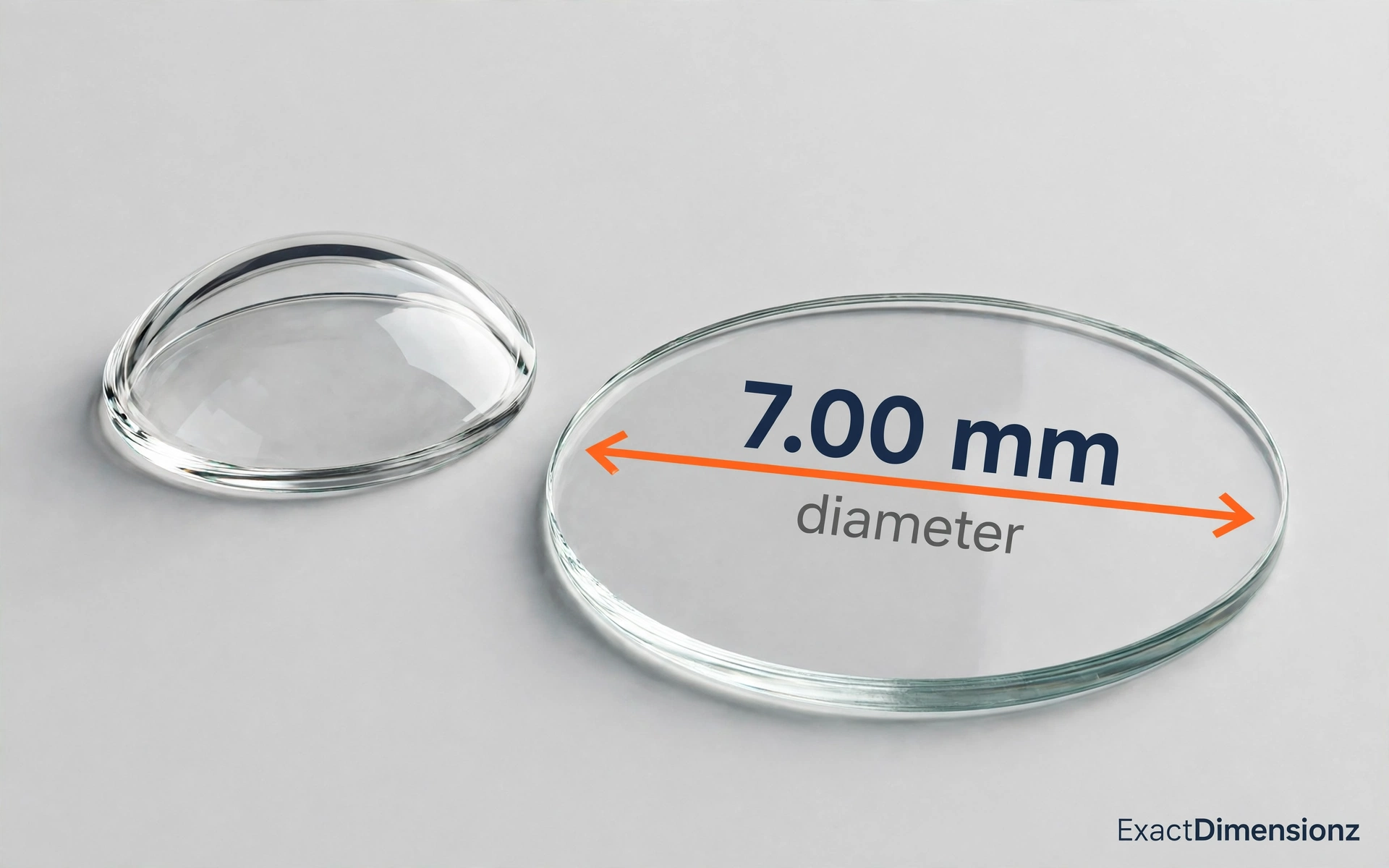
Imagine a glass disc about the width of a pencil eraser, the kind of component that sits inside lasers, sensors, and optical instruments. The 7 mm spans straight across its circular face. An arrow drawn across that face shows the supported axis; an arrow to the focal point would show the other 7.00 mm, a different fact about the same lens. One part, two numbers — the axis is everything, the same lesson the 4 mm lens taught with three.
The +0.0/−0.025 mm diameter tolerance is unusually tight — the diameter may only ever come in under 7.00 mm, never over — which is what you expect from a TECHSPEC optic. The label is official specification: the manufacturer’s own number for this exact stock part, with its real tolerance printed alongside.
Source: Edmund Optics #28-946 specsheet — Official specification.
Craft, thread, and skin. Back out in the open, 7 mm is in your hands: on the craft table where needles and hooks are sized by number, in the ribbon you tie, and in the neoprene between you and cold water.
6. addiPremium Classic Circular Knitting Needle, 7.0 mm (SKU 105-7)
Knitters buy needles by number, and addi’s official product page lists the addiPremium Classic circular knitting needle at 7.0 mm — SKU 105-7. It is a fresh size variant of a line this series has met before at 4.0 mm and 2.0 mm; each size is its own published product, so there is nothing to apologize for.
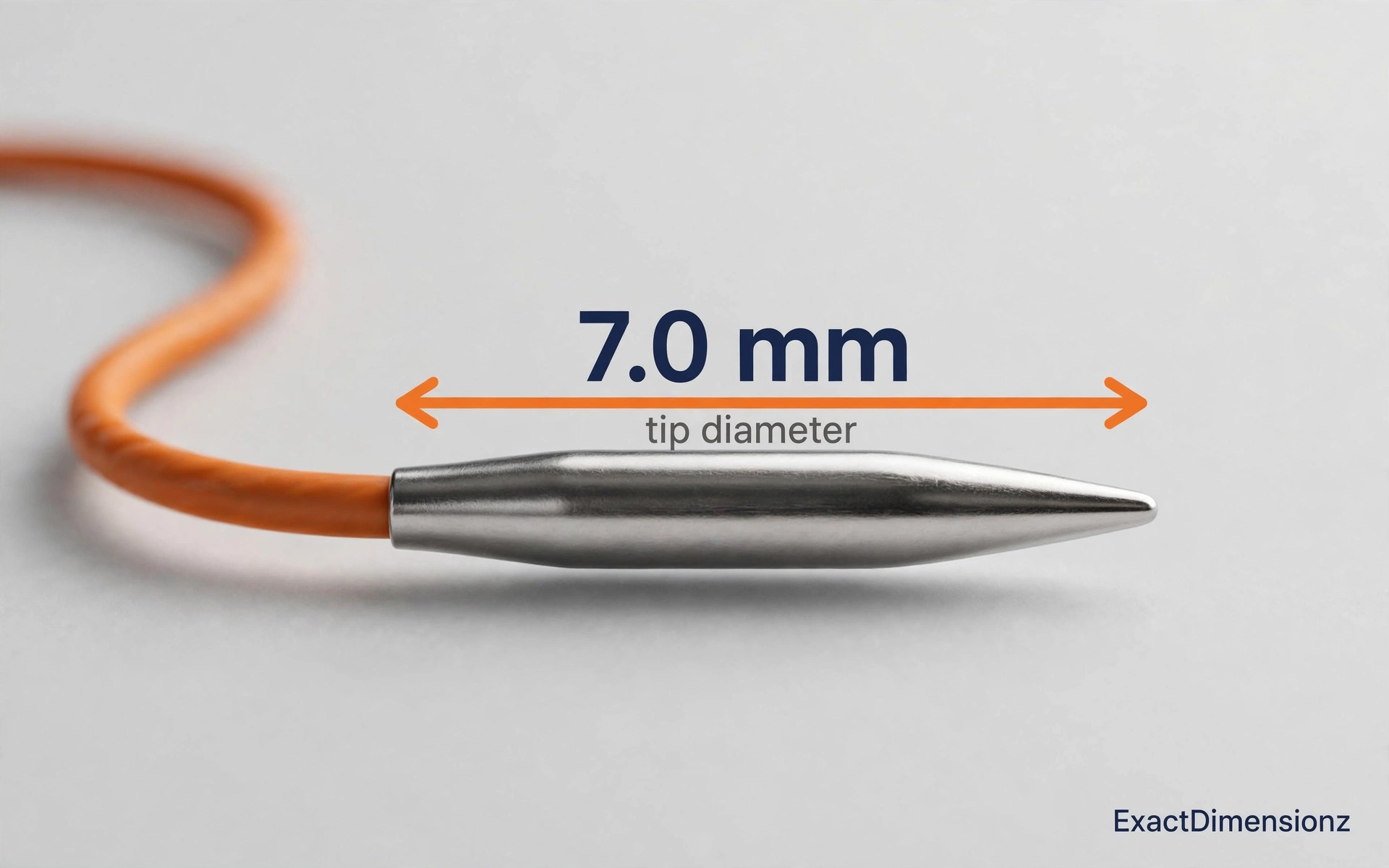
The 7.0 mm is the needle tip diameter — the shaft size that sets every stitch the needle makes. Roll it between your fingers and feel a proper chunky needle: this is the size for thick yarn and fast scarves, a full step up from the 4.0 mm variant. The axis matters here more than usual, because the next reference carries the same number on a different axis.
As with any craft tool, the evidence label does real work: published dimension, a manufacturer size grade with no published tolerance. Real needles vary microscopically around the designation, so never read 7.0 mm here as a physical guarantee — it is the size the maker names and the knitter shops for.
Source: addi addiPremium Classic product page — Published dimension.
7. Clover Amour Crochet Hook, 7.0 mm (Art. 1054)
The yarn aisle answers back with the same number on a different axis. Clover USA’s own page for the Amour crochet hook in the 7.0 mm size — article number 1054 — lists this exact hook at this exact size: not a generic size chart, but the product page for the 7.0 mm variant.
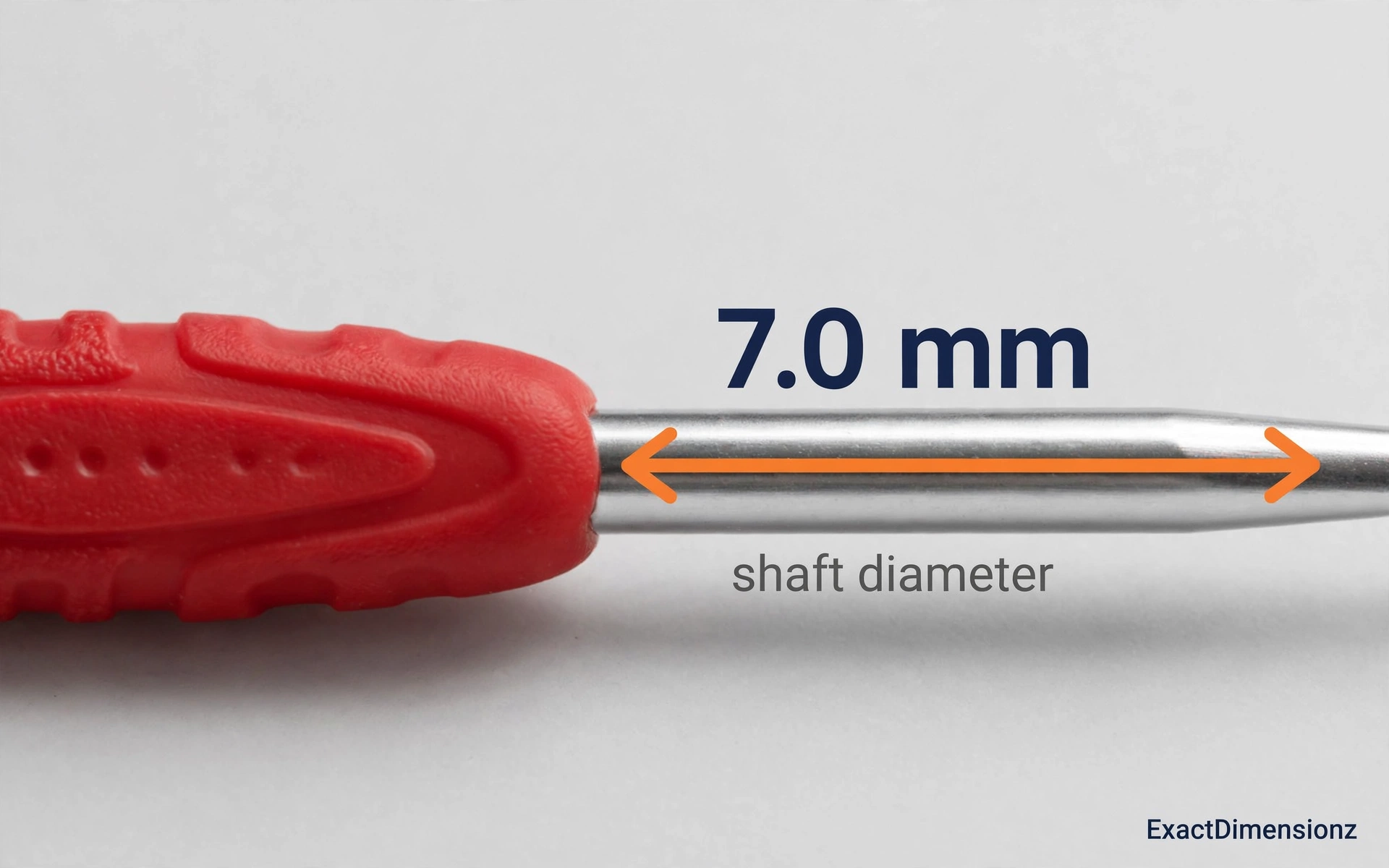
The 7.0 mm is the hook’s shaft diameter, measured on the shaft just behind the hook’s head — the diameter class that decides the size of the stitches the hook makes. Compare it with the addi needle above: the needle’s number is a tip diameter, the hook’s number is a shaft diameter, and the article states the difference explicitly so the two never read as duplicates. Same published number, two different axes, two different tools.
Here the evidence label is official specification: the manufacturer’s own listed size for this exact product, with no per-unit tolerance published. Never read 7.0 mm as a physical guarantee — it is the size the maker names and the crafter shops for. And the image note applies: sibling sizes look identical, so any image must be labeled “7.0 mm (Art. 1054)” explicitly.
Source: Clover Amour 7.0 mm hook product page — Official specification.
8. Treenway Silks Woven Silk Ribbon, 7 mm
The list’s freshest axis. Treenway Silks sells its woven silk ribbon in numbered widths, and the 7 mm width is one of them — the distance from one edge of the ribbon to the other, the number a gift-wrapper or embroiderer shops for.
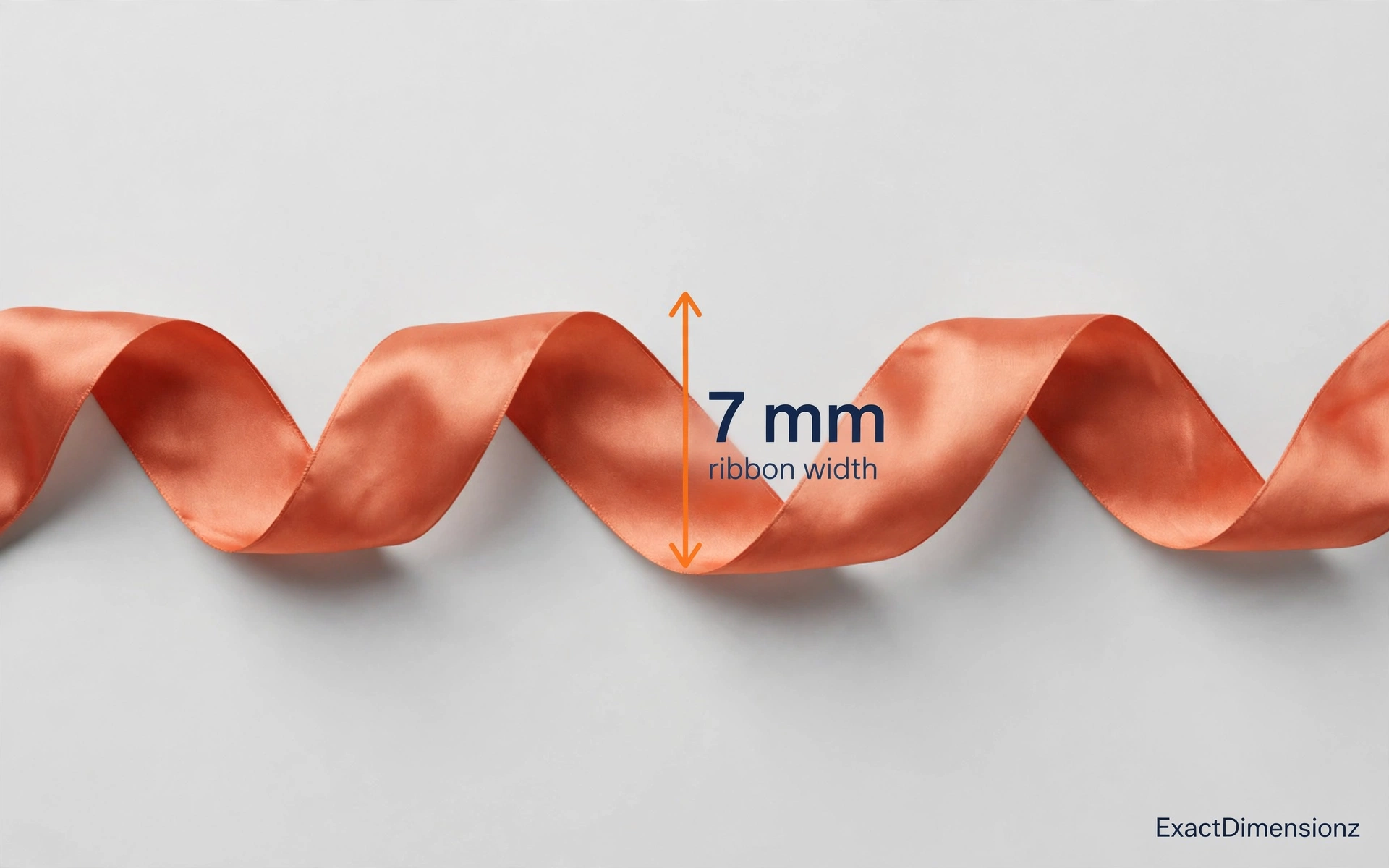
The axis is width, and it deserves its own word: not thickness (the ribbon is thin), not diameter (nothing is round), but edge-to-edge width across the flat strip. Lay it against a ruler and the 7 mm spans exactly seven ticks — the cleanest visual in this article, because the product exists to *be* a width the way a feeler blade exists to be a thickness.
Honestly framed: the label is official specification — the manufacturer’s own listed width — with no tolerance published for the weave. Woven edges vary microscopically, so never read 7 mm as “exactly 7.000 mm across every centimeter.” It is the size the maker names, and your fingers can confirm the match against the needle above.
Source: Treenway Silks ribbon product page — Official specification.
9. SCUBAPRO Definition Steamer 7MM Men
The water closes the list. SCUBAPRO sells the Definition Steamer with the thickness in the product name: the “7MM” is 7 mm of neoprene, the panel thickness between you and cold water. Item 63.934.600, the men’s steamer — a single 7 mm spec, not the multi-panel 7/6 or 5/4 blends weaker references hide behind.
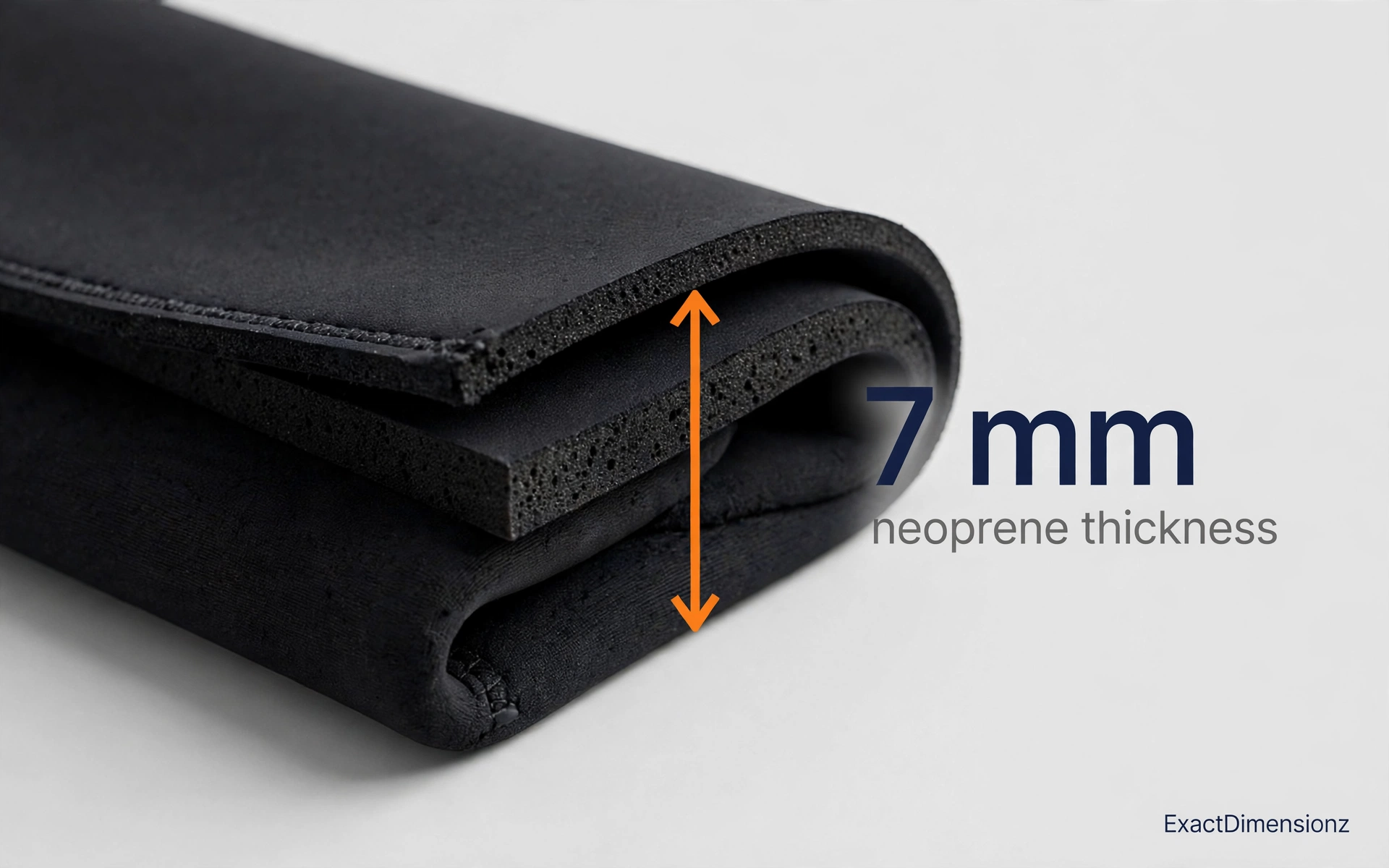
The axis is the neoprene’s thickness: outer face to inner face, the slab your thumb presses when you pick up the suit by the shoulder. This is the same “thickness through a flat object” axis as a yoga mat — just wrapped around a human instead of a floor.
The required honesty: the label is official specification, but 7 mm is the nominal panel thickness, and real suits vary by panel placement — knees, chest, and arms are cut and compressed differently. Never read it as a per-panel measured guarantee. It is the size the maker names for the suit, and the reason divers say “seven mil” the way knitters say “seven millimeter.”
Source: SCUBAPRO Definition Steamer 7MM product page — Official specification.
What the Evidence Labels Mean
Since the list mixes evidence types deliberately, here is what each label promises — and what it does not:
- Official specification: published by an authoritative body. The strongest tier, but still subject to rounding and production tolerance.
- Published dimension: printed in a manufacturer’s own catalog or datasheet for a specific model. Direct primary evidence for that product’s stated size.
- Standardized measurement: a dimension defined by an industry standard or a standardized product series. Real and meaningful, but still manufactured within tolerances.
- Nominal/toleranced size: a manufacturer’s size designation. The number names the size grade; individual units vary around it. Never read these as “exactly 7.000 mm.”
No reference in this article was inferred from a photograph, and none rests on a retailer listing alone.
Near 7 mm Comparisons, With the Difference Calculated
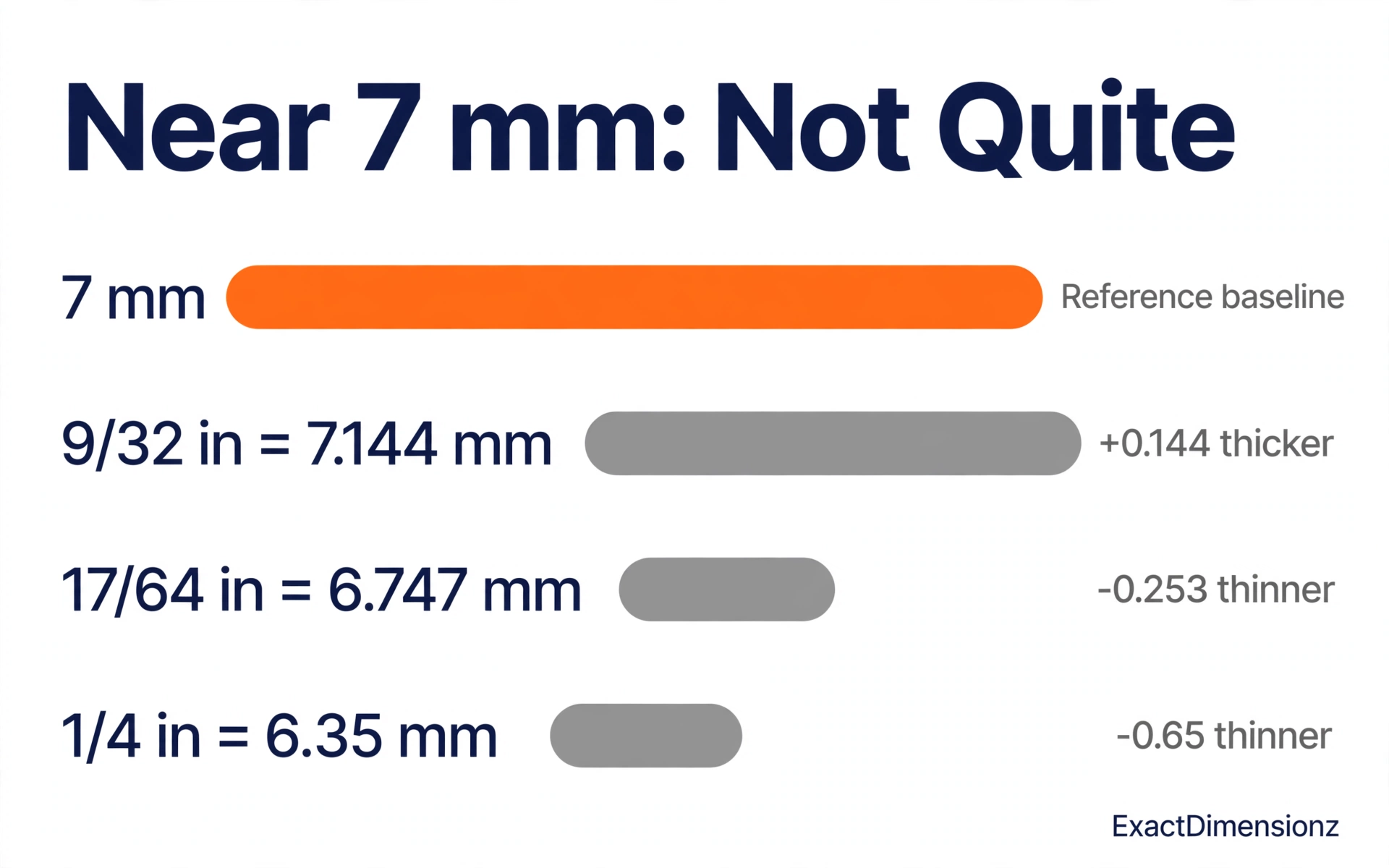
Sometimes the most useful reference is the one that almost matches. These three sit close enough to 7 mm to picture it against, with the exact gap stated:
| Object | Published size | Difference from 7 mm |
|---|---|---|
| 9/32 inch | 7.14375 mm | 0.14375 mm thicker |
| 17/64 inch | 6.746875 mm | 0.253125 mm thinner |
| 1/4 inch | 6.35 mm | 0.65 mm thinner |
The 9/32 inch is the classic near-miss: a seventh of a millimeter over 7 mm, close enough that workshops treat them as interchangeable in rough talk — but not the same number. The 17/64 inch falls short by about a quarter of a millimeter. And the 1/4 inch — the size everyone reaches for first — is a full 0.65 mm short, which your fingers would notice. These near-misses do not count as 7 mm references, which is why they sit in their own section.
How to Measure 7 mm Accurately
For most purposes a metric ruler is enough: count seven millimeter ticks past zero — past the halfway mark, closer to the next centimeter than to zero.
Digital calipers are the next step up, and they deserve a precise explanation. A caliper’s resolution (the smallest increment its display shows, often 0.01 mm) is not the same as its accuracy (how close its readings come to the true value, which depends on the instrument’s quality and calibration). A display that reads to 0.01 mm does not automatically measure to 0.01 mm. For a fuller tour of the instruments, see our measurement tools guide.
Whatever tool you use, measure the right axis. The single most common 7 mm measuring error is not instrument error at all — it is measuring a diameter when you meant a width, a nominal shaft size when you meant a ring feature, or, on a Wera socket, the length when you meant the hex opening.
Common Mistakes About 7 mm
- Calling 9/32 inch “equal to” 7 mm. It is 7.14375 mm — nearly a seventh of a millimeter over, close but not equal.
- Treating 0.27559 inches as mathematically exact. It is a rounded decimal display of the exact fraction 35/127.
- Saying 7 mm is “seven times as big” as 1 mm. Say seven times the length — “big” is vague and misleading.
- Assuming nominal products are physically exact. A 7 mm motor body (±0.1 mm) and a 7.00 mm lens (+0.0/−0.025 mm) are made to tolerances, not 7.000 mm guarantees.
- Reading the circlip’s 7 mm as a measured feature of the ring. It is the nominal shaft size per DIN 471 — no feature of the ring measures 7 mm.
- Mixing up the lens’s two numbers. On the #28-946, the 7.00 mm diameter and the 7.00 mm focal length are different axes — check which one the number describes.
- Mixing up the addi needle and the Clover hook. Same published 7.0 mm, but the needle’s is a tip diameter and the hook’s is a shaft diameter.
- Treating a 7mm wetsuit as uniform everywhere. 7 mm is the nominal panel thickness; real panels vary by placement.
- Reading the socket’s 7.0 as its length. On the Wera 8790 HMA, 7.0 mm is the hex across-flats; the length is 50.0 mm.
Frequently Asked Questions
How many centimeters is 7 mm?
Exactly 0.7 cm. A centimeter contains 10 millimeters, so 7 mm is seven-tenths of a centimeter.
How many inches is 7 mm?
About 0.27559 inches — a rounded decimal display of the exact fraction 35/127 inch.
Is 7 mm the same as 9/32 of an inch?
No. 9/32 inch equals 7.14375 mm, which sits 0.14375 mm over 7 mm. Close enough for rough conversation, but not the same number.
What is the difference between the addi needle’s 7.0 mm and the Clover hook’s 7.0 mm?
The axis. The addiPremium needle’s 7.0 mm is the tip diameter — the shaft size that sets each stitch. The Clover Amour hook’s 7.0 mm is the shaft diameter behind the hook’s head — the diameter class of the stitches it makes. Same published number, two different measurements.
Is a 7mm wetsuit exactly 7 mm thick everywhere?
No. 7 mm is the nominal neoprene panel thickness, and it varies by panel placement — chest, knees, and arms are cut and compressed differently. It is the size the maker names for the suit, not a per-panel measured guarantee.
How can I measure 7 mm without calipers?
Count seven millimeter ticks past zero on a metric ruler — past the halfway mark toward the next centimeter. Or compare against a known reference: the 7 mm width of a silk ribbon, or the cutting diameter of a 7.00 mm drill bit.
Final Thoughts
Seven millimeters turns out to be the size the standards skipped and life kept anyway. It sits outside the preferred number series — no M7 screw, no 7 mm dowel pin, no 7.5-versus-7 confusion allowed — yet it shows up exactly where precision gets personal: buzzing inside your phone, looped through your fingers on the craft table, wrapped around you in cold water.
Keep the evidence labels with you, and keep asking which axis the number describes. A published 7 mm tells you what the designer intended; the tolerance tells you what the factory is allowed; the axis tells you where to put your calipers — or your fingers. With those habits, 7 mm stops being the in-between size and becomes one you can picture.
