
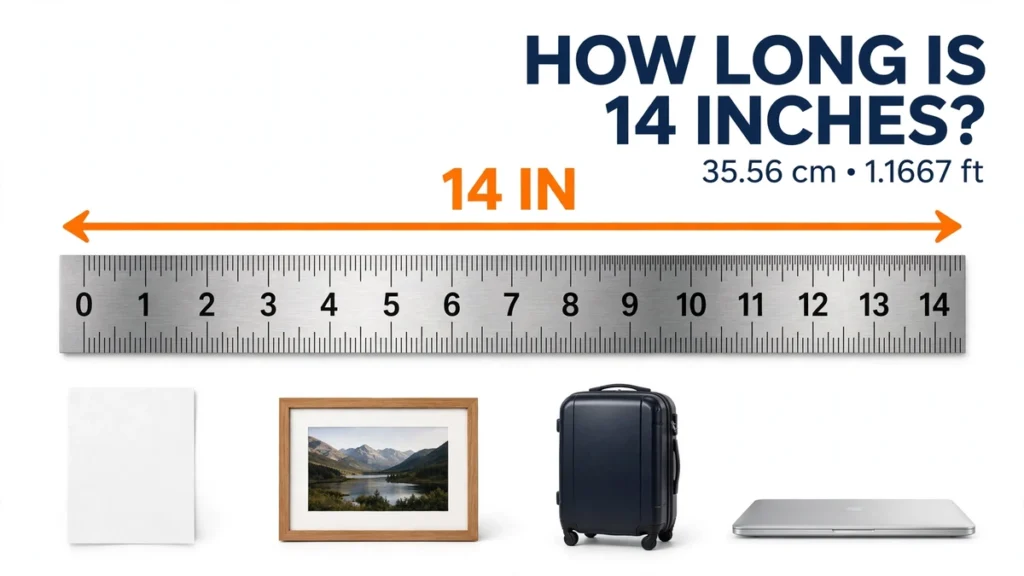
How long is 14 inches? It is a foot with a surplus — the full twelve inches every school ruler ends at, plus two more that no ruler bothers to print. Fourteen inches is exactly 35.56 centimeters, and it is one of the most quietly common sizes in your house: it is the long edge of the paper in a lawyer’s file, the name on half the laptops sold, the diameter on the pizza box, and the widest side an airline will let you carry onto a plane. It is also a number that gets claimed loosely. A “14-inch” laptop is not 14 inches wide. A “14-inch” MacBook Pro is secretly 14.2. So this article grades all fourteen references with an honest evidence label — “exactly 14,” “sold as 14,” or “listed at 14” — because the two extra inches past the foot are exactly where sloppy claims like to hide. For the full picture, see the complete inches size guide.
How long is 14 inches?
14 inches is exactly 35.56 centimeters — a full foot, plus two inches. It’s the long edge of US legal paper, the diagonal name of a mid-size laptop, and the wide side of an airline carry-on. Here’s the short version before we run past the foot:
12 in (one foot)
14 in
Screen rulers aren’t true to size — this bar is a visual guide, not a measuring tool. Calibrate against a sheet of US legal paper (exactly 14 in on the long edge), a carry-on’s 14-inch side, or a 12-inch ruler plus two quarters (13.91 in — close, and honest about it).
Why No Ruler Stops at 14
Twelve inches got the fame. The foot is a unit, a body part, a word in the language — and every ruler ever milled stops there, at the round end of the imperial story. Fourteen inches never got a unit of its own. It is an overflow length: you reach it by running past the end of the tool you trust most.
That overflow status is exactly why “14 inches” is claimed so carelessly. Thirteen at least has the excuse of being unlucky. Fourteen is a size that products graduate into — the larger laptop, the bigger pizza, the family pan — and “bigger than the foot” is a selling point, so the number gets rounded up, stretched across a diagonal, or printed on a box nobody measured. When the spec is written down and enforced, 14 is a fine reference. When it is just a label, it is a rumor. Every object below carries its grade, so you always know which one you are holding.
Cut to Fourteen: Paper and Print. Paper is where 14 inches is at its most trustworthy — because paper is still cut to a standard the whole continent agreed on.
1. US Legal Paper
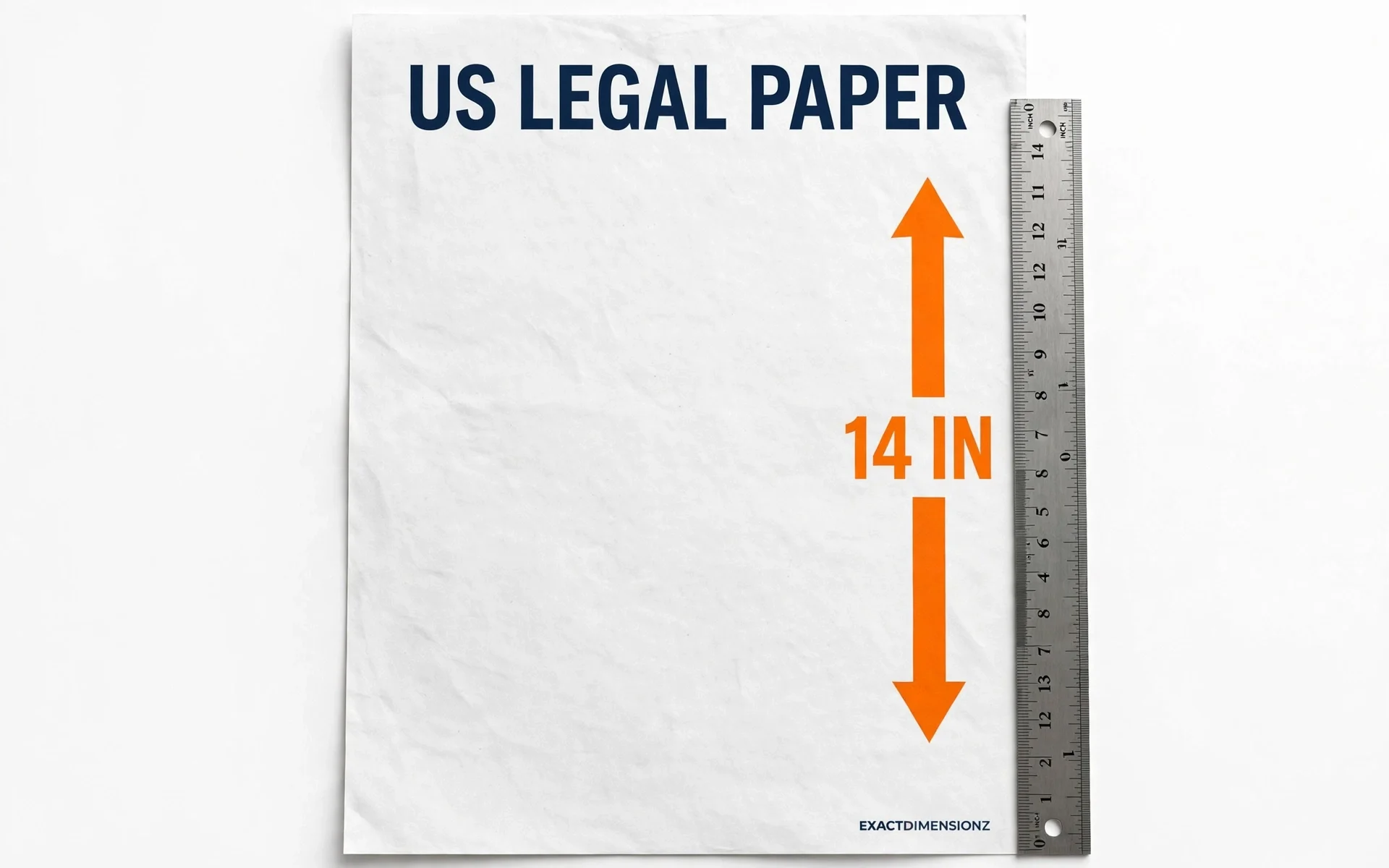
Evidence: exactly 14 by standard.
Start with the strongest reference on this list. US legal-size paper is defined at 8.5 by 14 inches — that long edge is not approximate, not nominal, and not a marketing rounding. It is the size, written into the North American paper standard, and every ream of legal paper in every office supply closet in the country is cut to it.
That makes a sheet of legal paper the best 14-inch reference most people own without knowing it. It is thinner than a ruler and easier to find than a tape measure, and its long edge is exactly the length this article is about. If you remember one reference, remember this one: the foot, plus two inches, is sitting in a filing cabinet near you.
2. The 11×14 Photo Print
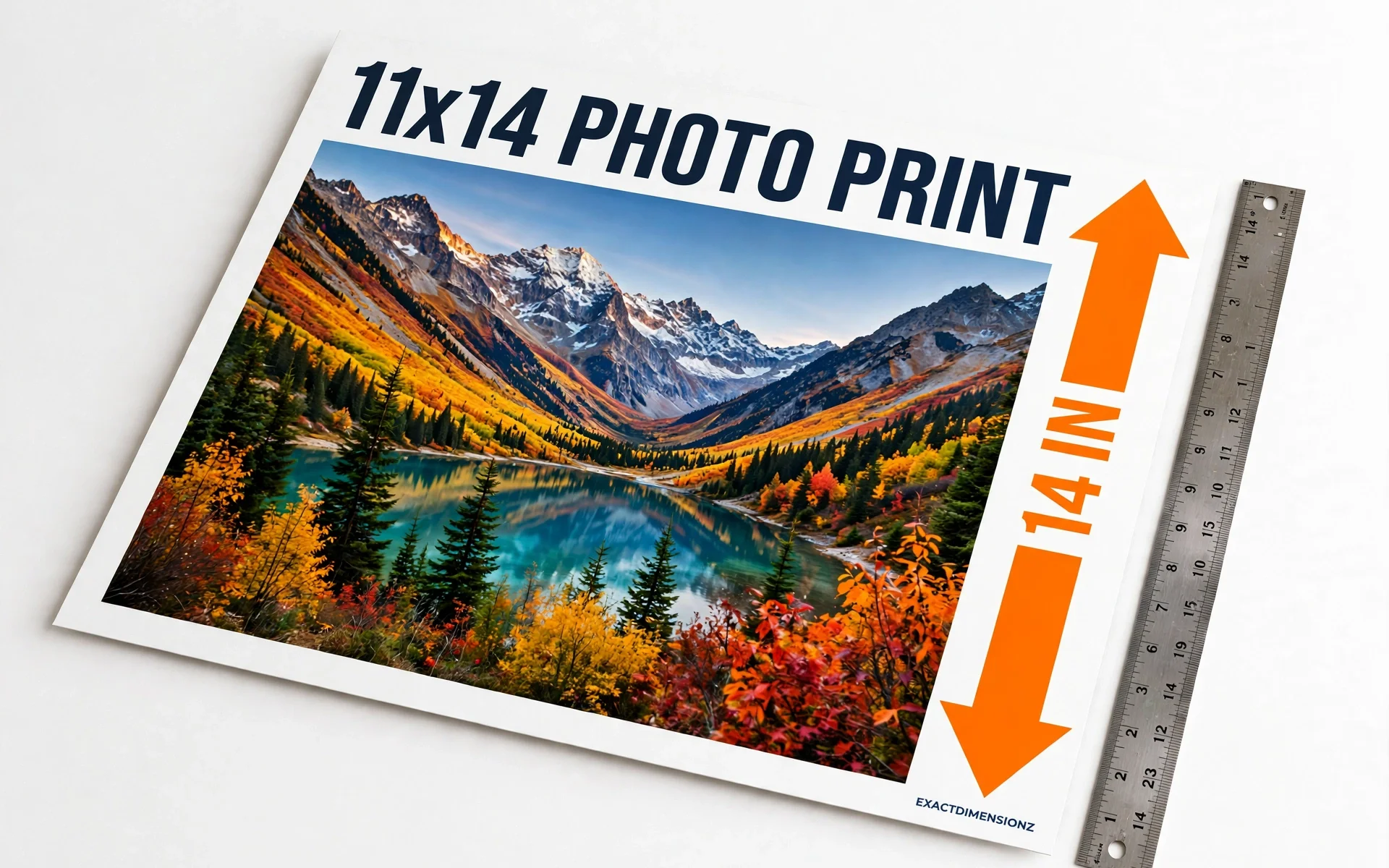
Evidence: exactly 14 by manufacture.
The 11×14 is a standard photographic print size, and its long edge is 14 inches because the paper is cut to it before a single pixel is printed. Most prints in a family album are 4×6; this one more than doubles the 6-inch edge of that standard snapshot. Photo paper is one of the last consumer products still manufactured to a ruler’s tolerance — the print either fits the standard frame or it visibly doesn’t, so the cutting stays honest.
Pair it with the legal sheet above and a pattern emerges: the two exact 14s on this list are both flat, both paper, and both boring — which is precisely why they can be trusted. Everything after this section needs its grade checked.
Fourteen on a Diagonal: Screens. Screens are where 14 inches goes to be exaggerated — not by liars, but by geometry. Screen sizes are measured corner to corner, and the diagonal is always the longest line a rectangle can offer.
3. The 14.0-Inch Laptop Screen

Evidence: exactly 14.0 by manufacturer spec — measured diagonally.
Here is the trap nearly every size site falls into, including our largest competitor, which lists “Laptop Width — 14 inches” as if the number ran across the machine. It does not. A 14-inch laptop is named for its display, and the display’s 14.0 inches are measured corner to corner. The laptop body itself is only about 12.7 inches wide — closer to 13 inches than to the number on the box.
The diagonal itself is genuine: manufacturer spec sheets list a true 14.0-inch panel, so the object earns its grade. Just never line the laptop’s edge against something and expect fourteen inches of width. You will come up more than an inch short, and the grade told you why.
4. The “14-Inch” MacBook Pro
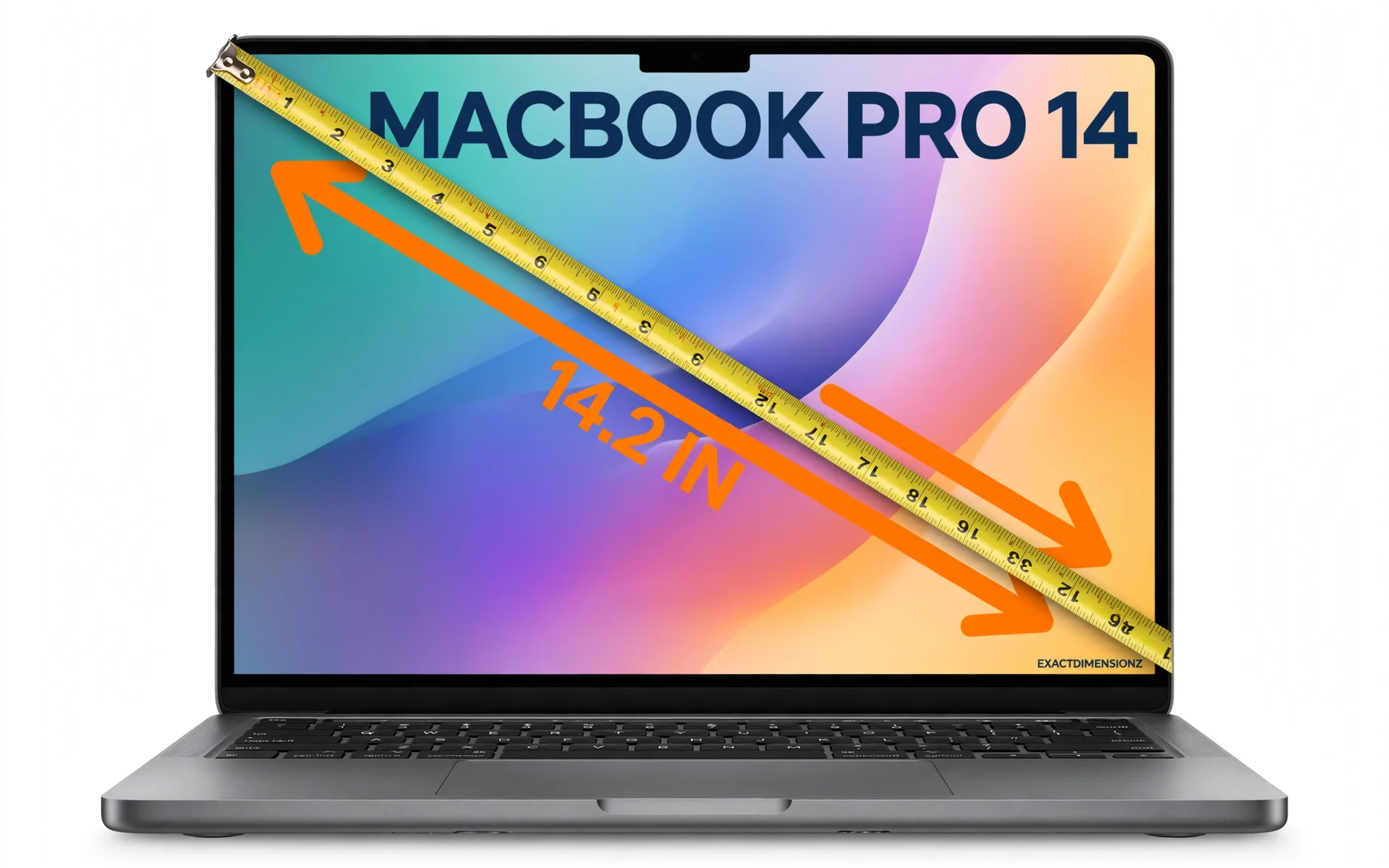
Evidence: listed at 14 — the display is actually 14.2 inches, diagonally.
If the laptop above is an honest diagonal, this one is a rounded name. Apple’s “14-inch MacBook Pro” carries a display Apple’s own spec sheet lists at 14.2 inches diagonal. Fourteen is the class name — the family the machine belongs to — not the measurement.
This is not an accusation; it is the whole theme of the article in one product. A listed-at 14 is still useful for picturing the size — the machine is unmistakably in the 14-inch class, a step up from the 13-inch class one rung down (see how long is 13 inches). But if a label and a spec sheet disagree, believe the spec sheet. It is 14.2, and that is what the image says. That extra 0.2 inch is about 5 mm — small, but exactly the kind of small this site exists to catch.
Round, and Sold as Fourteen: The Kitchen. Leave the spec sheets and enter the kitchen, where 14 inches stops being a diagonal or a standard and becomes a diameter printed on a box — true to within the honesty of the cookware aisle.
5. The 14-Inch Pizza
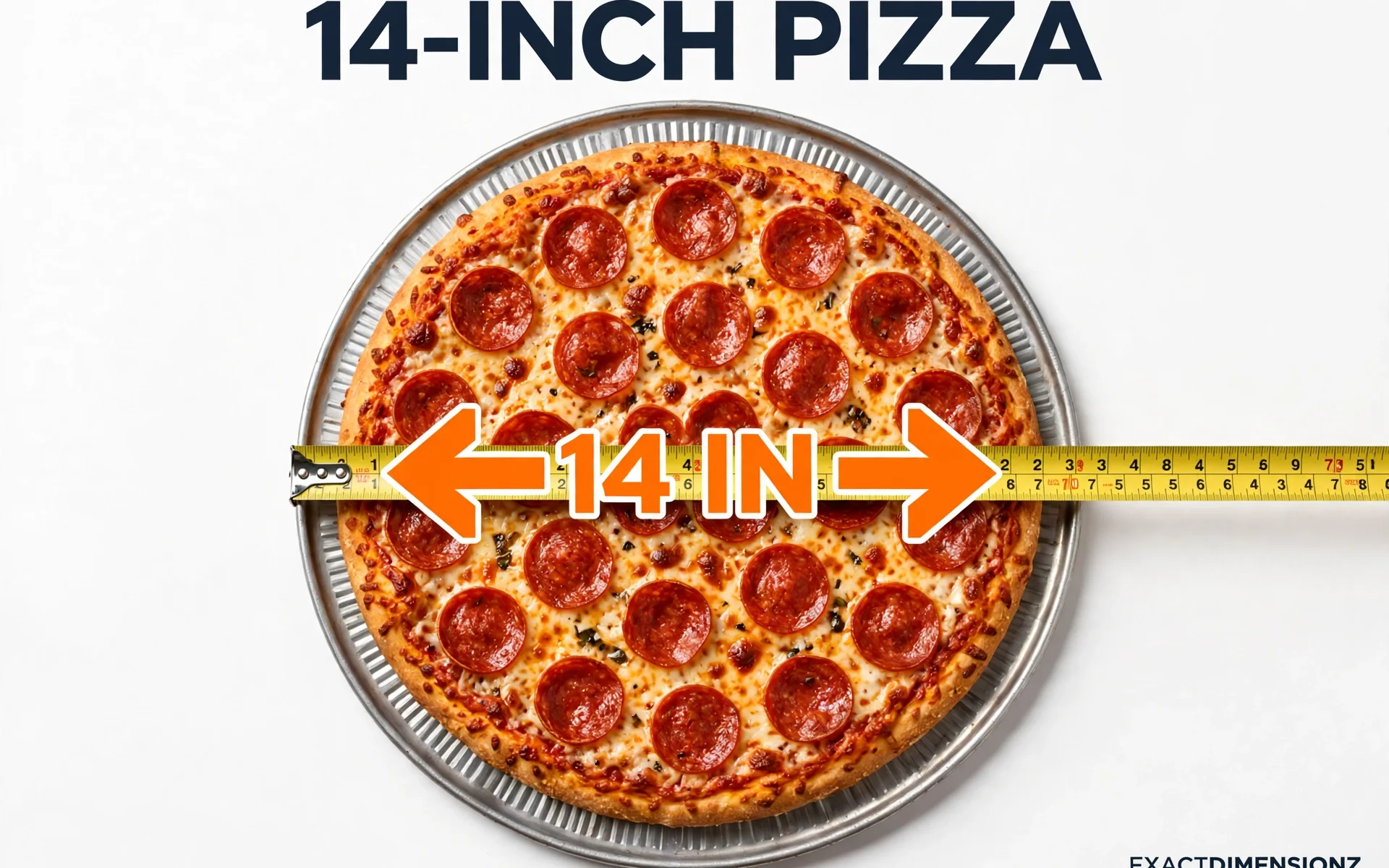
Evidence: sold as 14 (nominal diameter).
Fourteen inches is the classic “large” at most pizzerias — the size the standard pizza box is built around. The diameter is measured across the top, edge of crust to edge of crust, and a hand-stretched pie can land a quarter inch either side of the number without anyone reaching for a lawyer.
As a reference it is genuinely handy: a large pizza is the dinner-table version of 14 inches — the personal pies at the small end of the menu run about 8 inches, barely more than half of it — and unlike a laptop screen, its 14 runs straight across the middle where you can see it. Grade it “sold as 14,” enjoy it hot, and do not calibrate furniture against it.
6. The 14-Inch Frying Pan
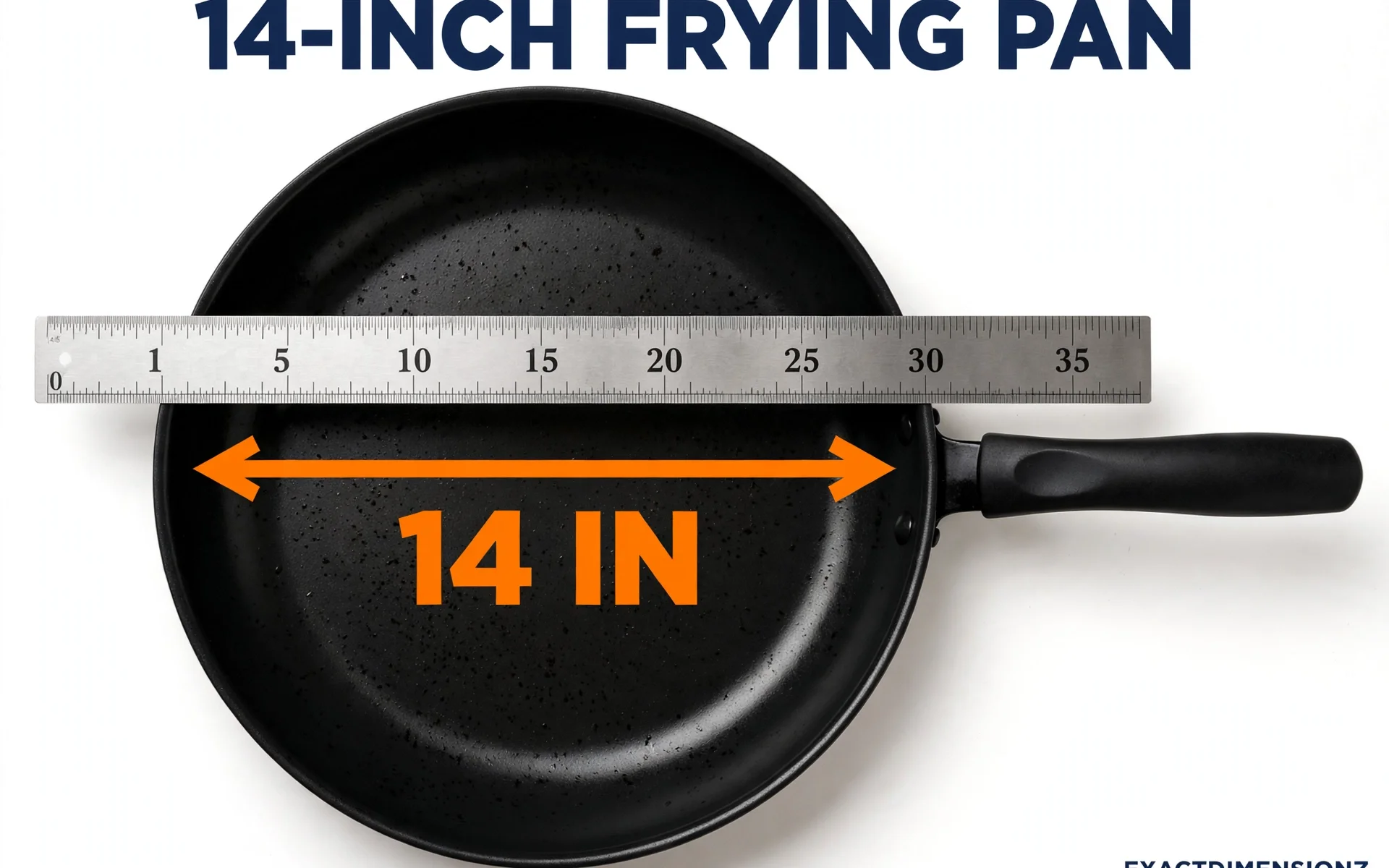
Evidence: sold as 14 (nominal — the cooking surface is smaller).
A 14-inch frying pan is the family-size workhorse of the stovetop, and its 14 inches describe the diameter across the top rim. The flat cooking surface at the bottom is meaningfully smaller — the walls slope, and slope eats inches. Two different numbers live inside the same pan, and the label only reports the flattering one.
None of this makes the pan a bad reference. It makes it a graded one. Picture a 14-inch pan and you are picturing 14 inches at the rim — just do not expect to fit a 14-inch circle of anything inside it.
7. The 14-Inch Cake Board

Evidence: sold as 14 (nominal diameter).
Cake boards — the stiff gold or silver rounds a bakery cake sits on — are sold in even sizes, and 14 inches is the standard board for a 12-inch cake: the cake, plus an inch of border all around. Boards are die-cut close to their stated size, so this is one of the more honest nominal 14s in the kitchen.
It is also a quietly useful reference, because party-supply drawers are everywhere and the board’s whole job is to be a measured circle. Sold as 14, cut close to 14, graded accordingly.
8. The 14-Inch Serving Platter
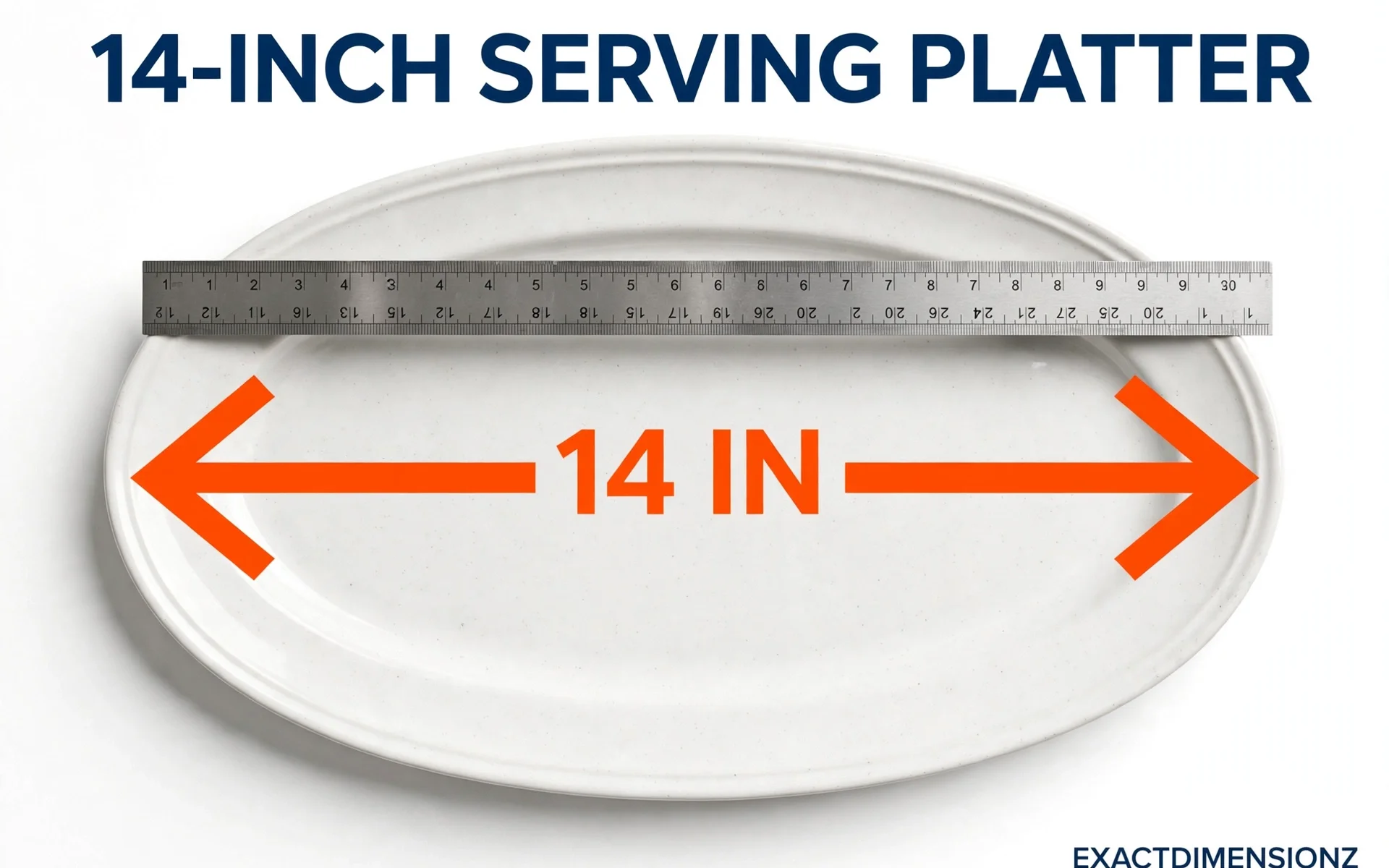
Evidence: sold as 14 (nominal length).
Oval serving platters are sold by their long dimension, and 14 inches is the standard turkey-adjacent, appetizer-carrying size. Platters vary more than cake boards — ceramic molds and product lines drift by half an inch between brands — so this one sits at the softer end of “sold as 14.”
Still, it earns its place: it is the reference already sitting in the sideboard, it reads instantly as “a foot and a bit more,” and its grade is printed right here rather than implied. For scale, it is three inches longer than the 11-inch plates from how long is 11 inches — a visible, useful step up.
Fourteen by Rule, Fourteen by Name. The last group mixes the two ways a size gets enforced: written into a rulebook, or settled into a product class so standard that the name itself became the reference.
9. The Carry-On’s 14-Inch Side

Evidence: exactly 14 by airline rule.
The sleeper pick of this entire list. The standard US airline carry-on size limit is 22 × 14 × 9 inches — and that middle number means the wide side of every compliant carry-on in every overhead bin in America is capped at exactly 14 inches by a written rule. Luggage makers build to the cap, because a bag that measures 14.2 does not fly.
No other object here is policed like this one. Pizza can stretch and pillows can squish, but the carry-on’s 14 inches is checked against a sizing frame at the gate. If you ever need to settle an argument about fourteen inches in an airport — and airports are where size arguments happen — the suitcase at your feet is a regulation-grade reference.
10. The 14-Inch Snare Drum
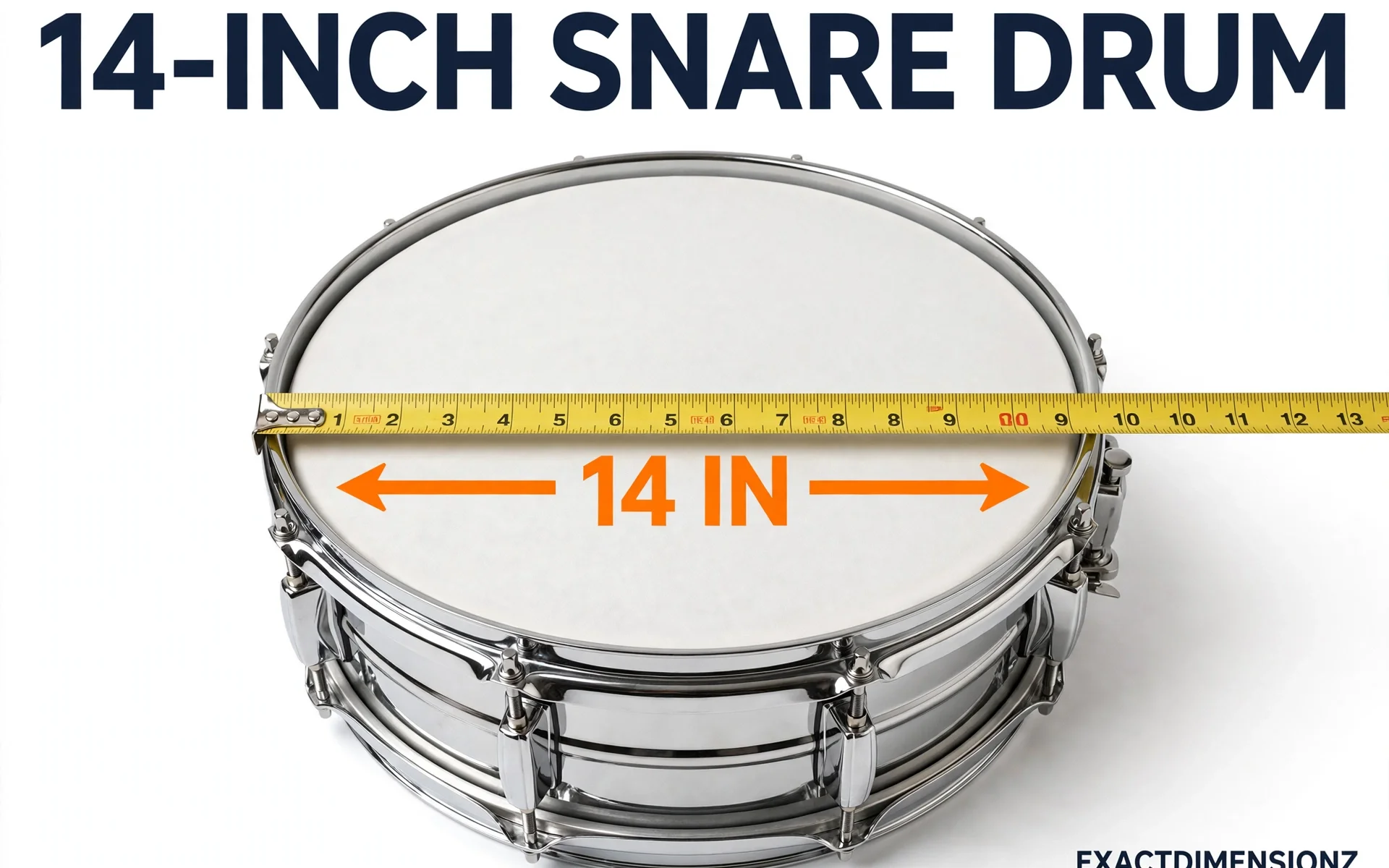
Evidence: sold as 14 (nominal drum size).
Fourteen inches is THE standard snare drum diameter — the default size on kit after kit, the way 12 inches was the standard tom a rung below. Drum sizes name the head diameter, and shells are built to take a 14-inch head, so the number is honest to within the width of the hoop.
Drummers handled the objects in the 13-inch article too; the kit is a small showroom of graded sizes. The snare earns “sold as 14” — a real class, consistently manufactured, with the hardware built around the number rather than the other way round.
11. The 14-Inch Kids’ Bike Wheel
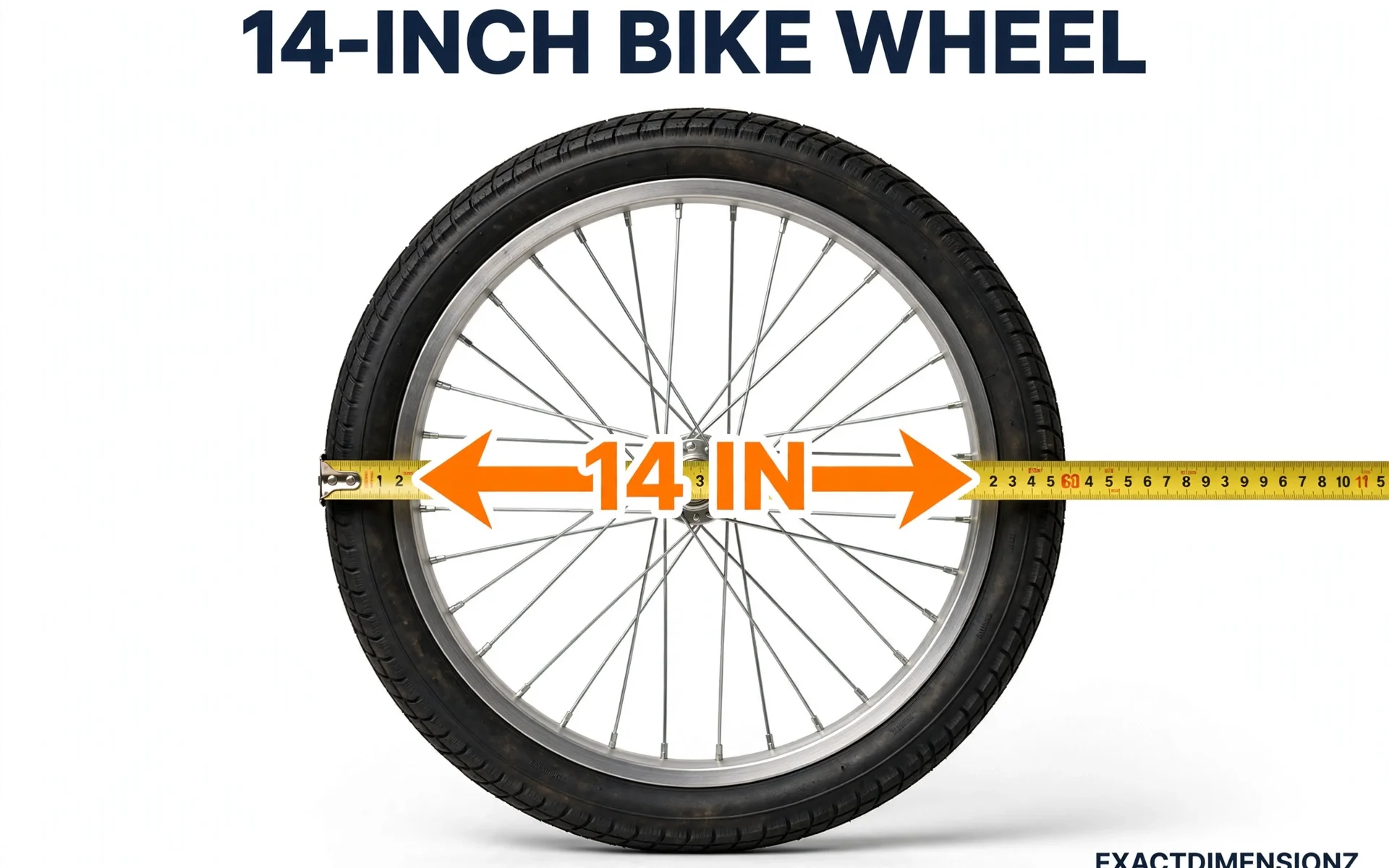
Evidence: listed at 14 (tire-size class).
A 14-inch wheel is a standard kids’ bike size — the step between a 12-inch balance-bike graduate and a 16-inch first real bicycle. The number names the tire class: the wheel’s overall diameter with the tire fitted lands near 14 inches, varying a little with tire profile and inflation.
That makes it a listed-at 14 — a class name with an honest relationship to the measurement, the way the MacBook’s 14 is a class name with a dishonest one. Same label style, different grade behavior, and the grade is what tells them apart.
12. The 14-Inch Throw Pillow
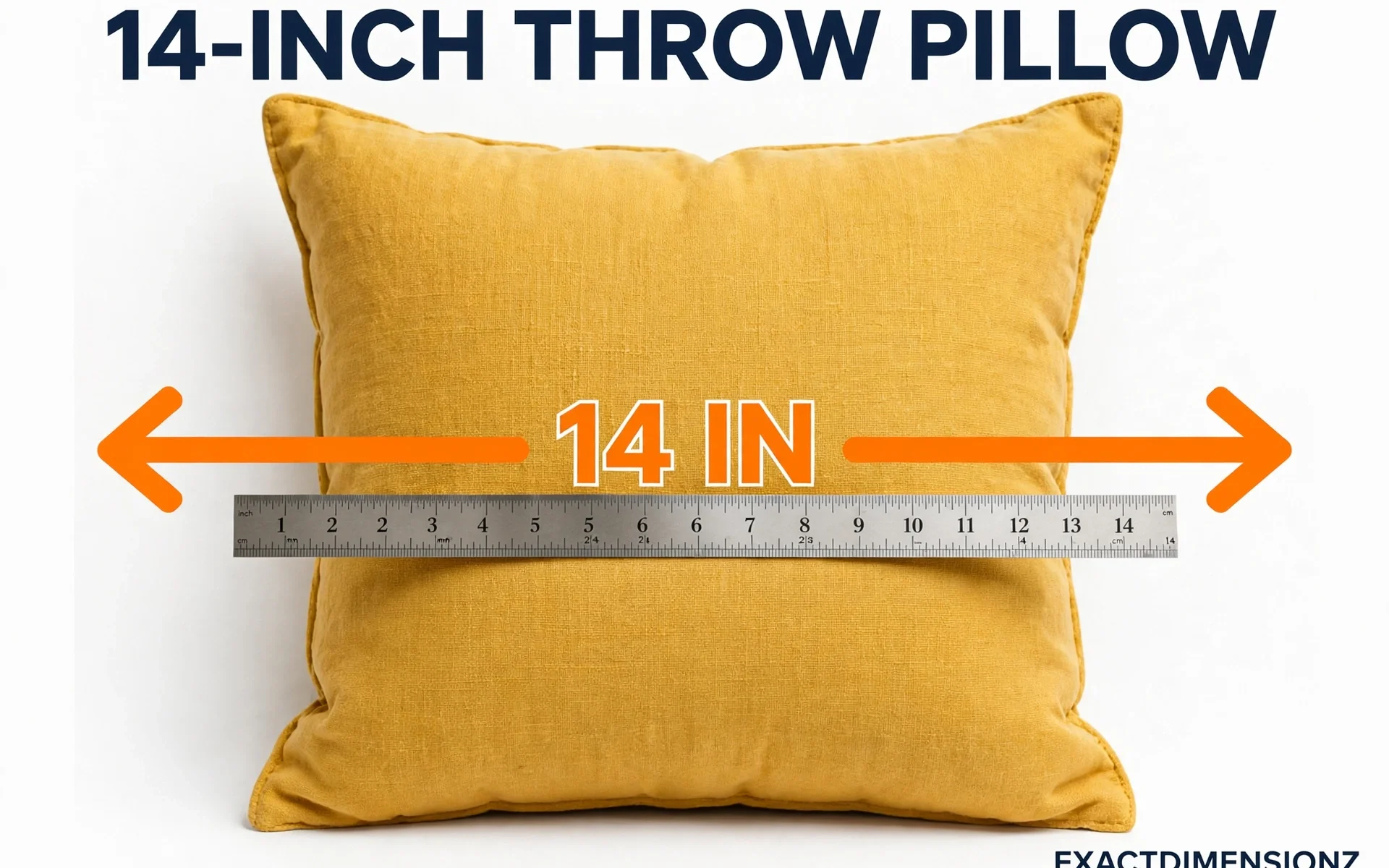
Evidence: sold as 14 (nominal).
Fourteen-by-fourteen is a standard throw pillow size, measured seam to seam on the unfilled cover. Once the insert goes in, the pillow puffs and the face you actually see measures less — the classic nominal-size behavior, soft edition.
It remains a useful reference because the size class is everywhere: sofas, accent chairs, and every home-goods shelf in the country. Just know you are picturing the cover’s promise, not the puff’s measurement — about a foot plus two inches, wearing a cushion’s rounding error.
13. The 14-Inch Wall Clock

Evidence: sold as 14 (nominal diameter).
Fourteen inches is a standard wall clock size — the step up from the common 12-inch classroom clock (see how long is 12 inches), big enough to read across a kitchen or an office. Clock diameters are nominal across brands, landing within about half an inch of the label either way.
As the second full-foot-plus reference in most homes — after the carry-on most people do not realize they own — it closes the “by name” group honestly: sold as 14, close to 14, and graded so you know it.
Build Fourteen Yourself.
14. A Ruler Plus Two Quarters

Evidence: measured about 13.9 — close to 14, and it says so.
The closing trick, and the most honest object on this list. A US quarter is 0.955 inches across — that is the Mint’s spec, not an estimate. Lay a 12-inch school ruler (exactly 12 by manufacture, from how long is 12 inches) end to end with two quarters and you have built 12 + 0.955 + 0.955 = 13.91 inches of measurement out of objects in your pocket.
That is not 14. It is 13.91, and the label on the image says 13.9 IN, because this article does not round a reference up to the number it is supposed to prove. What the trick gives you is a foot-plus-two you can build anywhere — short of the mark by less than a tenth of an inch, and honest about the gap. The missing sliver is thinner than 10 mm, which is as close as pocket change gets to perfect.
Build it the other way, too, when you need a check on a claim: anything sold as 14 inches should beat your ruler-plus-quarters line by a hair. If it doesn’t reach the end of the ruler and both coins, it isn’t fourteen inches — whatever the box says.
The Staircase: 12, 13, 14
Line the last three articles up and the sizes form a staircase. Twelve is the foot — the anchor, the unit, the ruler itself. Thirteen is the foot plus a thumb: the awkward middle child, all class names and rounded wishes (see how long is 13 inches). Fourteen is the foot plus two: the first length on the staircase that products deliberately graduate into — the larger laptop, the large pizza, the family pan, the biggest carry-on the airline allows.
That is why each step needs its own grading. Your eye happily rounds 14 down to “about a foot,” and product labels happily round 13.6 up to it. The staircase only works if every step is labeled with what it actually measures. The staircase continues with a step up to 15 inches.
Fourteen, Honestly
Fourteen inches is the overflow length: a full foot, exactly 35.56 centimeters, plus two inches that no ruler prints and every product line claims. The legal sheet and the photo print are the ones you can trust blind — cut to a written standard. The carry-on’s side is trusted for a different reason: a rule with a sizing frame behind it. The screens are honest only once you know their number runs corner to corner, and that one famous “14-inch” is really 14.2. The pizza, the pan, the pillow, and the clock are sold-as sizes — useful, familiar, and rounded like everything in a kitchen or a living room.
Keep the graded references — legal paper, photo print, carry-on, ruler plus two quarters at an honest 13.9 — and fourteen inches stops being a rumor on a box. It becomes a length you can prove, one foot and two inches at a time.
