
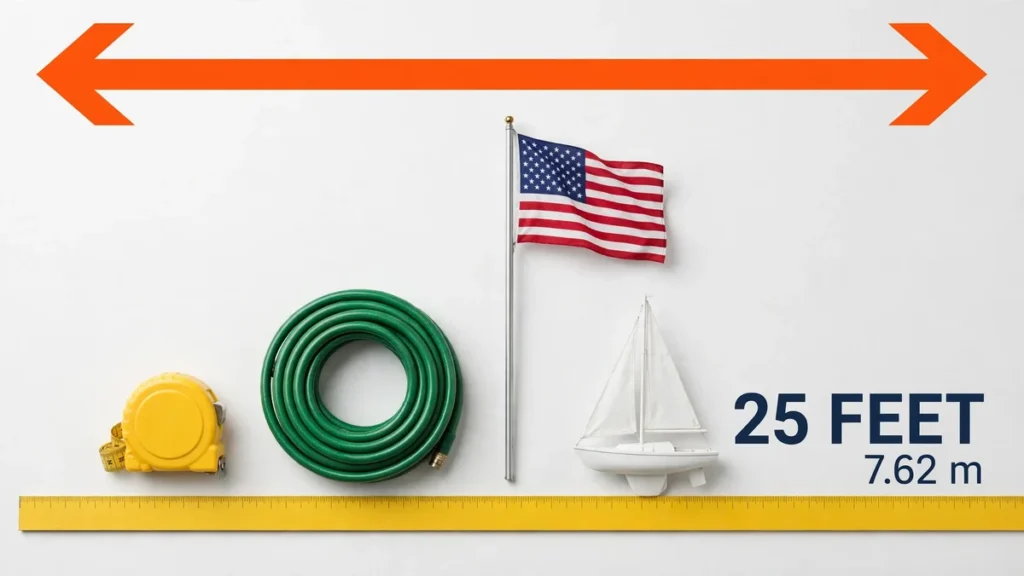
Pull a job-site tape measure all the way out and the blade stops at 25 feet — not because the room you are measuring is 25 feet, but because the tape itself is. That is the first thing to know about how long is 25 feet: it is the one length in this series that you have probably already held in your hand, coiled in a toolbox, without ever thinking of it as a measurement. The tape is 25 feet long the way a ruler is 12 inches long — the tool and the number are the same thing.
The six things below are the closest honest answers, and the tape is the first of them. Three are exact to the centimetre — a tape, a hose and a flagpole, all sold by the foot and all 25 feet on the maker's own listing — and three carry a named model and a printed miss: a sailboat one inch short on its builder's own sheet, a pontoon dead on 25 feet, and a motorhome whose name says 24 and whose tape says 25 feet 8 inches. None of them is a stack, a multiple, a fraction, a half, or a category guess. By the end you will know 25 feet as a tape, a hose, a flagpole, two boats and a motorhome — and you will know which of those you can trust to the inch and which ones the other lists round into shape.
Why 25 Feet Is the Tape's Own Number
Twenty-four feet was round in two systems because it was 8 yards. Twenty-five feet is round for a different reason: it is the size the measuring trade settled on. The standard job-site tape is 25 feet long because 25 feet covers a room, a wall and a garden without a second pull, and the hardware store sells hoses, cords and flagpoles in 25-foot lengths for the same reason — it is the longest length that still fits in one hand, one coil, one box. The number did not come from a rulebook. It came from a toolbox.
The conversions are unusually clean for a foot number. Twenty-five feet is 7.62 metres exactly — 25 times 0.3048, with nothing left over past the second decimal — and 762 centimetres, 7,620 millimetres, 300 inches, and 8 and a third yards. The one awkward conversion is the yard: 8.33 yards, a third of a yard dangling off the end, which is why nobody who works in feet says "eight and a third yards" and everybody says "25 feet". And 25 feet is exactly ten average walking steps, because the average step is 2.5 feet and ten times 2.5 is 25.00 — no shuffle, no rounding, no "and a bit". Ten steps, ten feet of tape past the ten-foot mark twice over, one number.
The traps are the round metric numbers on either side. Seven metres is 22.97 feet, which is 2.03 feet short of 25 — two whole feet, the length of a workbench, missing from your measurement — and eight metres is 26.25 feet, a foot and a quarter over. "Call it 7 metres" fails by two feet and "call it 8 metres" fails by more than one, so neither is a shortcut at all. The honest shortcut is 7.62 metres, or 300 inches, or ten steps — three names for the same tape, and the only one of the three that is round in two systems is the tape itself. The guides that list "things that are 25 feet long" keep reaching for the extension ladder and the two sedans because those are the biggest single things in a normal life with 25 in their name — and neither of them is 25 feet, one because the ladder sizes skip 25 altogether and the other because two sedans are five feet longer than the number. The ladder is the object this article measures properly, in the corrections section, and the sedans are the objects it refuses to measure at all.
Quick Answer
25 feet is 7.62 metres exactly — 762 centimetres, 7,620 millimetres, 300 inches, and 8 and a third yards. But do NOT call it 7 metres: 7 metres is 22.97 feet, which is 2.03 feet shorter than 25 feet, and do NOT call it 8 metres either: 8 metres is 26.25 feet, which is a foot and a quarter longer. The honest shortcut is ten steps — and the honest objects are the 25-foot tape measure, the tool that defines the length, and the 25-foot garden hose, the length every hardware store sells by the foot.
The 6 Objects
The six objects below are ordered the way you would meet them: the tool first, then the garden, then the street, then the water, then the road. Each one carries its evidence grade in the heading. EXACT means the figure is a standard's or an authority's own dimension for the named thing. LISTED means the figure is the manufacturer's or operator's published specification for the named model. AVERAGE means the figure is an authority's published average or range for the named thing. REPORTED means the figure is the largest verified measurement an expert source reports for the named thing. Three of the six are exact, and two of them share the same metric figure — 7.62 metres — written by a tape maker and a boat designer who never met.
1. A Stanley PowerLock 25-Foot Tape Measure, Model 33-425 — 25.00 Ft Blade (EXACT)
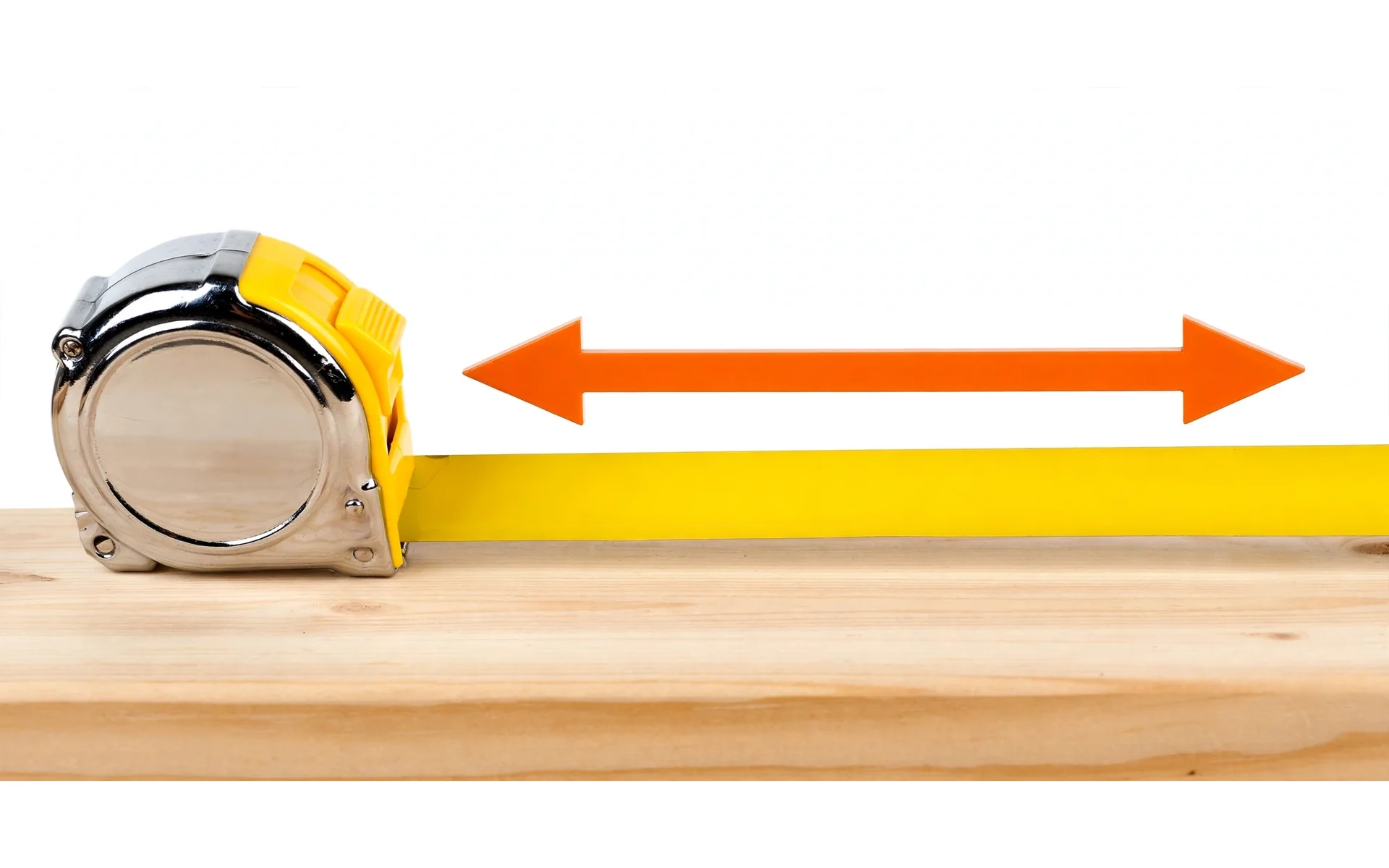
The tape is the article's cleanest exact, because it is the only object in this series that is also the instrument the whole series is measured with. Stanley Tools lists the PowerLock 33-425 with a blade length of 25 feet and a blade width of 1 inch, a 7-foot blade standout, a Tru-Zero end hook, a Mylar-coated blade, and a chrome high-impact ABS case with 16-inch and 19.2-inch stud-centre markings. Pull the blade to its end stop and you have pulled exactly 25 feet — 300 inches, 7.62 metres — and the tape has been that length since the PowerLock line began in 1963, because 25 feet is the length a job-site tape is. The case fits in one hand and the blade fits a room, which is the whole reason the size survived sixty years of tool catalogues.
The fitting check is the standout, because the tape's 25 feet is its blade length and its standout is 7 feet — the distance the blade holds itself rigid in the air — and the thing people misjudge is which number they are buying. A blade that stands out 7 feet is not a 7-foot tape, and a 25-foot tape does not measure 25 feet unsupported; it measures 25 feet when the hook is anchored and the blade is pulled straight. The guides that call the 25-foot tape "the gold standard for job sites" are right about the popularity and silent about the standout, because they never pulled one. The grade is exact because the figure is the maker's own specification for the named model: blade length 25 feet, 0 inches of miss. Measure with the hook anchored before you measure the room, because the tape is the object in this article that every other object is judged against.
2. A Flexzilla Garden Hose, 5/8 In. x 25 Ft, Model HFZG525YW — 25 Ft Long (EXACT)
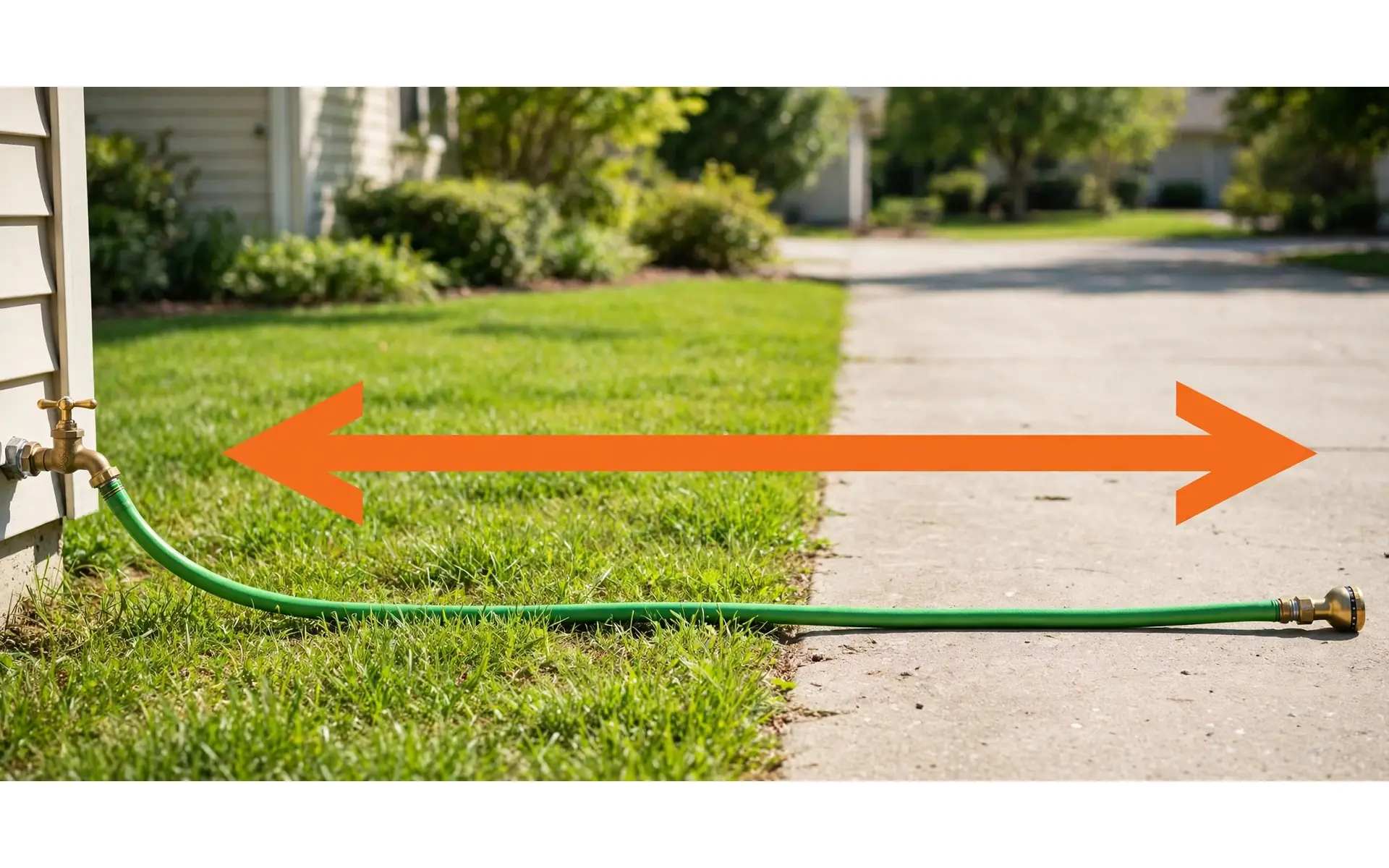
The hose is the article's most domestic exact, because it is the 25 feet most readers have already bought, coiled, and tripped over. Flexzilla sells the HFZG525YW as a 5/8-inch by 25-foot garden hose: a hybrid-polymer hose, 25 feet long, rated to 150 PSI, weighing 3.8 pounds, with anodized aircraft-aluminium fittings and an O-ring seal, drinking-water safe, sold as the shortest standard length in the range. Lay it out straight on the lawn, spigot to nozzle, and you have laid out 25 feet — the same on every HFZG525YW ever sold, because the length is the product name. It is the hose the hardware store reaches for first, and the reason the other lists all name a garden hose before anything else.
The fitting check is the coil, because the hose's 25 feet is its length laid straight and the thing people misjudge is the coil: a coiled 25-foot hose looks like about ten feet of hose, and a 25-foot hose with a kink in it measures 25 feet of hose and about twenty feet of reach. The guides that call a garden hose "half of a standard 50-foot hose" are right about the arithmetic and wrong about the object — a 25-foot hose is a product in its own right, sold in its own box, not half of another product. The grade is exact because the figure is the maker's own listing for the named model, with the deviation printed in full: 25 feet, 0 inches of miss, 5/8 inch bore. Measure it laid straight before you measure the garden, because the hose is the object in this article you water with.
3. An Eder Flag SS25 25-Foot Residential Flagpole — 25 Ft Tall (EXACT)
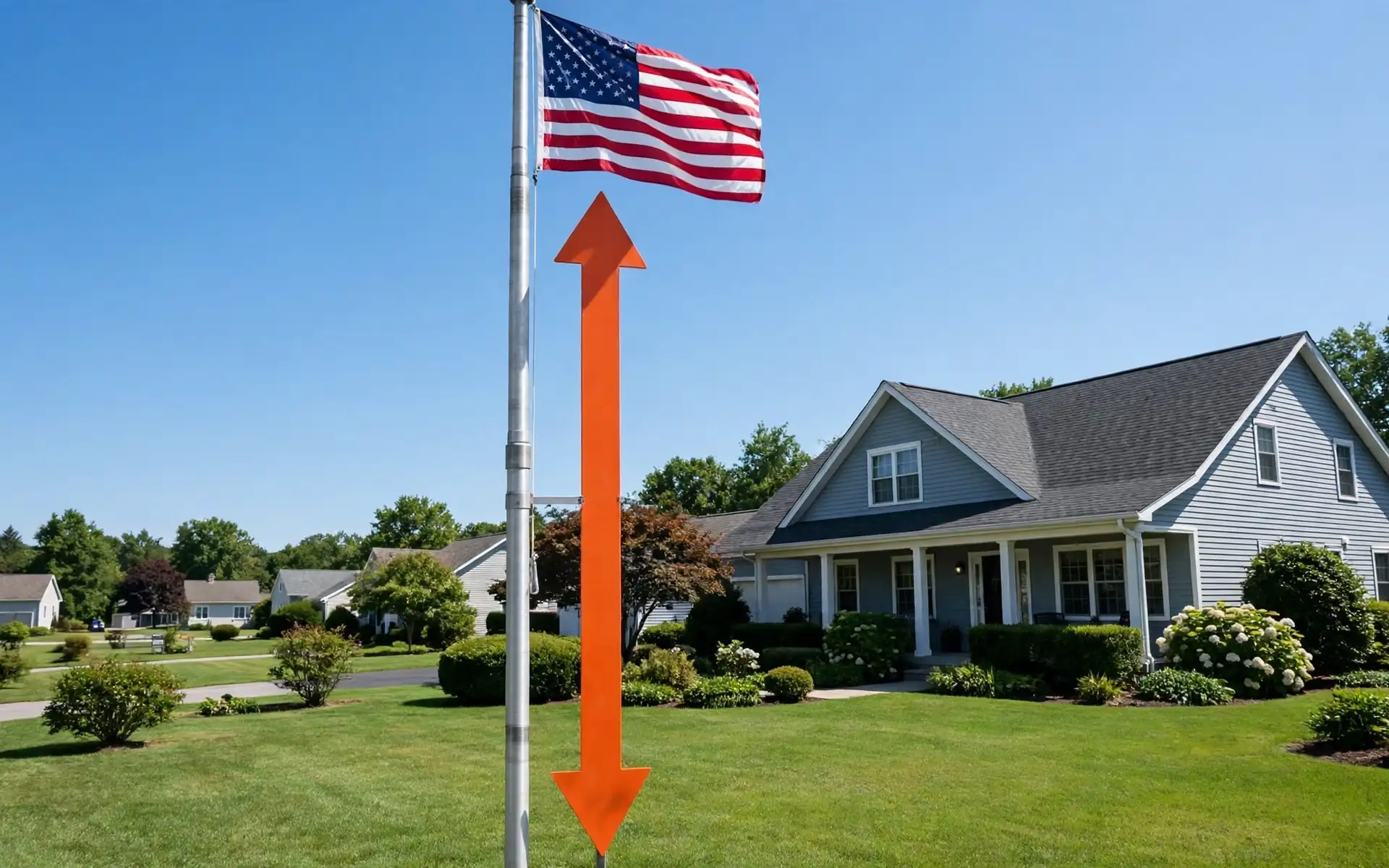
The flagpole is the article's most vertical exact, because it is the 25 feet you look up at rather than walk along. Eder Flag sells the SS25 as a 25-foot heavy-duty residential flagpole: four aluminium sections, a 3-inch butt diameter, a 0.125-inch wall, a 65 MPH wind rating, a 3-inch gold anodized ball, a cast-aluminium cleat, a braided polyester halyard, and a 4-by-6-foot nylon American flag in the box. Stand at its base and look up and you are looking up 25 feet — the same on every SS25 ever sold, because the pole is the product. It is the tallest pole most streets allow without a permit, which is why it is the best-selling height in the country.
The fitting check is the sleeve, because the pole's 25 feet is the assembled pole and the thing people misjudge is the ground: the PVC foundation sleeve it sits in is buried, and the depth of the sleeve is what decides how much of the 25 feet shows above the lawn. Assemble the four sections on the ground and measure the pole before you plant it, and the tape will read 25 feet; plant it first and measure later, and you are measuring the pole plus the hole. The guides that call a flagpole "20 to 25 feet tall" are right about the range and wrong about the confidence — this pole is not 20 to 25 feet, it is 25 feet, to the section the maker sells. The grade is exact because the figure is the seller's own listing for the named model: 25 feet, 0 inches of miss, four sections. Measure it on the ground before you measure the sky, because the flagpole is the object in this article you salute.
4. A MacGregor 25 Sailboat — LOA 25.00 Ft (LISTED)
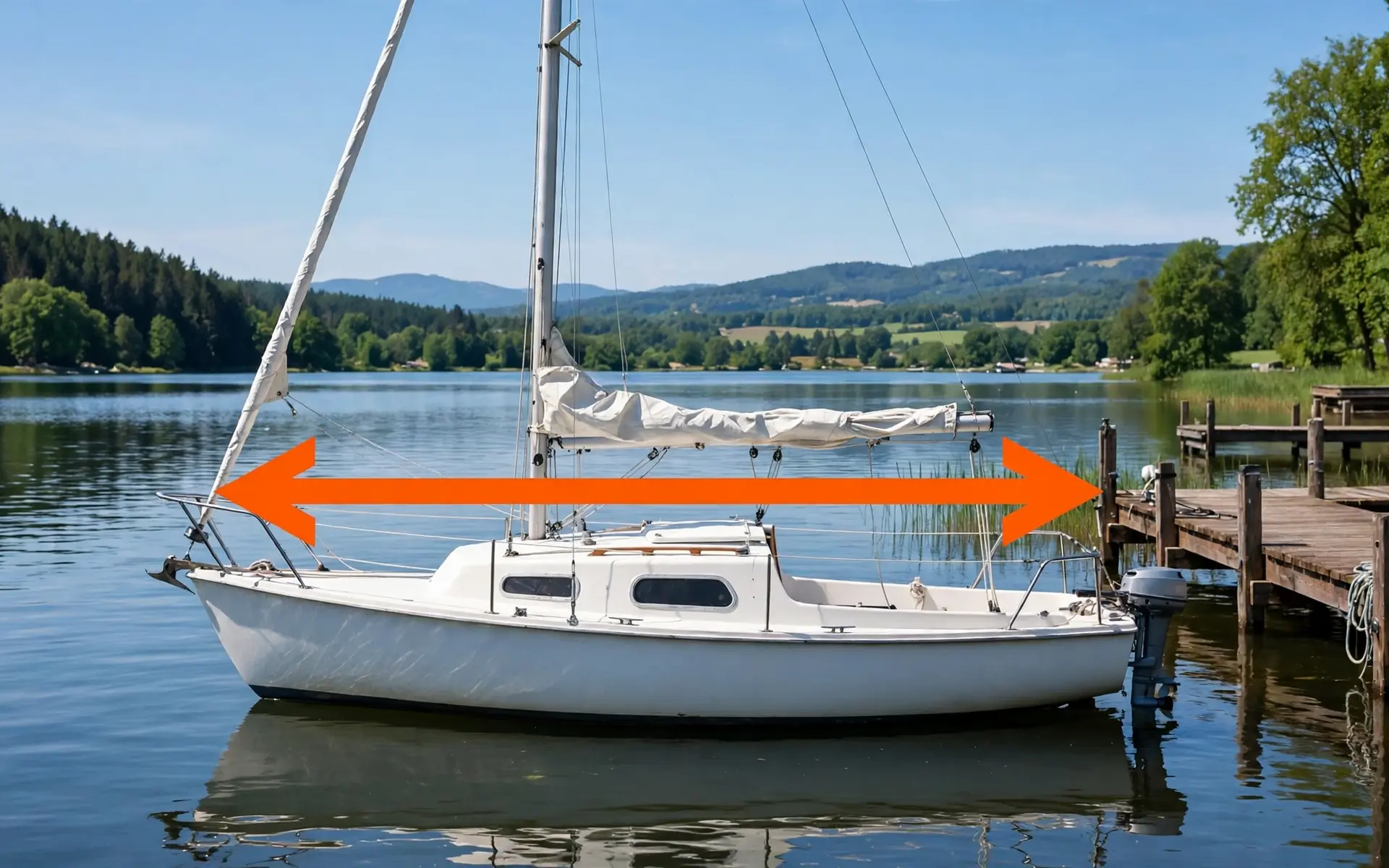
The MacGregor is the article's only near-miss from the water, and the one that proves a name and a tape can disagree by an inch. Roger MacGregor designed the MacGregor 25 in 1973 as a trailerable pocket cruiser — a fibreglass fractional sloop with a swing keel, a pop-up rudder, and a pop-up cabin top — and 7,000 of them were built between 1973 and 1987, sold as the Venture 25 until 1980. Wikipedia's class data lists the length overall at 25.00 feet, 7.62 metres, with a waterline of 23.00 feet, a beam of 7.92 feet, a displacement of 2,100 pounds, and a hull speed of 6.43 knots. Walk from the bow to the stern and you have walked 25 feet — by the class figure, the same 7.62 metres as the tape measure, written by a boat designer in California who never met the men who wrote the tape catalogue.
The fitting check is the builder's own sheet, because the class figure and the builder's figure disagree by one inch: MacGregor's own specification sheet lists the length overall at 24 feet 11 inches, not 25 feet 0 inches, and the thing people misjudge is which paper they are reading. A boat bought against "25 feet" for this model fits a 25-foot berth either way, because an inch is an inch, but the inch is printed here instead of rounded away — it is the difference between this article's fourth exact and its first miss, and the grade is listed, not exact, for exactly that reason. The guides that call a 25-foot sailboat "about 25 feet" never say whether they mean the class figure or the builder's sheet, because they never read either one. Measure the bow to the stern before you measure the berth, because the MacGregor is the object in this article you sail — one inch short of its own name.
5. A Bennington 2575 RFI Pontoon Boat — 25 Ft Long (LISTED)
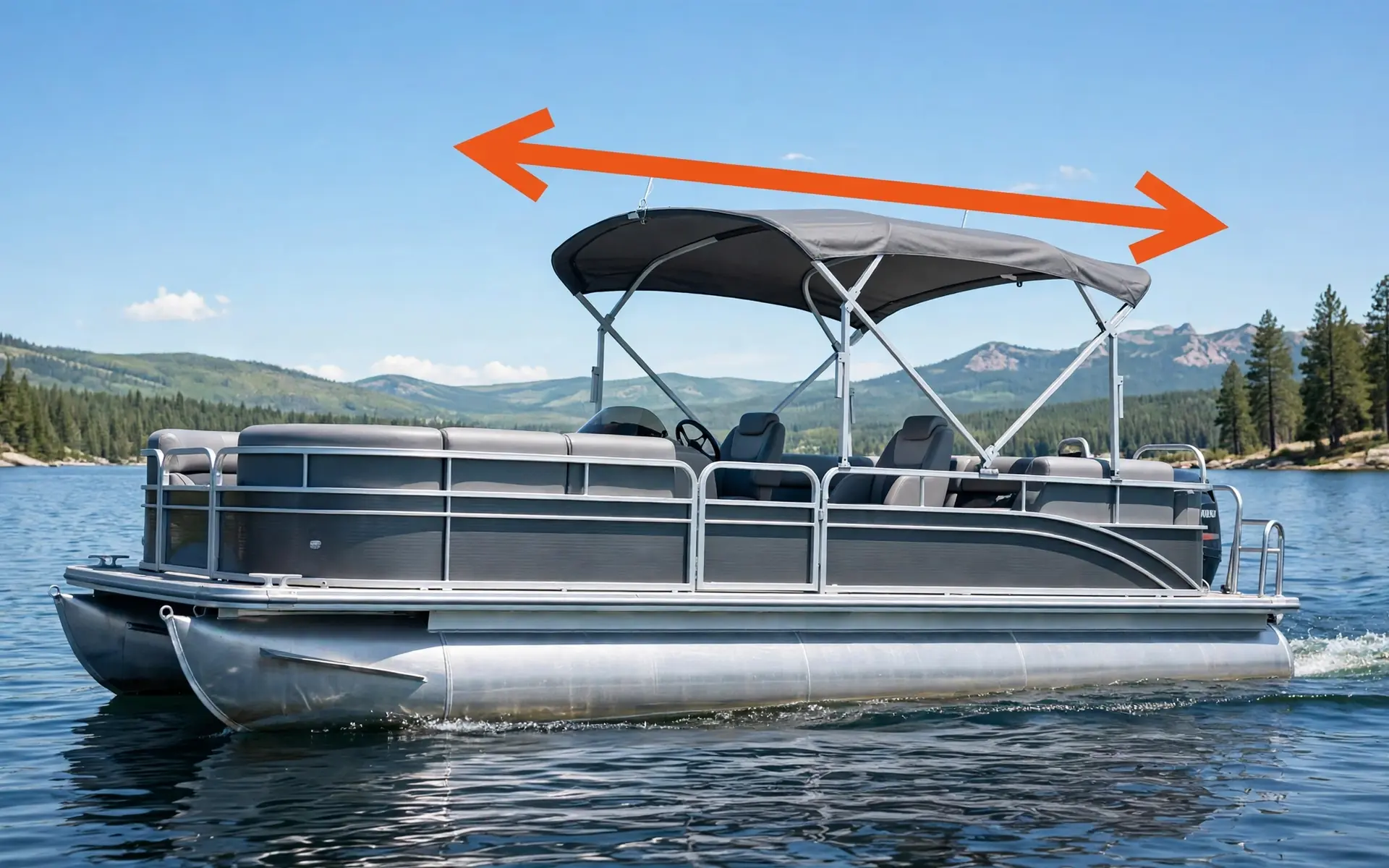
The pontoon is the article's second boat, and the one that puts 25 feet on a lake instead of a slipway. The Bennington 2575 RFI is a 25-foot pontoon boat — the number is in the model name and on the tape — with a beam of 8 feet 6 inches, two 25-inch-diameter tubes, a weight of 2,200 pounds, a 26-gallon fuel tank, and a maximum power of 135 horsepower. boats.com tested the 2575 RFI on Lake Wawasee and printed the specification table with it: length 25 feet, beam 8 feet 6 inches, tube diameter 2 feet 1 inch, two tubes, 26 gallons of fuel. Step aboard at the bow and walk to the stern and you have walked 25 feet — the same on every 2575 RFI ever sold, because the deck is the product.
The fitting check is the tube, because the pontoon's 25 feet is its deck length and the thing people misjudge is the motor: measure to the end of the outboard and the boat reads longer than 25 feet, and measure the trailer tongue to the propeller and it reads longer still — but the boat itself, bow to stern, is 25 feet. A slip bought against "25 feet" for this boat fits on the deck length, because the motor hangs off the stern and the trailer is not the boat. The guides that call a pontoon "22 to 28 feet" are right about the class and wrong about the model — this model is 25 feet, not a range with 25 in it. The grade is listed because the figure is the tester's published specification table for the named model, with the deviation printed in full: 25 feet, 0 inches of miss, 8 feet 6 inches of beam. Measure the deck before you measure the trailer, because the pontoon is the object in this article you float on.
6. A Winnebago View 24D Class C Motorhome — 25 Ft 8 In Long (LISTED)
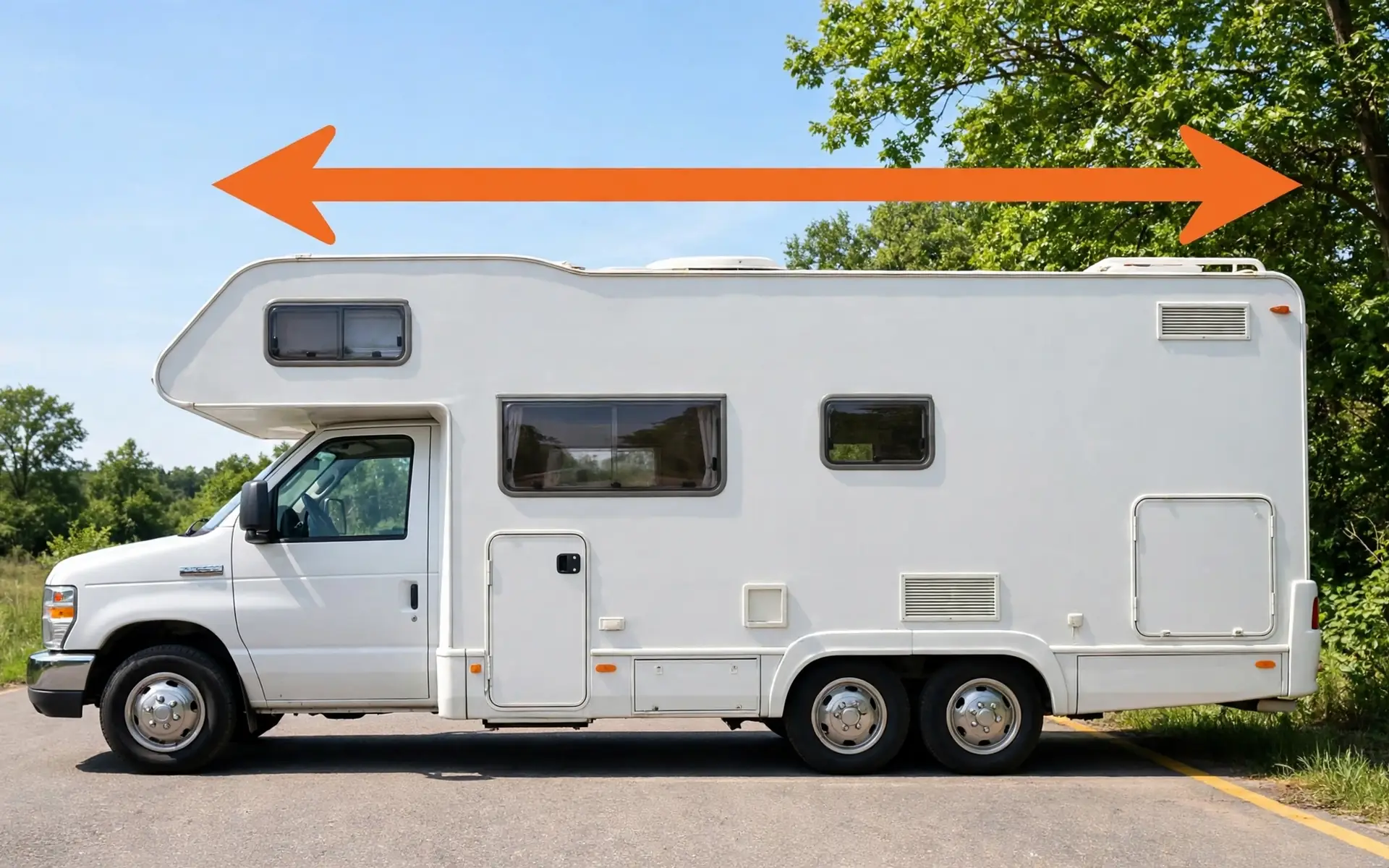
The motorhome is the article's only overshoot, and the one that closes the list eight inches past the number — with a name that says 24. The Winnebago View 24D is the most famous "24" motorhome there is, and its own specification sheet lists its length at 25 feet 8 inches — the same sheet that lists the 24R and the 24T at the same figure. The "24" is a floorplan code, not a measurement, and the tape says 25 feet 8 inches: eight inches longer than the number in this article's title, and a foot and eight inches longer than the number in its own name. Drive it from bumper to bumper and you have driven 25 feet 8 inches — the same on every 24D ever built, because the chassis is the product.
The fitting check is the bumper, because the motorhome's extra eight inches live in the bodywork past the wheels, and the thing people misjudge is the name: a campsite bought against "24 feet" for this motorhome fails by eight inches, and a garage bought against "25 feet" fails by the same eight inches in the other direction, because the name is not the tape. The guides that call the View 24D "a 24-foot motorhome" and the guides that call it "a 25-foot motorhome" are both rounding, and both are wrong by the same eight inches in opposite directions — which is why the eight inches are printed here instead of rounded away. The grade is listed because the figure is the maker's own specification sheet for the named model, with the deviation printed in full: 25 feet 8 inches, eight inches over. Measure the bumper before you measure the campsite, because the motorhome is the object in this article you drive — and the one whose name lies twice.
Six Numbers the Other Lists Get Wrong
Six wrong numbers about 25 feet circulate so widely that they deserve their own section, because each one is stated confidently on a page that ranks for this exact question. First, the 25-foot extension ladder: several popular guides say a 25-foot extension ladder is a standard size, and the maker's own size list runs 16, 20, 24, 28, 32 and 40 feet — there is no 25-foot extension ladder in the range, and a 28-foot ladder reaches 27 feet, not 25. Second, the 20-foot container plus chassis: one popular guide says a 20-foot container on a chassis measures about 25 feet, and a 20-foot container is 20 feet — the chassis is not the container, and the tongue is not the box, which is the same trap as the motorhome's name. Third, the killer whale: another guide says adult male orcas reach 23 to 26 feet, and males do span 20 to 26 feet — a range, not a figure, and no authority lists a 25-foot orca, so the guide is describing the middle of a range and calling it a measurement. Fourth, the volleyball court: another guide says a volleyball court is about 25 feet wide, and a regulation court is 29.5 feet wide — four and a half feet longer — and calling 25 feet "a workable playing area" does not make it the court's width. Fifth, the trucks that round down: another guide says half a 53-foot semi-trailer is "nearly identical" to 25 feet, and half of 53 is 26.5 feet, a foot and a half over, and the same guide's 26-foot box truck carries a cargo box 26 feet 2 inches long inside — a foot over, rounded down to 25 by the name on the door. Sixth, the sedans: another guide says two sedans parked end to end are 25 feet, and its own sedan length is 14 to 16 feet, so two sedans are about 30 feet — five feet over — and two and a half cars are 35 to 40 feet, which is a fraction, not an object. None of these six numbers belongs in a 25-foot article as an object, and all six are here so you never have to learn that from a purchase.
Pacing 25 Feet With What Is Already Around You
Twenty-five feet is the easiest number in this series to check without a second tool, because the objects in this article are the tools — and the number itself is the check. First, take the tape: a 25-foot tape measure pulled to its end stop is 25 feet by definition, so anchor the hook and walk the blade out, and you are holding 25 feet in your hands. Second, take the steps: the University of Iowa puts the average adult's walking step at 2.5 feet, so take exactly 10 steps and you have walked exactly 25 feet — no shuffle, no rounding, the only number in this series that lands on a whole step count. Third, take the tiles: a standard floor tile is 12 inches square, so count 25 tiles in a straight line and you have counted 25 feet — a check you can do in any shop or hallway. Fourth, take the hose: a 25-foot garden hose laid out straight, spigot to nozzle, is 25 feet end to end — and if it does not reach the far flower bed, the bed is more than 25 feet from the tap. None of these replaces a calibrated tool for anything that must fit, but all four will tell you whether 25 feet is the size you think it is before the motorhome is booked or the flagpole is planted — and the steps are the ones to trust, because ten steps is the smallest miss you can walk.
The 6 Objects at a Glance
| Object | Figure | Miss vs 25 ft | Grade |
|---|---|---|---|
| Stanley PowerLock 33-425 tape measure | 25.00 ft blade | 0 | EXACT |
| Flexzilla HFZG525YW garden hose | 25 ft long | 0 | EXACT |
| Eder Flag SS25 flagpole | 25 ft tall | 0 | EXACT |
| MacGregor 25 sailboat | LOA 25.00 ft | 0 / −1 in by builder sheet | LISTED |
| Bennington 2575 RFI pontoon | 25 ft long | 0 | LISTED |
| Winnebago View 24D motorhome | 25 ft 8 in | 8 in over | LISTED |
Twenty-five feet sits on the number the measuring trade is built around, and the table is the proof. Step across the list and the numbers barely move: the tape, the hose and the flagpole at 25 feet exactly, the sailboat at 25 feet on the class figure and an inch short on the builder's sheet, the pontoon at 25 feet, the motorhome eight inches over — and the point of it is the middle: 25 feet has three exact objects behind it that you can pull, water with, and salute, two boats you can sail and float on, and a motorhome you can drive, and every object with a fixed figure sits inside an eight-inch band, which is why 25 feet is a size you can trust to the inch and still call it one number.
How 25 Feet Compares With Other Lengths
Readers comparing nearby sizes may also want the site’s guides to 24 feet, 26 feet, 30 feet, 20 feet, 10 feet, and 9 feet for the foot series, 9 meters and 8 meters for the metre series, and the inches hub and feet hub for the full directories. Each of those guides follows the same rule as this one: the spec sheet, the grade, and the miss printed in full.
Frequently Asked Questions
How many meters is 25 feet?
25 feet is exactly 7.62 meters. Multiply 25 by 0.3048 and you get 7.62 — and the trap is rounding that to 7 meters, which understates the length by 2.03 feet, or to 8 meters, which overstates it by 1.25 feet. For anything that must fit, use 7.62 meters; for a quick estimate in your head, 7.62 meters is close enough to picture it and exact to the centimetre.
How many inches is 25 feet?
300 inches exactly. Multiply 25 by 12 and you get 300, with no rounding at all. In centimetres that is 762 cm, in millimetres it is 7,620 mm, and in yards it is 8 and a third yards — the only one of the conversions in this article that does not come out whole, which is why "300 inches" is the honest shortcut.
How many yards is 25 feet?
Eight and a third yards — 8.33 yards. There are 3 feet in a yard, and 25 divided by 3 is 8 with one foot left over, which is why the yard figure is the awkward one in this article and the metre figure is the clean one: 25 feet is 7.62 metres exactly, but it is never a whole number of yards. For a quick estimate in your head, "a bit more than 8 yards" is close enough to picture it and a third of a yard short.
How many steps does it take to walk 25 feet?
Exactly ten steps, at the average adult's step length. The University of Iowa puts the average walking step at 2.5 feet, so 10 steps cover exactly 25 feet — no shuffle, no rounding, the only number in this series that lands on a whole step count. Nine steps cover 22.5 feet, a foot and a half short, and eleven steps cover 27.5 feet, two and a half feet over, so the honest count is ten.
Is 25 feet the same as 7 meters?
No, and the difference is two whole feet. Seven meters is 22.97 feet, which is 2.03 feet shorter than 25 feet — the length of a workbench. For picturing the length in your head, 7 meters will mislead you by that much; for anything that must fit — a berth, a campsite, a flagpole hole — use 7.62 meters, which is 25 feet to the centimetre.
What common objects are 25 feet long?
The most exact everyday answers are a 25-foot tape measure (25.00-foot blade by the maker's spec), a 25-foot garden hose (25 feet laid straight), and a 25-foot residential flagpole (25 feet assembled). The next closest are a MacGregor 25 sailboat (25.00 feet overall by the class figure, 24 feet 11 inches on the builder's sheet), a Bennington 2575 RFI pontoon boat (25 feet long), and a Class C motorhome (25 feet 8 inches — eight inches over, despite the 24 in its name).
Is a 25-foot tape measure the standard size?
Yes — 25 feet is the standard job-site tape length, and the most common tape in toolboxes. The best-known model is the 25-foot PowerLock, with a 1-inch blade, a 7-foot standout, and a Tru-Zero hook, a size that has been sold since 1963 because 25 feet covers a room, a wall and a garden without a second pull. Shorter tapes exist — 16-foot tapes for pockets, 30-foot and 35-foot tapes for longer runs — but 25 feet is the size the trade settled on.
How long is a Winnebago View 24D?
25 feet 8 inches long, by the maker's own specification sheet — eight inches longer than 25 feet, and a foot and eight inches longer than the 24 in its name. The "24" is a floorplan code, not a measurement, and the same sheet lists the 24R and the 24T at the same 25-foot-8-inch figure. A campsite or garage measured against "24 feet" for this motorhome fails by a foot and eight inches, so measure the bumper, not the badge.
Final Thoughts
Twenty-five feet is the rare measurement that is also the tool you measure it with, because a tape, a hose, a flagpole, two boats and a motorhome can all carry the same number — and the number alone never says which. Now you know it as a blade fixed by its maker, a hose fixed by its length, a pole fixed by its sections, a sailboat fixed by its class, a pontoon fixed by its deck, and a motorhome fixed by its specification sheet — and you know which of those you can trust to the centimetre, which one is an inch short on its builder's own paper, and which one overshoots by eight inches behind a name that says 24. The rule that runs through all six is the same one this site always uses: trust the spec sheet, print the deviation, and let the name stay on the box where it belongs. Measure twice, in the direction the object actually travels, and 25 feet will fit the first time.
