

If you have ever wondered how long is 19 feet, you have probably been handed a stack, a half, or a rounded guess instead of an answer. Nineteen feet is 228 inches — 19 times 12, with nothing to round — and 5.79 metres, or 6 yards and 1 foot. It is longer than a full-size pickup’s short-bed crew cab by a whisker, shorter than a two-story house is tall by a whisker in the other direction, and exactly the length of a one-design sailboat that has been built to the same 19-foot rule since 1957. The trouble with most lists of “things that are 19 feet” is that they cheat: they stack six sticks, halve a tree, or round 5.8 metres into a match that is not there. For the whole series, see the complete feet size guide.
This article does not cheat, and that is why it is organised by deviation rather than by category. Only two of the eight objects below are exactly 19 feet. One is 1.2 inches short, two are 4 inches over, one is 6 inches over, one is a radius 9 inches over, and one is not a number at all but a range that contains 19 feet. Every figure comes from a manufacturer, a class association, or a governing body’s rule book, every deviation is printed in the heading, and every object’s image sits immediately after its heading. By the end you will not just know 19 feet — you will know how far “about 19 feet” is allowed to stray before it stops being true.
Quick Answer
19 feet = 228 inches exactly = 579.12 cm = 5.7912 m (5.79 m rounded) = 6 yards 1 foot. Do NOT round a 5.8-metre car into “19 feet” — the precise figure is 18 feet 10.8 inches — and do NOT trust a “20-foot” label either, since a nominal 20-foot container is only 19 feet 4 inches inside.
The Deviation Ladder: All Eight Objects, Closest First
Before the objects, here is the whole article on one ladder, so you can see the shape of the evidence before you meet any single object. Exactness is rare at 19 feet, and the near-misses cluster just past the mark — which is exactly why a garage, a trailer bay, or a parking space planned at “about 19 feet” so often fails by inches.
| Object | Figure | Deviation from 19 feet | Grade |
|---|---|---|---|
| Flying Scot sailboat | 19 ft 0 in | 0 | EXACT |
| Epic V8 Pro surfski | 19 ft 0 in | 0 | LISTED |
| Rolls-Royce Boat Tail | 18 ft 10.8 in | 1.2 in short | LISTED |
| Boston Whaler 190 Montauk | 19 ft 4 in | 4 in over | LISTED |
| Ford F-150 SuperCrew, 5.5-ft bed | 19 ft 4 in | 4 in over | LISTED |
| Escape 19 travel trailer | 19 ft 6 in | 6 in over | LISTED |
| High-school 3-point arc | 19 ft 9 in radius | 9 in over (radius) | LISTED |
| Typical two-story house | 18–20 ft tall | 19 ft inside range | AVERAGE |
Two lessons fall out of the ladder before any object is described. First, the two objects that share a deviation — the boat and the pickup, both 4 inches over — got there by completely different routes, a hull measured bow to stern and a truck measured bumper to bumper, so a shared deviation is not a shared object. Second, the two “exact” objects are exact in different ways: one is fixed by class rules that forbid changing the hull, the other is a manufacturer’s listed length for a single model. Exactness always has a source, and this article names it every time.
1. Flying Scot Sailboat — Exactly 19 Feet Long (EXACT)
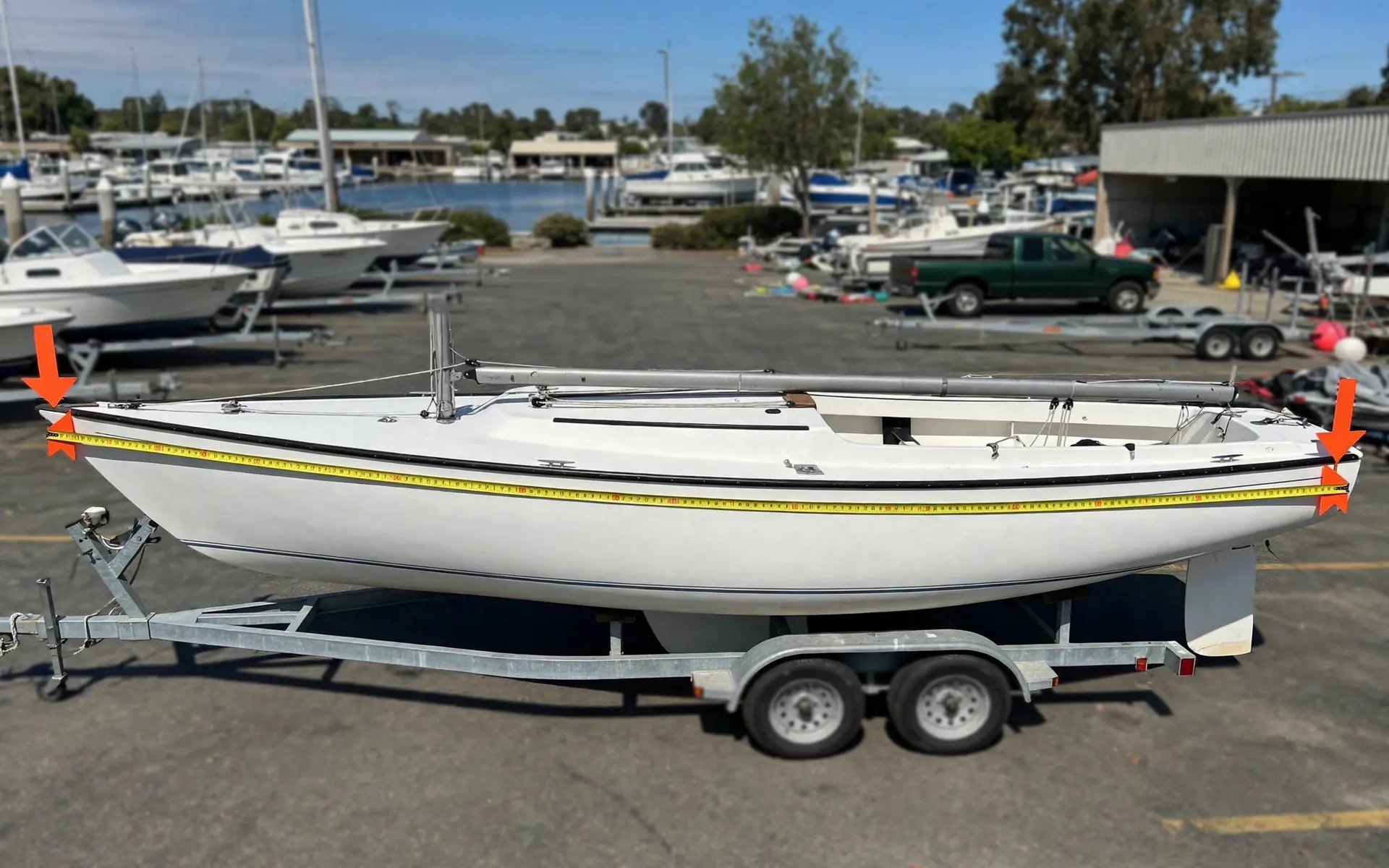
The Flying Scot is the article’s anchor, because its 19 feet is not a coincidence but a rule. The class association’s press kit gives the boat length as 19 feet, with a waterline of 18 feet 6 inches and a beam of 6 feet 9 inches, and because the Scot is a strict one-design class, every boat built since 1957 measures the same: the hulls come from the same moulds, the class rules forbid changes that would make older boats obsolete, and more than 6,100 have been built. A Flying Scot is therefore 19 feet in the way a ruler is 12 inches — by definition, not by luck.
That distinction matters when you picture it. The Scot is a centreboard daysailer with a cockpit big enough for a family, a mast 28 feet above the water, and a trailering weight of about 1,200 pounds, so it is towable behind most larger vehicles — but the trailer, the mast, and the rudder all add length beyond the hull, and none of them is part of the 19 feet. Quote the hull at 19 feet, measure the rig separately, and never let a “19-foot boat” headline smuggle the trailer into the measurement. Here, the headline is the hull, and the hull is exactly 19 feet.
2. Epic V8 Pro Surfski — Exactly 19 Feet Long (LISTED)
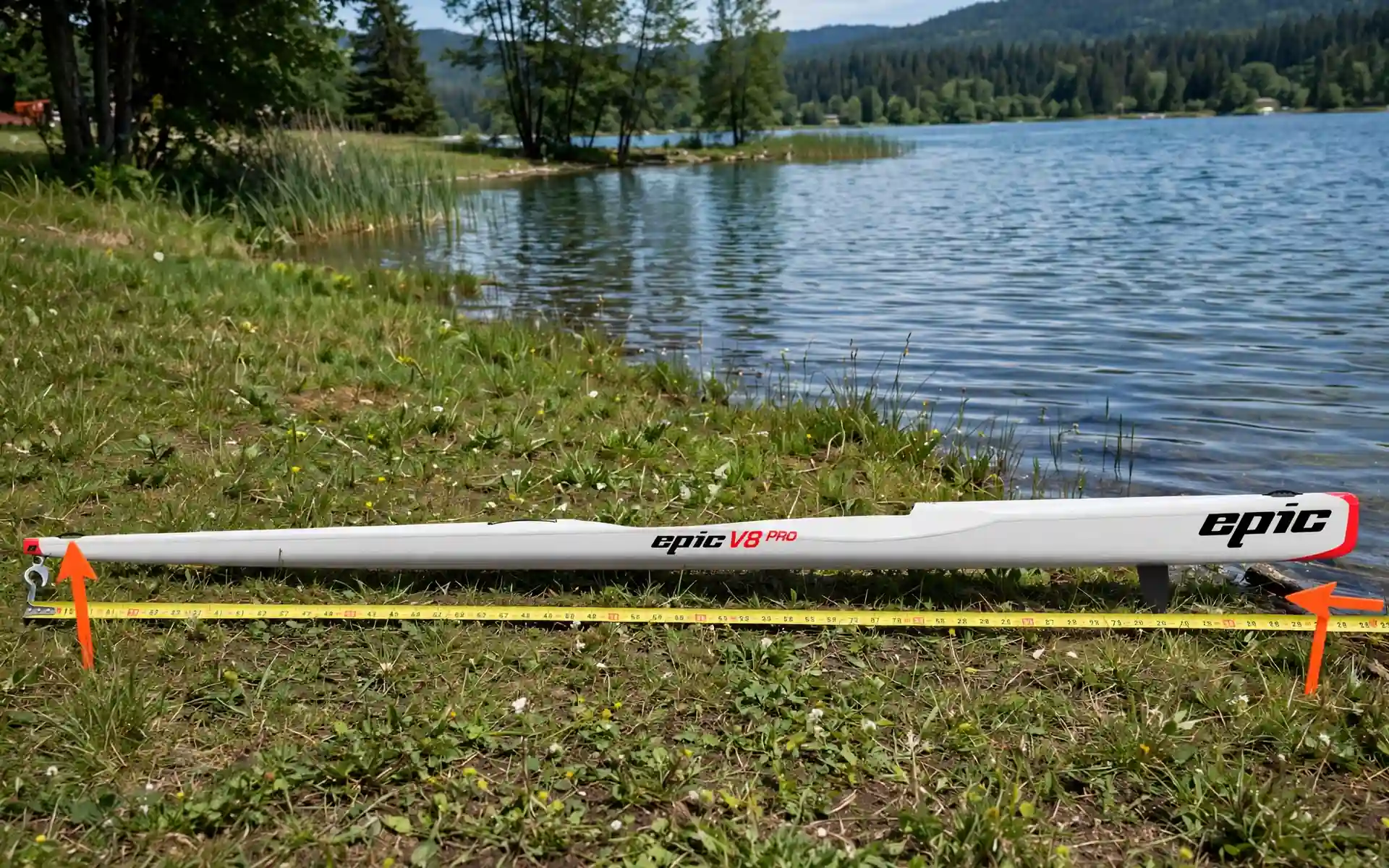
The surfski is the sailboat’s paddling twin: another long, narrow hull whose whole purpose is speed on open water, and another exact 19 feet. A spec listing gives the V8 Pro’s length as 19 feet, with a beam of 19.9 inches, and the model sits one foot longer than the standard V8 it was developed from — which is why the “Pro” in the name is also a measurement warning. Buy the V8 and you get 18 feet; buy the V8 Pro and you get 19 feet, and the single foot between them is the difference between a stable beginner hull and a sleeker intermediate one.
The grade here is LISTED rather than EXACT for an honest reason: the V8 Pro is a 2016-era design and its length is confirmed by a dealer spec listing rather than the maker’s current catalogue, so this article prints the figure as listed, not as class-rule law. That is still a far stronger claim than “a kayak is about 19 feet,” because it names one model, one length, and one source — and because a 19-foot surfski on a roof rack needs 19 feet of bar, plus the overhang you allow at each end, exactly as the sailboat does. Two exact objects, two different waters, one identical discipline: name the model, print the figure.
3. Rolls-Royce Boat Tail — 18 Feet 10.8 Inches, 1.2 Inches Short (LISTED)
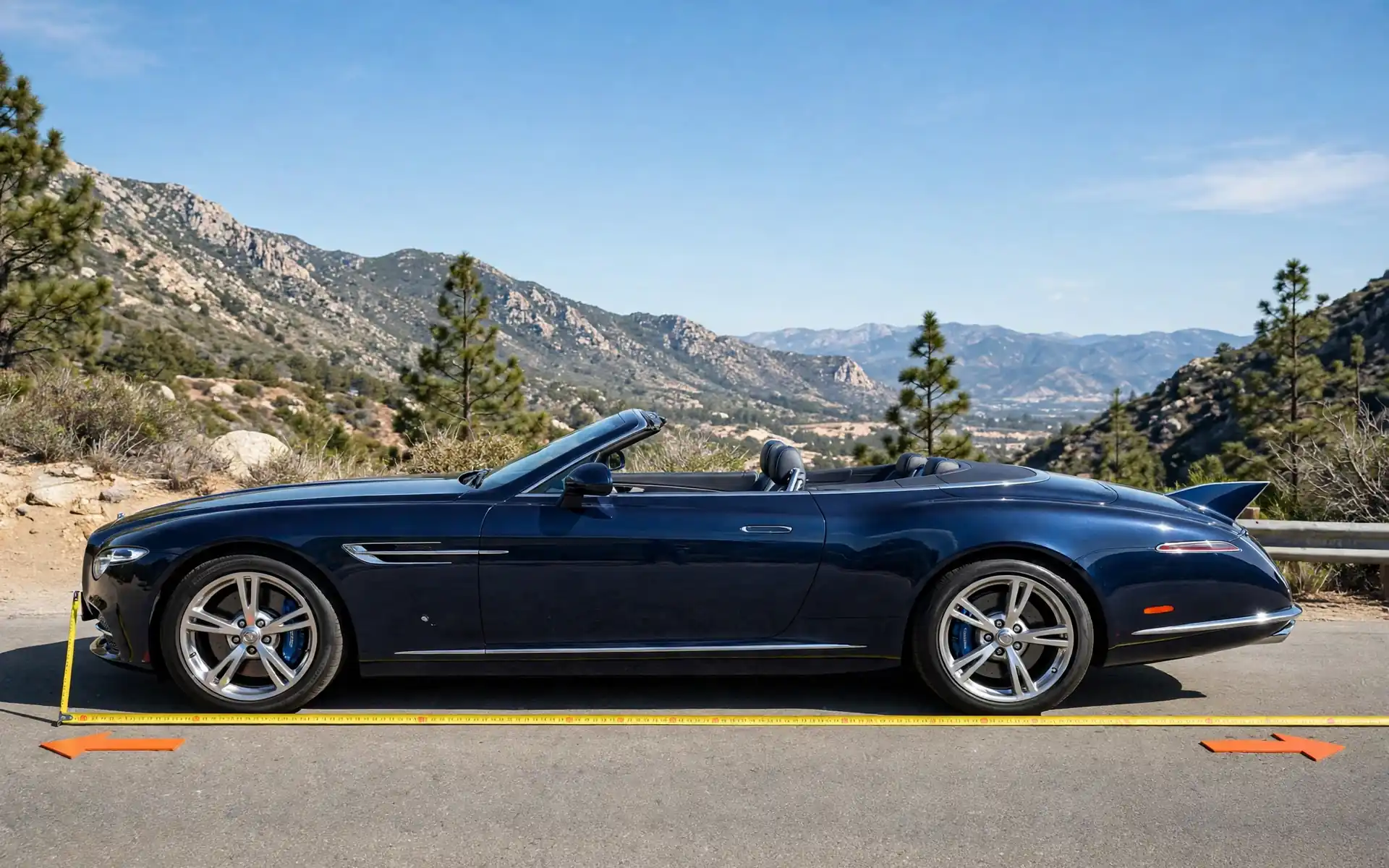
The Boat Tail is the article’s most expensive correction, and its whole value is in 1.2 inches. A rival list prints this coachbuilt grand tourer at “5.8 metres or 19.03 feet,” and that figure is wrong in a way that only rounding can produce: the precise spec table lists the Boat Tail’s length at 5,760 millimetres, which is 226.8 inches, which is 18 feet 10.8 inches — 1.2 inches short of 19 feet, not a fraction past it. The manufacturer’s own press language says “nearly 5.8 metres,” and “nearly” is doing real work there; round it to 5.8 metres, convert, and you invent 0.03 feet that the car does not have.
That 1.2 inches is also a lesson about luxury cars as yardsticks. Only three Boat Tails exist, each coachbuilt by hand over nearly four years, so almost nobody will ever stand next to one with a tape measure — which is precisely why a list can get away with rounding it. This article does not: the Boat Tail is a near-miss from below, the only object on the ladder that falls short, and it earns its place by proving that “about 19 feet” can fail on either side of the mark. If a list tells you a car “is 19 feet” from a metric figure, ask for the millimetres before you believe it.
4. Boston Whaler 190 Montauk — 19 Feet 4 Inches, 4 Inches Over (LISTED)
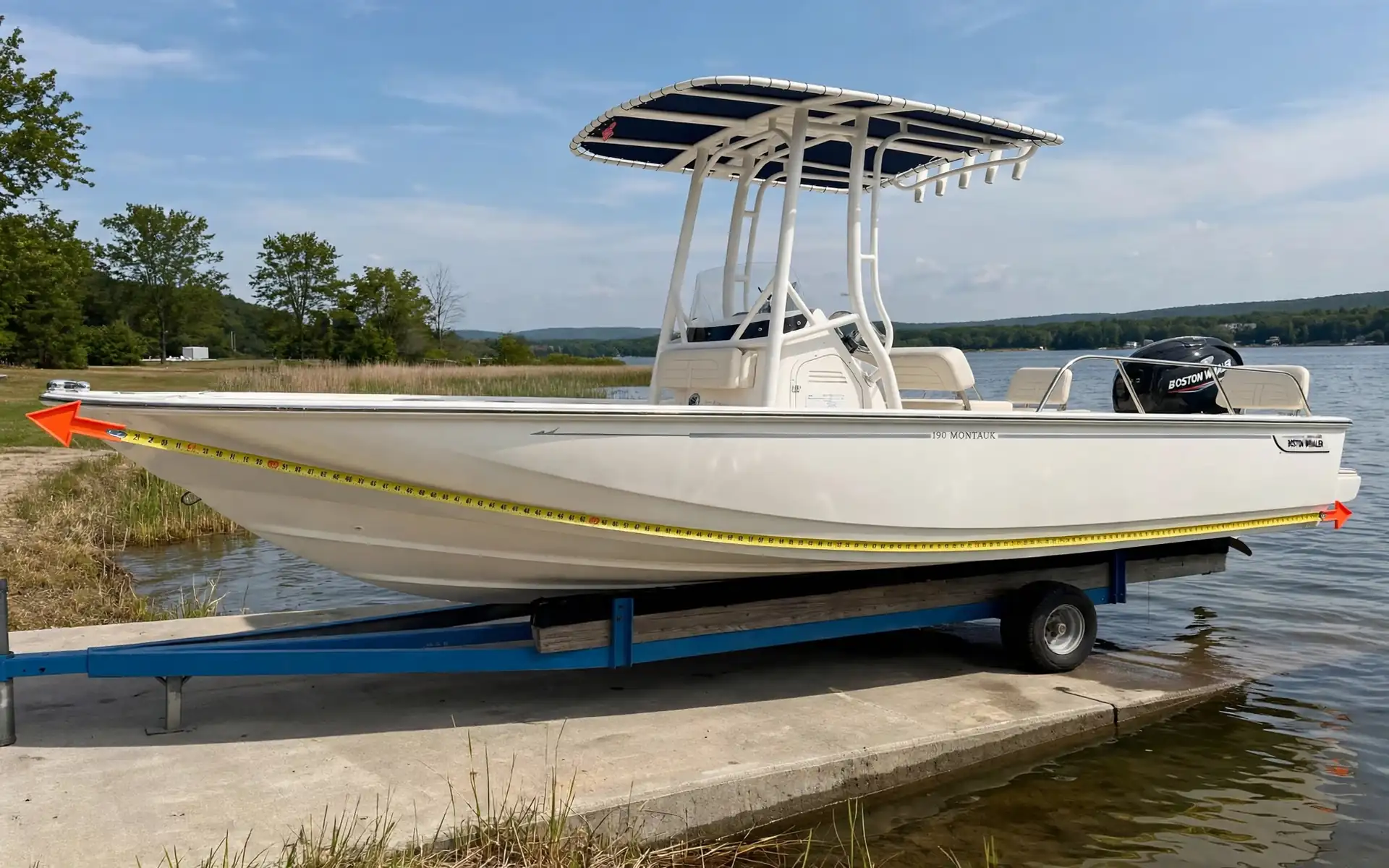
The Montauk is the article’s working boat, and its 4 inches are the most practical in the article. The manufacturer’s configurator lists the 190 Montauk’s length overall at 19 feet 4 inches, with an 8-foot beam and a 13-inch draft, and the model name itself is the trap: “190” sounds like 19 feet 0 inches, and the boat is marketed as a 19-foot fishing boat, but the measured hull is 19 feet 4 inches. Older sheets and dealer shorthand round it down to “19 feet,” and the rounding survives because four inches feels too small to matter — until it meets a garage bay, a boathouse slot, or a trailer bunk planned at exactly 19 feet.
Four inches matters differently on water than on land. On a trailer, the package grows again: the boat on its trailer with the engine up measures far longer than the hull alone, and the configurator’s own package dimensions run past 23 feet. So there are three numbers for this boat, and only one of them is 19 feet 4 inches — the hull, bow to stern, engine excluded. Plan storage against the package, plan the waterline against the hull, and never let a model number do the measuring for you.
5. Ford F-150 SuperCrew, 5.5-Foot Bed — 19 Feet 4 Inches, 4 Inches Over (LISTED)
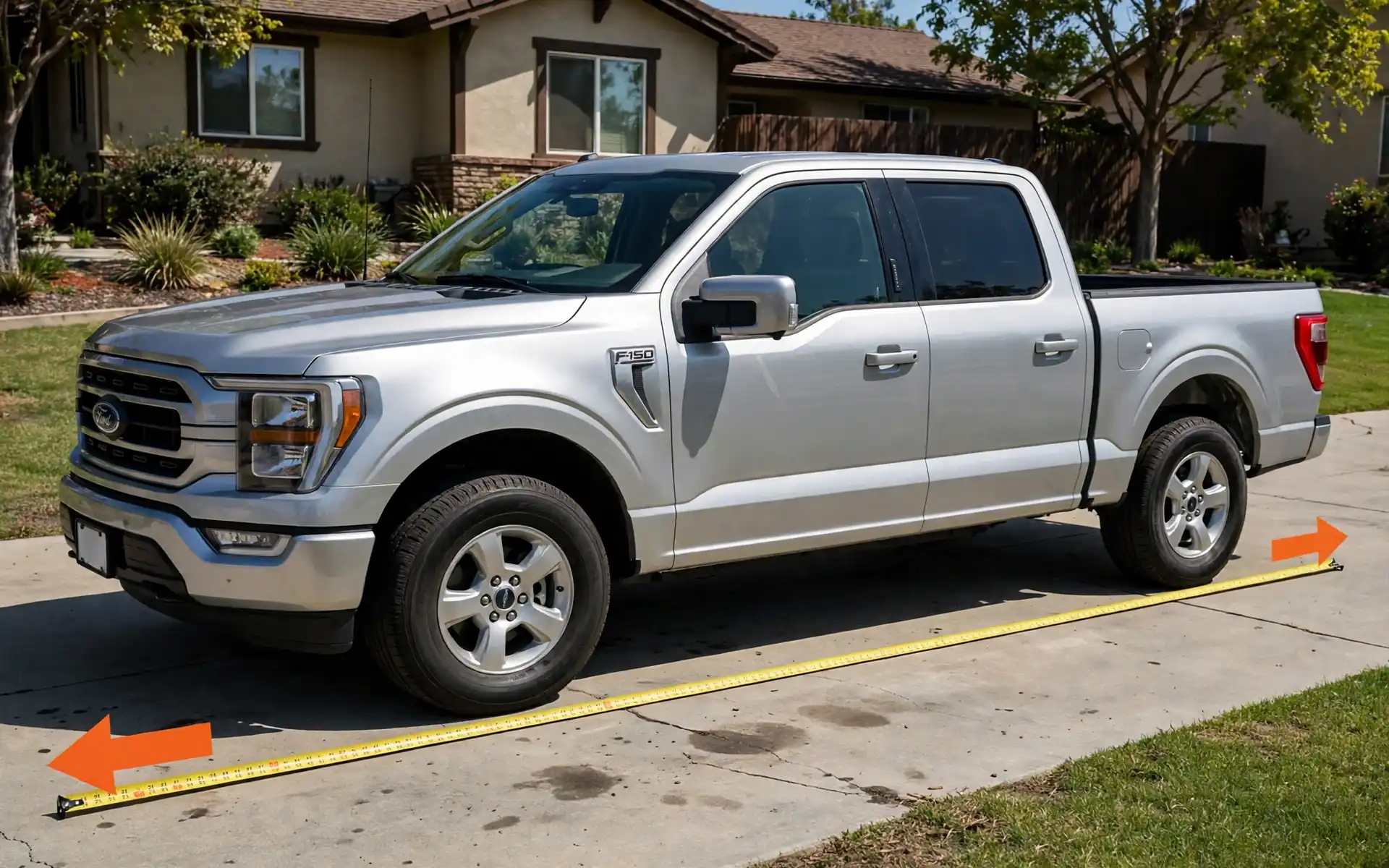
The pickup shares the boat’s deviation and nothing else, which is why the two sit side by side on the ladder. Current spec listings give the SuperCrew 5.5-foot bed an overall length of 232.0 inches, which is 19 feet 4 inches — four inches past 19 feet, bumper to bumper, mirrors excluded — while the 2021 sheet gave 231.7 inches, or 19 feet 3.7 inches, for the same configuration. The truck did not shrink or grow between sheets by any amount a driver would notice; the spec was revised by three-tenths of an inch, and this article uses the current 232.0-inch figure with the older one noted, because a parking decision made on 231.7 inches and a parking decision made on 232.0 inches are the same decision.
The buying rule is the same as the boat’s, applied to a driveway: a 19-foot parking bay does not fit a 19-foot-4-inch truck, and a garage planned at exactly 19 feet deep leaves the tailgate or the bumper outside. Note also what this object is not: it is not the SuperCrew with the 6.5-foot bed, which runs about 243.8 inches — over 20 feet — and it is not the SuperCab, which shares the 232.0-inch length but gives the extra inches to the bed instead of the cab. Cab plus bed together set the number, and changing either changes the truck.
6. Escape 19 Travel Trailer — 19 Feet 6 Inches, 6 Inches Over (LISTED)

The trailer is the article’s small-home yardstick, and its 6 inches are the most expensive in the article for a camper. The manufacturer page lists the E19 at 19 feet 6 inches long, 7 feet wide, and 8 feet 1 inch high, with a dry weight around 3,250 pounds — a complete fibreglass home, bed, kitchen, and bathroom included, in a shell half a foot past the mark. The model name says “19” and the shell says “19 feet 6 inches,” and the difference is the whole story for campsites: a site that promises “up to 19 feet” does not fit this trailer, and a storage bay built at 19 feet leaves six inches of trailer in the driveway.
Moulded-fibreglass makers quote total length, hitch included in the convention, which is one reason their numbers run longer than stick-built trailers whose model numbers often describe the cabin alone. The lesson generalises: never compare a model number with a measured length across construction types, and never book a site, a bay, or a tow against a model number at all. Measure the trailer you own, in the configuration you tow it — spare tyre, hitch, and storage box included — and let 19 feet 6 inches be the number you plan against, not the “19” on the badge.
7. High-School Basketball Three-Point Arc — 19 Feet 9 Inches Radius, 9 Inches Over (LISTED)

The three-point arc is the article’s only object that is not a length at all, and that is why it is here: it teaches the difference between a length and a radius, which most lists never mention. The governing rule draws the arc at a radius of 19 feet 9 inches from the point on the floor directly below the centre of the basket, and that radius is a distance from a point to a line, not a thing you can pick up. Stand at the basket, walk 19 feet 9 inches in any direction on the court, and you are standing on the arc; the arc itself, running around the basket, is far longer than 19 feet 9 inches, and anyone who calls the arc “19 feet long” has confused a radius with a perimeter.
The arc is also the article’s best at-home measuring tool, and the only object you can draw with chalk and a string. Fix one end of a 19-foot-9-inch string at the basket’s floor point, hold a marker at the other end, and walk the arc: you have marked a distance 9 inches past 19 feet with nothing but string, and the 9 inches become visible as the gap between your arc and a 19-foot mark. Compare it with the college and professional arcs — 22 feet 1.75 inches and 23 feet 9 inches respectively — and the high-school arc is suddenly the shortest three-point line in the sport, and the closest any court marking comes to 19 feet.
8. Typical Two-Story House — 18 to 20 Feet Tall, a Range Containing 19 Feet (AVERAGE)
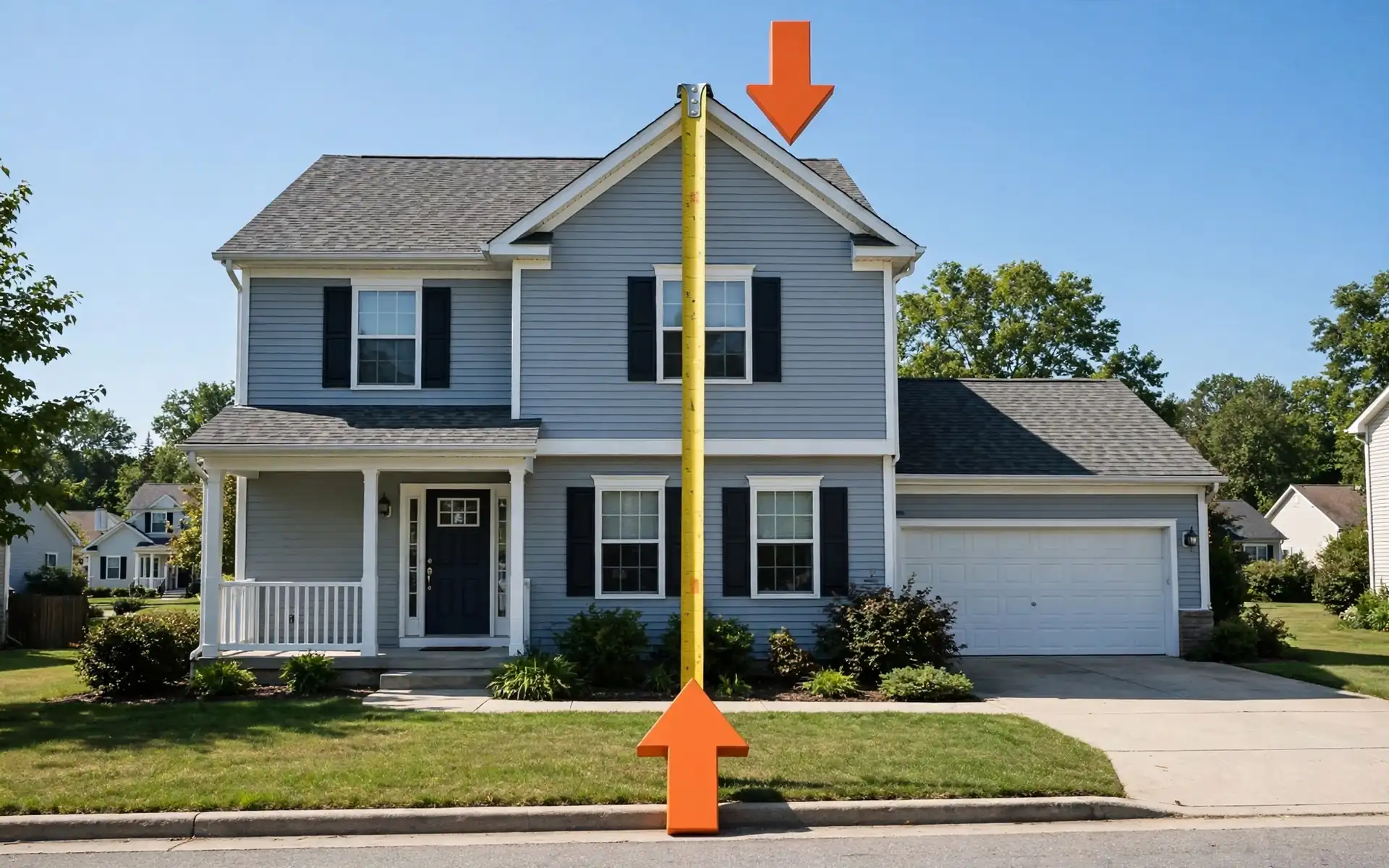
The house is the article’s deliberate anti-object: it is not 19 feet, it has never been 19 feet, and that is the point. Under common UK and US standards a typical two-story building falls between 18 and 20 feet tall, at roughly 9 to 10 feet per story, so 19 feet sits inside the normal range — but no individual house is “19 feet tall” by rule, and roof pitch, foundation height, and ceiling height move any given house across the whole range. A rival list that prints “a 2-story building is 19 feet” has taken the middle of a range and promoted it to a measurement, and this article refuses that promotion.
Used honestly, though, the range is the most familiar scale in the article. Everyone has stood beside a two-story house, and picturing one lying on its side — eaves to foundation stretched along the ground — gives 19 feet a height most readers already own in memory. The discipline is to keep the range attached: say “a two-story house is typically 18 to 20 feet tall, so 19 feet falls inside it,” never “a two-story house is 19 feet tall.” A range used as a range is a fine yardstick; a range quoted as a point is a fiction, and this article’s whole method is the difference between the two.
Will It Fit? Driveways, Garages, and Storage Bays
Nineteen feet behaves differently as a hull, a truck, a trailer, and a radius, and the fitting question changes with each. As a boat or trailer length, 19 feet needs a bay deeper than the object once hitches, motors, and walking space are added — the Montauk at 19 feet 4 inches and the Escape at 19 feet 6 inches both prove that a “19-foot” bay is already too short, and the trailer’s hitch and the boat’s trailer package add feet beyond the hull figures printed here. As a truck length, 19 feet 4 inches means the F-150 sticks out of a tight 19-foot parking bay by four inches plus mirrors, and a garage planned at exactly 19 feet deep is a garage that cannot close its door on this truck. As a house height, 19 feet is a vertical question — a ladder, a paint job, a second-story window — and the range, not the point, decides whether your ladder reaches. Measure the direction the object travels and rests in, add clearance, and compare against the spec-sheet figure for your exact model and year, not the class name or the badge.
Measure 19 Feet With What You Already Own
A standard 25-foot tape measure covers 19 feet directly — stretch it fully, mark 228 inches, and you are done — but the objects above give you three tape-free checks. First, the string-and-basket trick from the three-point arc: 19 feet 9 inches of string from a fixed point marks a radius 9 inches past your target, so shorten it by 9 inches and you have 19 feet. Second, the house trick: stand beside a two-story house and mark its eaves height on the ground, then adjust within the 18-to-20-foot range — if the house is a tall two-story, your mark is past 19 feet; if it is a low one, short. Third, the conversion trap to avoid: a 6-metre board is 19 feet 8.2 inches, about 8 inches past 19 feet, so a “6-metre” product is not a 19-foot substitute, and a 5.8-metre car is 1.2 inches short of it, as the Boat Tail proved. For anything that must fit, use a real tape: at 19 feet, four to nine inches is the whole margin in this article, and guessing throws it away.
Conversion Table
| Unit | 19 feet equals |
|---|---|
| Inches | 228 in exactly |
| Centimetres | 579.12 cm |
| Millimetres | 5,791.2 mm |
| Metres | 5.7912 m (5.79 m rounded) |
| Yards | 6 yd 1 ft (6.333 yd) |
| Compared with 5 metres | 79.12 cm past 5 m |
| Compared with 6 metres | 8.2 in short of 6 m |
| Compared with 18 feet | 12 inches past 18 feet |
| Compared with 20 feet | 12 inches short of 20 feet |
| Square area 19 ft by 19 ft | 361 sq ft |
| Wrong figures to reject | 19.03 ft for the Boat Tail (true: 18 ft 10.8 in); 19.4 ft for a quarter tennis court (true: 19 ft 6 in) |
How 19 Feet Compares With Other Lengths
Nineteen feet is a foot past 18 feet and two feet past 17 feet, and it towers over the inch series — 70 inches is just 5 feet 10 inches. Against the foot series it sits just above 16 feet, 15 feet, 14 feet, 13 feet, 12 feet, and 11 feet, each a full foot or more below it. And one foot longer takes you to 20 feet.
Frequently Asked Questions
How many inches are in 19 feet?
228 inches. Multiply 19 by 12 and you get 228 exactly, with no rounding and no remainder.
How many metres and yards is 19 feet?
5.7912 metres, or 5.79 metres rounded, and 6 yards 1 foot (6.333 yards). Multiply 19 by 0.3048 for metres, and divide by 3 with a 1-foot remainder for yards.
Is 19 feet the same as 6 metres?
No. Six metres is 19 feet 8.2 inches, about 8 inches past 19 feet, so a 6-metre board, pipe, or roll overshoots a 19-foot space. And a 5.8-metre car is 1.2 inches short of 19 feet, not equal to it — rounding in either direction creates a false match.
Will a 19-foot trailer fit in a 20-foot garage or campsite?
Only if the bay is measured against the trailer’s true length, not its badge. The Escape 19 measures 19 feet 6 inches, so it fits a 20-foot bay with six inches to spare before hitch, walking space, and door swing — and it does not fit a site limited to “up to 19 feet” at all. Measure your exact model, hitch included.
Is a Ford F-150 really 19 feet long?
The SuperCrew with the 5.5-foot bed measures 19 feet 4 inches bumper to bumper, so it is four inches past 19 feet, not 19 feet. The SuperCrew with the 6.5-foot bed is longer still, at about 20 feet 4 inches, so cab and bed together decide the answer.
What boat is exactly 19 feet long?
The Flying Scot: a one-design centreboard sailboat whose class rules fix the hull at 19 feet, with an 18-foot-6-inch waterline. The Epic V8 Pro surfski is also listed at exactly 19 feet, and the Boston Whaler 190 Montauk is 19 feet 4 inches — four inches past the mark despite its “190” name.
How far is the high-school three-point line?
19 feet 9 inches from the centre of the basket, measured as a radius to the arc — not as a length along the court. College and professional arcs sit further out, at 22 feet 1.75 inches and 23 feet 9 inches, so the high-school arc is the closest court marking to 19 feet.
How can I measure 19 feet at home without a long tape measure?
Fix a 19-foot-9-inch string at a basket’s floor point and walk the three-point arc, then shorten the string by 9 inches — that is 19 feet. Or pace it as roughly eight relaxed adult steps and check your stride against a known distance. A standard 25-foot tape measure covers 19 feet directly, and for anything that must fit, a real tape is the only honest tool.
Final Thoughts
Nineteen feet is 228 inches, 5.79 metres, and 6 yards 1 foot — and once the arithmetic is right, the objects fall onto a ladder: a sailboat and a surfski exactly at the mark, a coachbuilt car 1.2 inches short, a motorboat and a pickup four inches over, a trailer six inches over, a basketball radius nine inches over, and a two-story house whose normal range simply contains the mark. Eight objects, two exact, five honest near-misses, and one range, each with its dimension named, its deviation printed, and its grade attached. That is what 19 feet looks like when it is measured instead of repeated — and the next time a list tells you something “is 19 feet,” you now know the four questions to ask: how many inches, by whose spec sheet, in which direction, and is it a point, a radius, or a range?
