
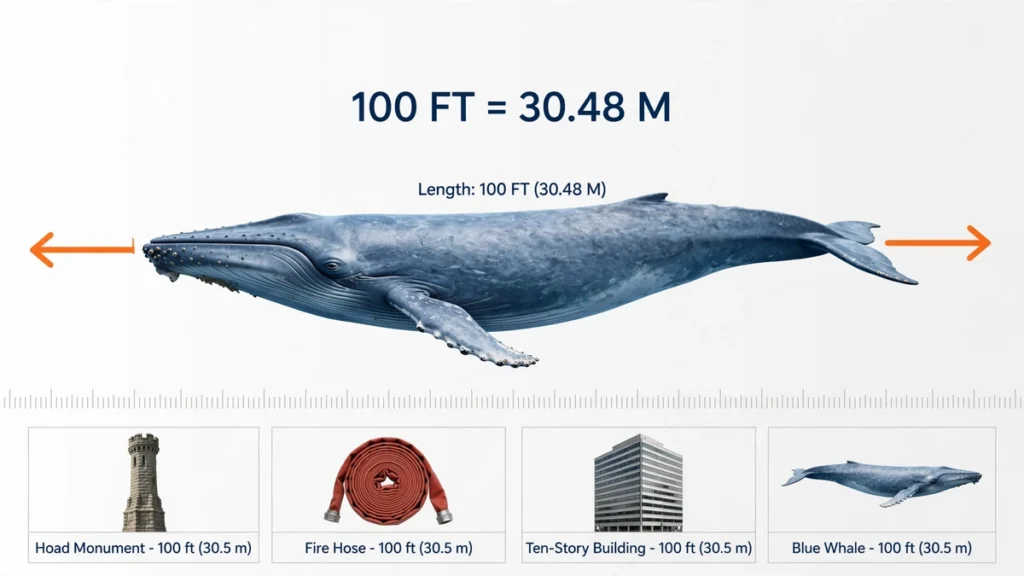
If you have ever wondered how long is 100 feet, the short answer is 30.48 metres — and the longer answer is that 100 feet is the height of a ten-story building, the length of a blue whale, and the exact height of a stone monument in northern England, all at once. A blue whale can grow to about 110 feet, so 100 feet sits inside the largest animal that ever lived. A fire hose comes in standard 100-foot sections because the fire service builds its water supply in hundred-foot lengths. The Sir John Barrow Monument on Hoad Hill is exactly 100 feet tall, not approximately, because it was built to be 100 feet and the surveyors wrote the number down. You do not need three school buses or two-and-a-half of anything to picture 100 feet, because eight single things already are 100 feet, and each one has a specification to prove it.
Below are those eight things, each checked against its own specification, with the miss printed wherever a thing misses. Five of them are exact or listed at 100 feet for the dimension stated, and three are honest near-misses — two inches over, six feet short, and a range that straddles the number — with the miss printed in the heading itself. Every object's image sits immediately after its heading, and no object is a stack, a multiple, a fraction, or a category guess. You will not find five sedans parked bumper to bumper or half a swimming pool here, because a stack of things is not a thing that is 100 feet long — it is addition wearing a trench coat. After the objects comes a section on the job, where 100 feet is a working measurement in the fire service and on the building site, then a section the other lists will not write: ten claims about 100 feet that the internet states confidently and gets wrong, each corrected with the real number. By the end you will know 100 feet as a building, a whale, a monument, a hose, a ladder truck, a tree, an aeroplane, and a basketball court — and you will know which of those you can trust to the foot and which you must measure yourself.
Quick Answer
100 feet is 1,200 inches — 30.48 metres, 33.33 yards, and 3,048 centimetres. But do NOT trust a list that tells you half an Olympic pool is 100 feet: half a 164-foot pool is 82 feet, so the claim is wrong by 18 feet. The eight things below are each checked against their own specification, with the miss printed wherever a thing misses.
100 Feet on the Job
One hundred feet is not only a measurement you picture; it is a measurement people work with every day, because the fire service and the building site both treat 100 feet as a standard unit. A fire crew does not carry a 100-foot hose because the number is round. It carries one because the national hose standard, NFPA 1961, says attack and supply hose is manufactured in 50-foot and 100-foot sections, and a 100-foot section is the longest single length a crew can drag, couple, and charge without a second connection. When a preconnected attack line is pulled off the truck it is usually 50 to 250 feet of coupled sections, and the 100-foot section is the building block inside it — the length the whole lay is counted in. The aerial ladder on a modern tower truck reaches 100 feet straight up for the same reason: the Pierce Ascendant 100-foot tower is named for its vertical reach, and a crew that needs to reach the tenth floor of a burning building needs to know the ladder reaches 100 feet, not 95 and not 105.
The building site uses 100 feet in a different way, as a boundary rather than a reach. Lot lines, setbacks, and easements are commonly drawn in 100-foot increments, so a surveyor's 100-foot tape — the steel tape that unrolls to exactly 100 feet — is the tool the measurement is named after. A builder who hears "one hundred feet" on a site is usually hearing a distance between two stakes, and the stakes are 100 feet apart because the tape is 100 feet long. The ten-story building in this article is the same number from the other direction: at the standard ten feet per story, ten floors is 100 feet, which is why the fire service's 100-foot ladder and the builder's ten-story building meet at the same height. The code itself sets only a minimum ceiling height of 7 feet 6 inches and prescribes no floor-to-floor height, so 10 feet per story is a rule of thumb, not a requirement — and a list that says the code "sets" it is wrong about the code and the building.
The 8 Things That Are 100 Feet
Each object below carries its evidence grade in the heading. EXACT means the figure is a standard's or an authority's own dimension for the named thing. LISTED means the figure is the manufacturer's or operator's published specification for the named model. AVERAGE means the figure is a published average or a standard rule of thumb, with the honest range printed beside it. REPORTED means the figure is a published estimate from a named authority, with the range behind it printed beside it. The grade is the whole point: a list that never grades its numbers is asking you to trust it, and this article would rather show you the receipt.
1. A Ten-Story Building — About 100 Feet Tall (AVERAGE)
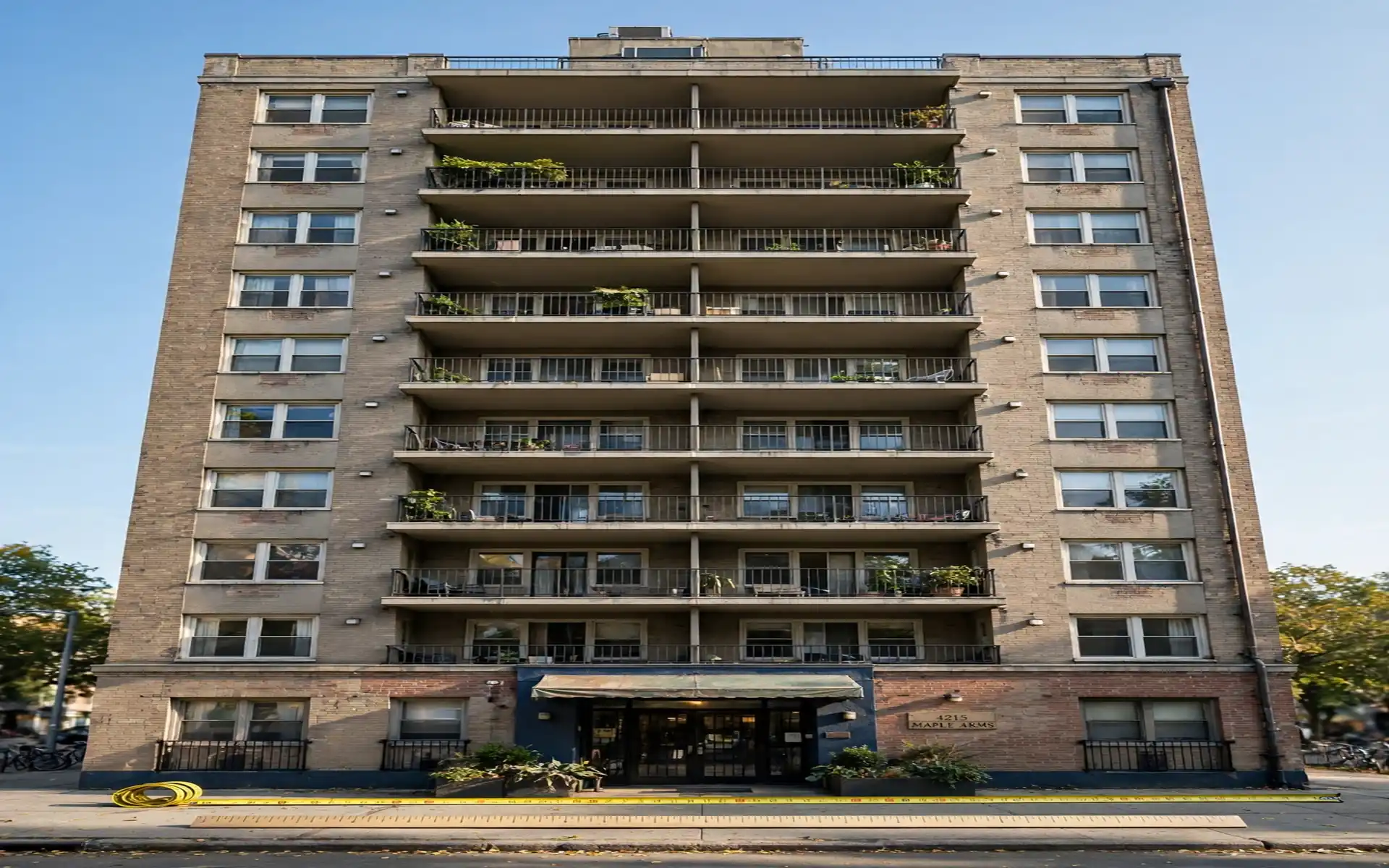
The ten-story building is the article's most useful average, because it is the one you can count from the street. The standard rule of thumb in construction is about 10 feet per story — residential buildings usually run 9 to 10 feet per floor, commercial buildings 10 to 14 feet — so ten stories at 10 feet each is 100 feet. That is the figure every rival list uses, and it is the figure this article uses too, with one difference: the range is printed beside it. A ten-story residential block is about 100 feet tall. A ten-story commercial building, with taller ceilings and deeper floor slabs, can run 100 to 140 feet or more. The 10-foot rule is a rule of thumb, not a building code, and the grade says so: AVERAGE, with the honest range 100 to 140 feet for commercial buildings printed beside the 100-foot residential figure.
The fitting check is the ground floor, because the first story is almost always taller than the rest. Lobbies, shopfronts, and entrances commonly add two to four feet to the ground floor, and the roof — parapet, plant room, lift housing — adds more on top. So a real ten-story building measured from the pavement to the top of the parapet is often 102 to 106 feet, not 100, and the 100-foot figure is the floor-to-floor sum rather than the building's full height. Count ten floors on the block outside your window, and you are looking at about 100 feet — give or take a lobby, and give or take a roof.
2. A Blue Whale — 90 to 110 Feet, So 100 Feet Is Inside the Range (REPORTED)

The blue whale is the article's largest 100 feet, because 100 feet is not the size of any one whale — it is a length inside the range of the largest animal that ever lived. The American federal fisheries service states it plainly on its current page: blue whales in the North Atlantic and North Pacific can grow up to about 90 feet, and Antarctic blue whales can reach up to about 110 feet. So 100 feet sits inside the species range, between the northern animals and the Antarctic giants, and the older figure of 98 to 100 feet for the largest verified females is where the 100-foot number in the rival lists comes from. The blue whale is the largest animal ever to have lived — larger than any dinosaur — which is why it belongs in this article and the fin whale belongs in the previous one: the two largest animals alive are 80 feet and 100 feet, one article apart.
The fitting check is the ocean, because where a blue whale lives changes how long it grows. Northern animals run up to about 90 feet and Antarctic animals up to about 110 feet, with females slightly larger than males, so a big Antarctic female can be nearly 20 feet longer than the 100-foot middle, and a small northern male can be 10 feet shorter. None of that makes the 100-foot figure wrong. It makes it a range, and the grade says so: REPORTED, with the range 90 to 110 feet printed beside it. The rival lists get this one wrong in the other direction: they call 100 feet the ceiling — "up to 100 feet" — and the current fisheries page says the ceiling is about 110 feet, so 100 feet understates the maximum by ten feet.
3. The Hoad Monument — Exactly 100 Feet Tall (EXACT)
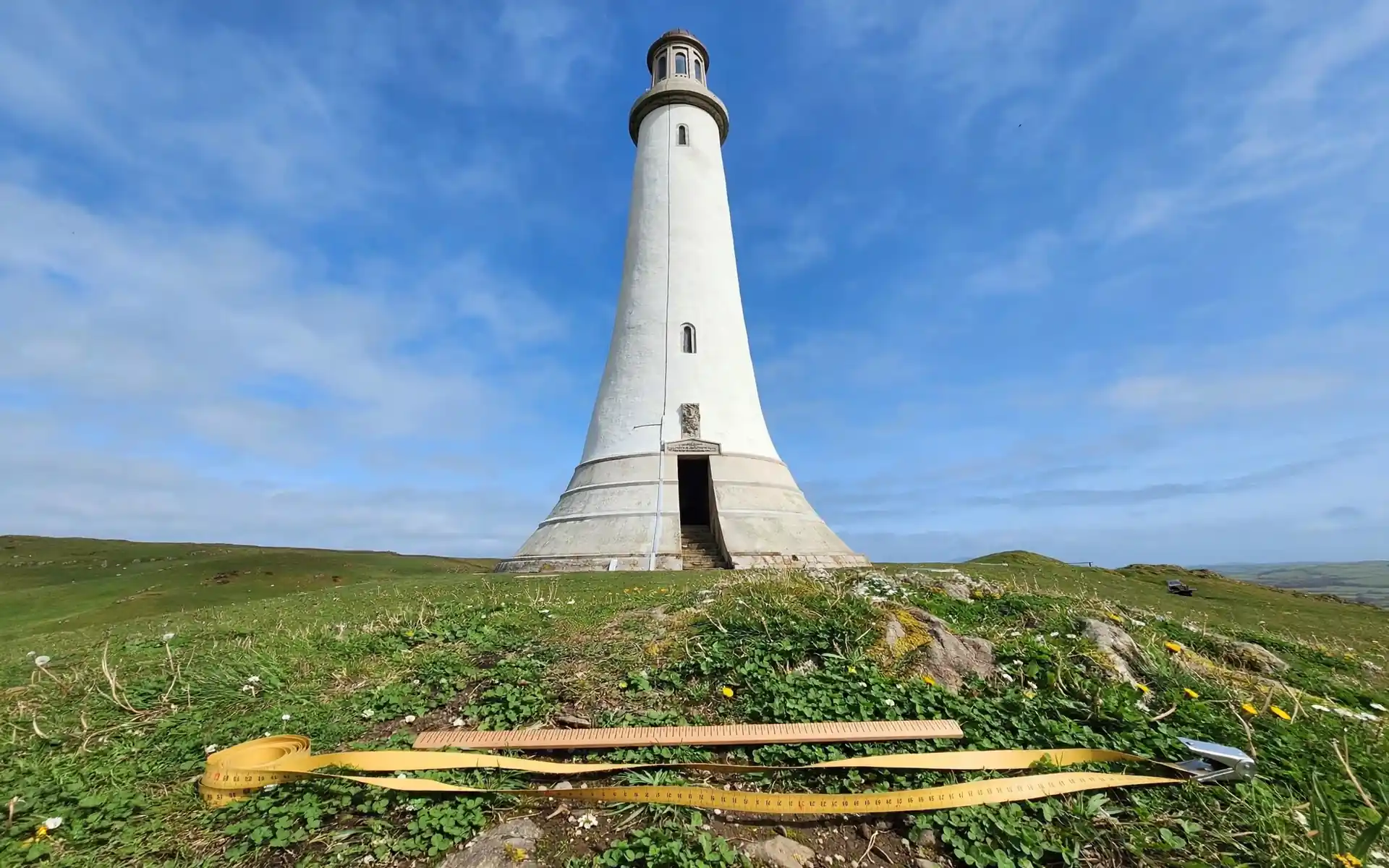
The Hoad Monument is the article's most exact 100 feet, because it was built to be 100 feet and the number is written in its listing. The Sir John Barrow Monument, the stone tower on Hoad Hill above Ulverston in Cumbria, is a Grade II* listed building raised in 1850, and its total height is exactly 100 feet — the figure is stated concordantly by the local heritage guides, which call it "a 100-foot (30 m) tower" and note that "the total height of the monument is exactly 100 feet". It is a replica of the Eddystone Lighthouse, built as a memorial to Sir John Barrow, and it has a 112-step spiral staircase inside that climbs the full 100 feet to the viewing platform at the top. The monument is 100 feet because its builders built it 100 feet tall, and the listing is the receipt.
The fitting check is the name, because the hill and the monument are easy to confuse. "Hoad" is the hill; the monument is the Sir John Barrow Monument, and a list that calls the whole thing "Hoad Monument" is using the local shorthand, not the formal name. The tower never had a functional light, despite copying a lighthouse — it is a memorial that looks like a lighthouse, not a lighthouse that happens to be a memorial — and the 100 feet is its height from the ground to the top of the lantern room, not the height of the hill it stands on. The grade is exact because the figure is the listed building's own dimension for this named tower: 100 feet, not approximately, and the one number in this article that needs no range beside it.
4. A Fire Hose — 100 Feet, the Standard Section (LISTED)
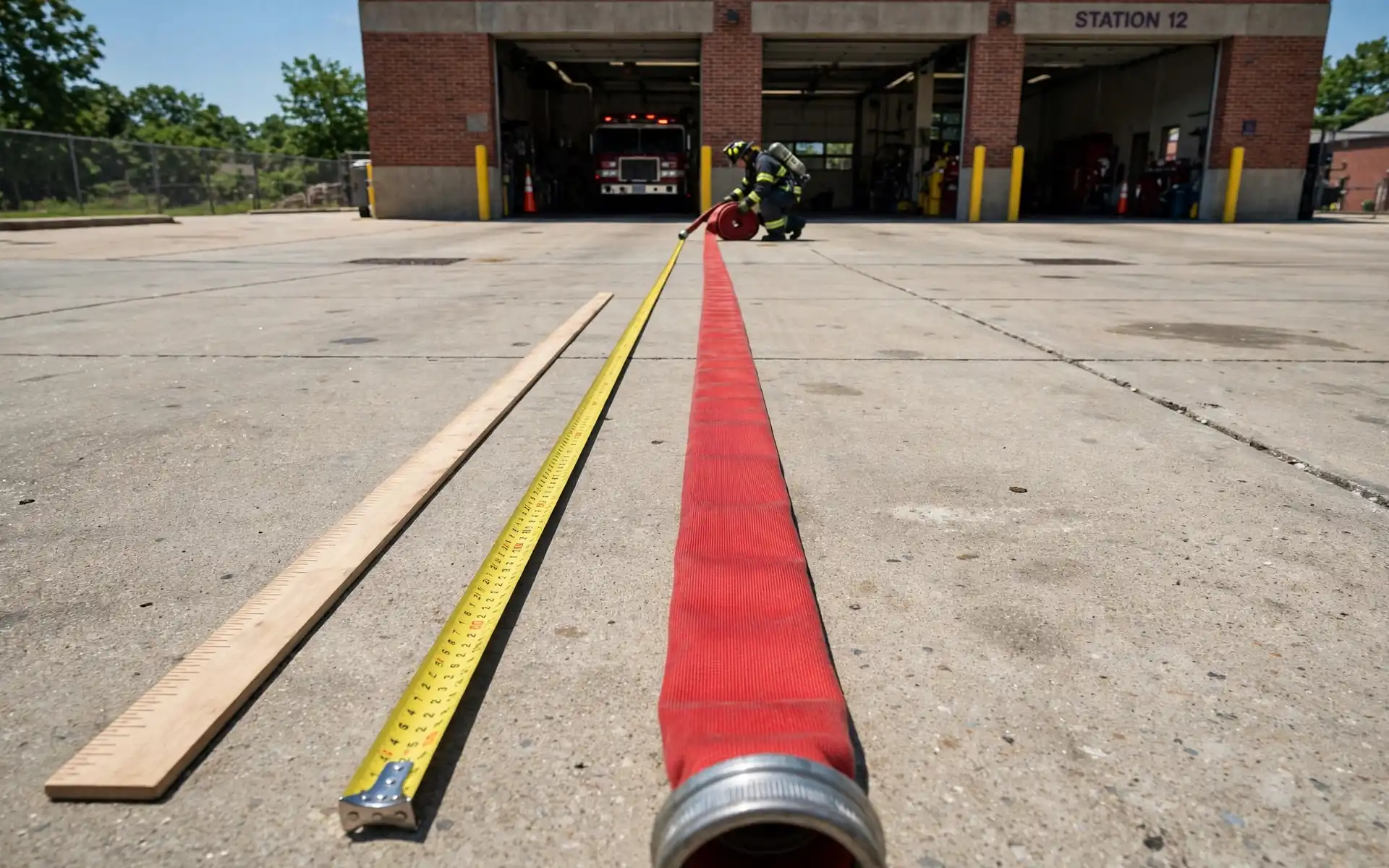
The fire hose is the article's most practical 100 feet, because it is a length the fire service buys, stocks, and counts in hundred-foot units. The national hose standard, NFPA 1961, says attack and supply hose is manufactured in 50-foot (15-metre) or 100-foot (30-metre) sections, and a single standard section unrolled on the ground is exactly 100 feet long. Departments order hose in those lengths — the suppliers list "50 foot / 100 foot" as the order options — and a crew that needs 200 feet of line couples two 100-foot sections together, not one 200-foot hose, because no single section is longer than 100 feet. The hose is 100 feet because the standard says so, and the standard says so because a 100-foot section is the longest length a crew can drag, couple, and charge without a second connection.
The fitting check is the lay, because a 100-foot section is the building block, not the whole hose lay. Preconnected attack lines on a modern engine are usually 50 to 250 feet of coupled sections, so a single 100-foot section is rarely the whole line — it is the unit the line is counted in, and a crew that says "give me another hundred" is asking for one more section. One rival list also claims a 100-foot hose full of water "weighs around 100 pounds", and that is wrong by a wide margin: a 100-foot length of 1.75-inch attack hose full of water weighs far more than 100 pounds, because water weighs about 8.3 pounds a gallon and a hundred feet of hose holds many gallons. The grade is listed because the figure is the standard's own manufacturing length for the named product, with the fitting check printed beside it: the section is 100 feet, the lay is longer, and the weight is not 100 pounds.
5. A Pierce Ascendant 100-Foot Aerial Tower — 100 Feet of Vertical Reach (LISTED)

The Pierce Ascendant 100-foot aerial tower is the article's most literal 100 feet, because the number is the model's name — and the most careful one, because the name is a measurement. The Pierce Ascendant 100-foot Heavy-Duty Tower, built by Pierce Manufacturing, is specified at a vertical reach of 100 feet, with a horizontal reach of 93 feet, a dry tip load of 1,000 pounds, and a water flow of 2,000 gallons per minute. The "100" in the model name is the measured vertical reach, not a marketing round number: the ladder rises 100 feet straight up from the truck, and a crew that needs to reach the tenth floor of a burning building needs to know it reaches 100 feet, not 95 and not 105. It is the only object in this article whose length you can confirm by reading the badge on its side.
The fitting check is the truck, because the 100 feet is the ladder's reach, not the vehicle. The truck itself is only about 43 to 47 feet long — less than half the ladder's reach — so a list that calls the truck "100 feet long" is wrong about the truck and wrong about the ladder. The horizontal reach is shorter too, at 93 feet, because a ladder extended sideways carries less load than one extended straight up, and the 1,000-pound tip load is the dry rating: the load the ladder can carry at full extension with no water flowing. The grade is listed because the figure is the manufacturer's own specification for this named model, with the truck's own length printed beside it: the ladder reaches 100 feet, the truck is about 45 feet, and the difference is the width of a street.
6. An Eastern Cottonwood — 80 to 100 Feet, So 100 Feet Is the Top (AVERAGE)
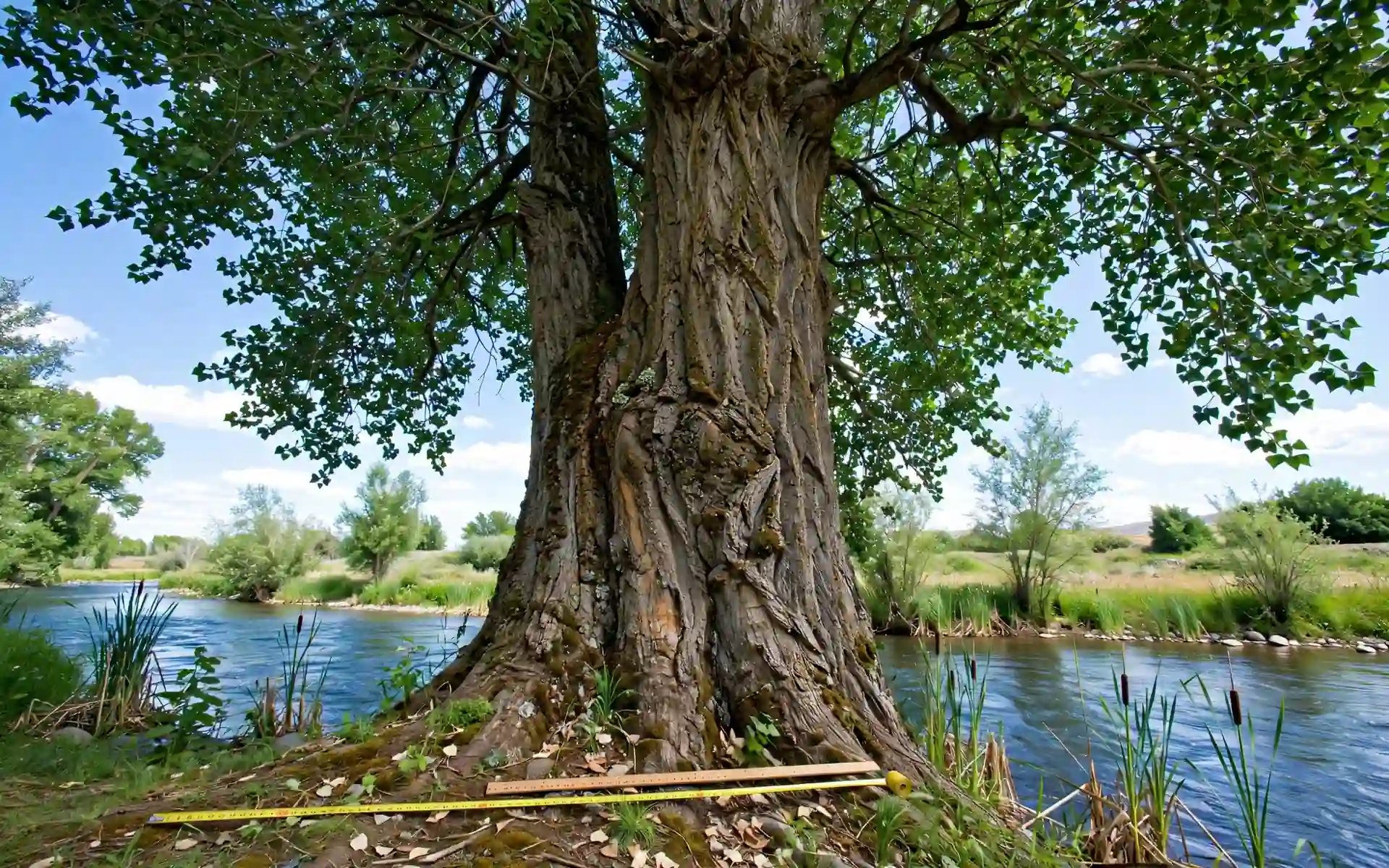
The eastern cottonwood is the article's tallest tree, because 100 feet is the top of its published range, not the size of a typical tree. The United States Department of Agriculture's plant fact sheet for the eastern cottonwood, Populus deltoides, states it plainly: the tree is "a fast-growing tree which reaches 80 to 100 feet in height and 3 to 4 feet in diameter". The Illinois Extension gives a mature height of 70 to 100 feet, and the Texas A&M Forest Service calls it "a large tree to 100 feet tall" — so three separate authorities agree that 100 feet is the top of the range, and the grade says so: AVERAGE, with the range 80 to 100 feet printed beside it. The cottonwood is one of the fastest-growing trees in North America, which is how it reaches the top of its range at all: a young tree can add five feet a year in good soil with plenty of water, and a mature tree beside a river can be 100 feet tall in a few decades.
The fitting check is the water, because a cottonwood's height depends on where it grows. The tree is a riverbank species — it needs wet soil, and a cottonwood planted on dry ground will stay far shorter than one planted beside a river, so the 100-foot figure is the top of the range for a well-watered tree, not the average for every cottonwood in a garden. The rival lists get this one nearly right — they call it "up to 100 feet", which is the top of the range — but they rarely print the bottom, and a tree that is 80 feet tall is a cottonwood too.
7. A Boeing 737-200 — 100 Feet 2 Inches, Two Inches Over (LISTED)

The Boeing 737-200 is the article's closest jet to 100 feet, because it misses the number by two inches — and the two inches are the whole story. The 737-200, the original short-body 737 first flown in 1967, is 30.53 metres long, which is 100 feet 2 inches from nose to tail, and the aircraft data tables agree on the figure across every source that lists it. It is the closest jet to 100 feet ever built: two inches over, on an aeroplane a hundred feet long, which is a miss of less than two-tenths of one percent. The grade is listed because the figure is the published specification for this named aircraft, with the miss printed in the heading: 100 feet 2 inches, not 100 feet, and the two inches are the difference between a fact and a rounding error.
The fitting check is the model, because the rival lists use the wrong 737. One popular list offers the 737-500 as "approximately 101 feet" and calls it a near-perfect reference for 100 feet, but the 737-500 is actually 31.01 metres — 101 feet 9 inches — which is one foot nine inches over, nearly nine times further from 100 feet than the 737-200. The 737-200 is the closer jet by a foot and seven inches, and the list that picks the 737-500 has picked the worse aeroplane and rounded it anyway.
8. An NBA Basketball Court — 94 Feet Long, Six Feet Short (EXACT)
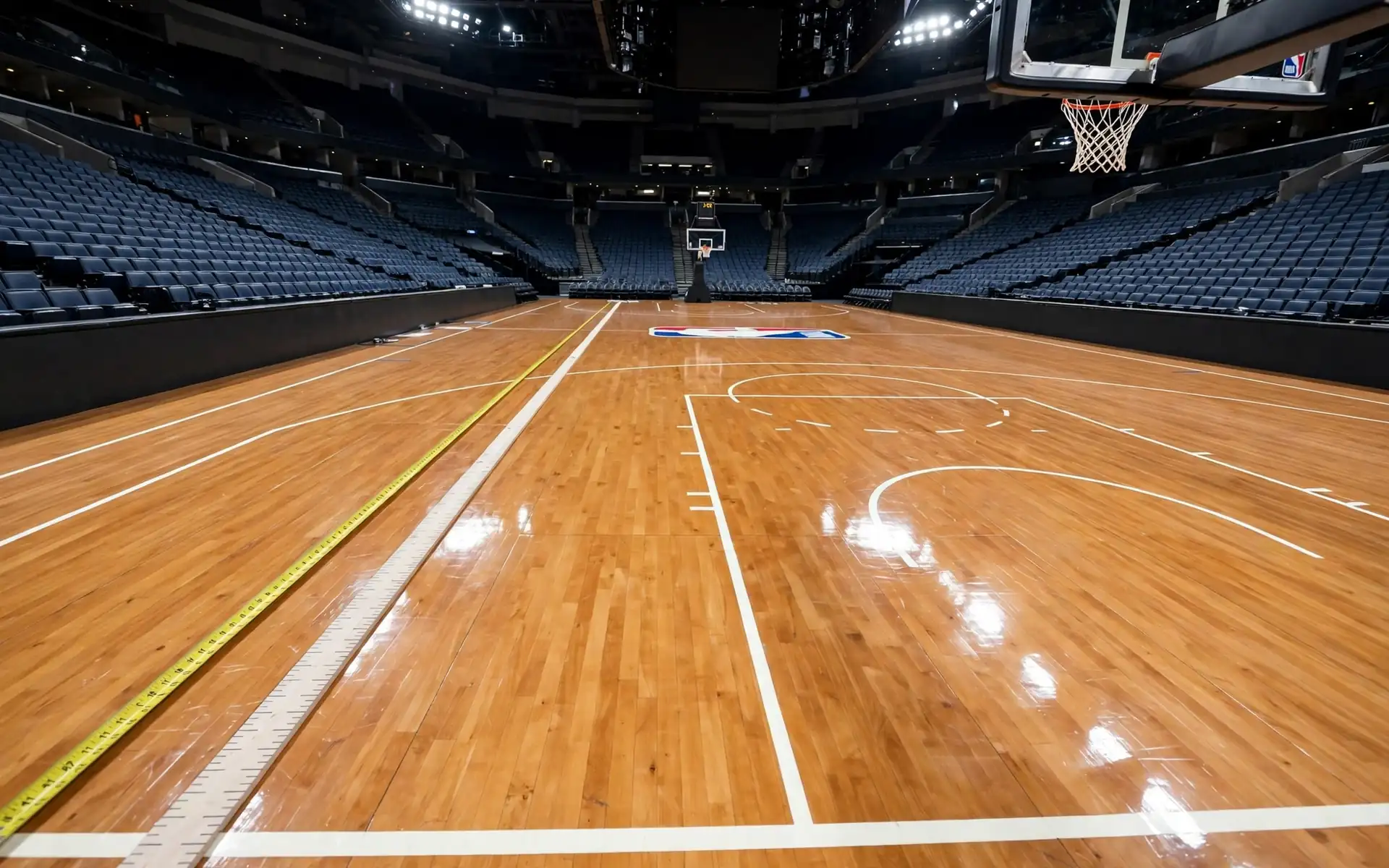
The NBA basketball court is the article's most famous near-miss, because every rival list uses it and none of them prints the miss. An NBA court is 94 feet long and 50 feet wide under Rule No. 1 of the official rules, baseline to baseline, and the international court is shorter still at 28 metres — 91.86 feet. That makes the NBA court six feet short of 100 feet, and the six feet is the width of a doorway and a half: the court is almost 100 feet, and almost is the word that matters. One rival list calls the court a reference for 100 feet and then admits you need "one more step past the far baseline" to reach it — and a step is about 2.5 feet, not 6, so the list's own fix does not fix the gap. The grade is exact because the figure is the league's own dimension for this named court: 94 feet, not 100, and the six feet is printed in the heading.
The fitting check is the out-of-bounds area, because the court itself is 94 feet but the space a court needs is longer. An NBA arena leaves several feet of run-off behind each baseline for the players to land in, so the floor of a real arena is well over 100 feet long — but the run-off is not the court, and a court built to 100 feet would have its baselines six feet too far apart. The rival lists make the same mistake with the width: one list adds the court's 50-foot width to its 19-foot key and calls the sum "approximately 100 feet", and 50 plus 19 is 69, not 100 — the arithmetic does not even reach the number it claims.
Where the Other Lists Get 100 Feet Wrong
Ten wrong numbers about 100 feet circulate so widely that they deserve their own section, because each one is stated confidently on a page that ranks for this exact question. First, the swimming pool: one popular list says half an Olympic pool is 100 feet, and it is not — a 50-metre pool is 164 feet long, so half of it is 82 feet, and the claim is wrong by 18 feet. Second, the trailers: another list says two 53-foot semi-trailers are 100 feet, and 2 times 53 is 106 feet — and the same list's "48-foot trailer plus 20-foot cab totals close to 100 feet" is worse, because 48 plus 20 is 68 feet, wrong by 32 feet. Third, the school buses: a list says three school buses are 100 feet, and three buses at 35 to 40 feet each are 105 to 120 feet — the list's own table says 105 to 120 feet combined, and the text still says "right around 100 feet". Fourth, the sedans: a list says five mid-size sedans are 100 feet, and five cars at 16 feet each are 80 feet — and the list's fix, "add parking gaps and you reach 100 feet", is not a fix, because parking gaps are not car length, and the claim is wrong by 20 feet. Fifth, the statue: a list says the Statue of Liberty is 111 feet from its pedestal base to its torch, and the National Park Service dimensions sheet says 111 feet 1 inch is heel to top of head — the top of the base to the torch is 151 feet 1 inch, and the ground to the torch is 305 feet 1 inch, so the claim is wrong by 40 feet. Sixth, the bowling lane: a list calls a bowling lane "approximately 100 feet" with the approach and pin deck included, and the lane is 60 feet from foul line to head pin, plus a 15-foot approach, plus a pin deck of about 2 feet 10 inches — about 86.5 feet in total, wrong by about 13 feet. Seventh, the building code: a list says the International Building Code "sets" a ten-foot floor height, and the code sets only a minimum ceiling height of 7 feet 6 inches — it prescribes no floor-to-floor height at all, so 10 feet per story is a rule of thumb, not a code requirement. Eighth, the steps: a list says 20 average adult steps cover 100 feet, and 20 steps at 2.5 feet each are 50 feet — it is 40 steps, and the claim is wrong by half. Ninth, the castle: a list says the gatehouse at Doune Castle is 100 feet tall, and it is about 95 feet — 29 metres — so the claim is wrong by about 5 feet. Tenth, the tennis court: a list says a tennis court with its run-backs is "right at 100 feet", and the court is 78 feet, while the fenced area with run-backs is about 120 feet — neither 78 nor 120 is 100, so the claim is wrong in both directions. None of these ten numbers belongs in a 100-foot article, and all ten are here so you never have to learn that from a building plan, a trailer that does not fit its bay, or a swimming pool that is 18 feet shorter than the list promised.
The 100-Foot Walk: Check It in 40 Steps
One hundred feet is a number you can check without a tape measure, because it is forty steps, ten stories, and one-third of a football field, all at once. First, the walk: an average adult's step is about 30 inches, so forty steps covers 100 feet, and you can count them on any pavement in under a minute — and if a list tells you twenty steps will do it, that list has halved the distance, because twenty steps is 50 feet. Second, the building: count ten floors on the block outside your window, at the standard ten feet per story, and you are looking at about 100 feet — give or take a lobby and a roof. Third, the field: an American football field is 300 feet long from goal line to goal line, so 100 feet is exactly one-third of the field — stand on one goal line and walk to the 33-yard line, and you have walked 100 feet, with one foot to spare. Fourth, the court: walk from one baseline of an NBA court to the other and you have walked 94 feet — then take two long strides past the baseline, and you have walked 100. Fifth, the monument: climb the 112 steps inside the Hoad Monument and you have climbed exactly 100 feet, one step at a time, to the best view in Ulverston. None of these replaces a tape measure for anything that must fit, but all five will tell you whether 100 feet is the size you think it is before the hose is ordered, the ladder is extended, or the building is drawn — and the fortieth step is the one that proves it.
How 100 Feet Compares With Other Lengths
Readers comparing nearby sizes may also want the site’s guides to 80 feet, 70 feet, 60 feet, 50 feet, 40 feet, 30 feet, 20 feet, and 12 feet for the feet series, and 11 cm for the centimetre series. Each of those guides follows the same rule as this one: the spec sheet, the grade, and the miss printed in full. The next size down is a step down to 90 feet, and the complete feet size guide covers every feet size from 1 to 100.
Frequently Asked Questions
How many meters is 100 feet?
100 feet is 30.48 metres exactly. Multiply 100 by 0.3048 — the international foot, fixed by the 1959 agreement — and you get 30.48, with no rounding involved.
How many inches is 100 feet?
1,200 inches exactly. Multiply 100 by 12 and you get 1,200 with no rounding, because the foot is defined as exactly 12 inches. In centimetres that is 3,048 cm, in yards it is 33.33 yards rounded — exactly 33 and one-third yards — and in kilometres it is 0.03048 km, which is why nobody measures a hundred feet in kilometres.
How many yards is 100 feet?
33.33 yards, or 33 and one-third yards exactly. Divide 100 by 3 and you get 33.333, so the honest figure is a repeating decimal — and the trap is rounding it to 33 yards, which understates the length by a full foot.
How many stories is 100 feet?
About ten stories in a residential building, at the standard 10 feet per story — and about seven to ten stories in a commercial building, where each story runs 10 to 14 feet. The number is not fixed, because story heights vary by building type, by country, and by whether the ground floor has a lobby.
How many steps is 100 feet?
Forty steps, at an average adult step of about 30 inches. Multiply 40 by 2.5 feet and you get 100 feet exactly, which is why the 40-step walk is the most useful check in this article — and why the rival list that says 20 steps cover 100 feet is wrong by half, because 20 steps at 2.5 feet each are only 50 feet.
Is a blue whale 100 feet long?
It can be — 100 feet sits inside the blue whale's range, but it is not the ceiling and not the size of any one whale. The federal fisheries service says northern blue whales grow up to about 90 feet and Antarctic blue whales up to about 110 feet, so 100 feet is a length a large whale can reach, and the largest verified females were measured at 98 to 100 feet.
Is the Boeing 737-500 about 101 feet long?
No — it is 101 feet 9 inches, which is one foot nine inches over 100 feet, not about one foot over. The 737-500 is 31.01 metres long, and the list that calls it "approximately 101 feet" has rounded away nine inches and picked the wrong aeroplane anyway: the 737-200, at 100 feet 2 inches, is the closest jet to 100 feet ever built, and it is a foot and seven inches closer than the 737-500. If you want a jet that is 100 feet, use the 737-200 — and print the two inches.
What is 100 feet compared to a football field?
An American football field is 300 feet long from goal line to goal line, so 100 feet is exactly one-third of the field — the distance from one goal line to the 33-yard line, with one foot to spare. An NBA basketball court is 94 feet long, so 100 feet is six feet longer than the court — two long strides past the baseline. And a tennis court is 78 feet long, so 100 feet is 22 feet longer than the court — about nine steps past the baseline. The three comparisons bracket the number: 78 feet on one side, 94 feet in the middle, and 100 feet a third of the way down a football field.
Final Thoughts
One hundred feet is the rare measurement that is honest and still misunderstood, because 30.48 metres can be a height, a length, a span, or a reach — and the number alone never says which. Now you know it as a building's ten stories fixed by a rule of thumb, a whale's middle fixed by a government range, a monument's height fixed by its listing, a hose's length fixed by its standard, a ladder's reach fixed by its manufacturer, a tree's top fixed by three agricultural authorities, an aeroplane's length fixed by its data table, and a basketball court's length fixed by its league — and you know which of those you can trust to the foot and which you must measure yourself. The rule that runs through all eight is the same one this site always uses: trust the spec sheet, print the deviation, and let the name stay on the box where it belongs. Measure twice, in the direction the object actually travels, and 100 feet will fit the first time.
