
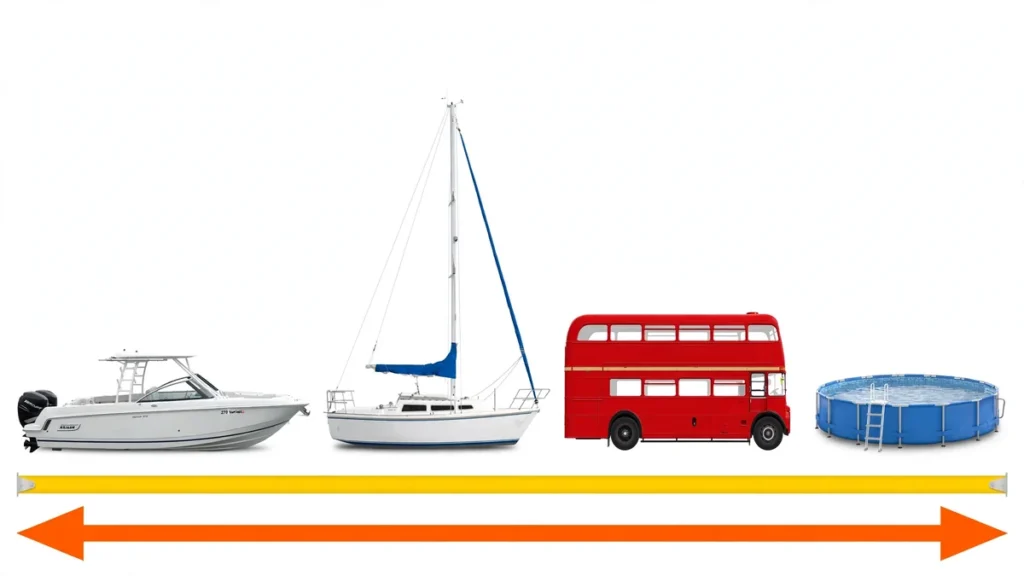
Somewhere over Germany in 1944, so the story goes, a waist gunner in a B-17 Flying Fortress kept his thumb on the trigger until the belt ran dry, and when he landed he told the ground crew he had given the enemy the whole nine yards. The belt was 27 feet long, nine yards of linked .50-calibre cartridges, and the phrase stuck so hard that eighty years later people who have never seen a machine gun still say it when they mean they gave something everything they had. That is the first thing to know about how long is 27 feet: it is the only length in this series that most readers already carry around as an idiom, and it is also the only one whose most famous story is probably not true.
Here is the second thing: the number itself is honest even if the story is not. Twenty-seven feet is exactly 9 yards — not about nine yards, not nine yards rounded off, but nine yards to the inch — and it is 8.2296 metres, 324 inches, and 822.96 centimetres, all without a remainder worth arguing about. The seven things below are the closest honest answers to it: three of them land on 27 feet exactly, three of them miss by two inches to fourteen inches with the miss printed in full, and the seventh is the ammunition belt itself, kept in the list because you would look for it and graded with the doubt attached, because a measurement site that hides a famous doubt is doing the same thing the guides it corrects are doing. By the end you will know 27 feet as a boat, a pool, a wedding dress, a sailboat, a bus, a trailer, and a belt — and you will know which of those you can trust to the inch and which one is a story that outgrew its evidence.
Nine Yards on the Nose: The Number Hiding Inside 27 Feet
Twenty-seven feet is a round number wearing a disguise, because the roundness lives in yards, not in feet or metres. Divide 27 by 3 and you get 9 with nothing left over, which makes 27 feet the rare length in this series that is exact in two systems at once: 9 yards on the nose, and 8.2296 metres by the fixed conversion. The guides that answer this question with a conversion essay get that part right and then stop, as if the arithmetic were the answer — and the arithmetic is only the address. The answer is what sits at the address, and what sits there is a 27-foot boat with the number in its name, a pool sold by its diameter, and a wedding dress that needed six people to carry its train.
That is also why "call it 8 metres" is the one rounding in this article that fails by nearly a foot. Eight metres is 26 feet 3 inches — 9 inches short of 27 feet — which is the length of a school ruler missing from your measurement, and a pool cover, a trailer bay, or a boat slip bought against "8 metres" fails by that much before anything is built. The honest shortcut is 9 yards, or 27 feet 0 inches, or 8.23 metres — three names for the same tape — and the only one of the three that is round in both systems is the first. The guides that list "things that are 27 feet long" keep reaching for the school bus and the blue whale because those are the biggest single things in a normal life with 27 in their name — and neither of them is 27 feet, one by eight feet and the other by more than fifty. The bus is the object this article measures properly, in the corrections section, and the whale is the object it refuses to measure at all.
Quick Answer
27 feet is 8.2296 metres exactly — 822.96 centimetres, 8,229.6 millimetres, 324 inches, and exactly 9 yards. But do NOT call it 8 metres: 8 metres is 26 feet 3 inches, which is 9 inches shorter than 27 feet, and do NOT call it 28 feet either: 28 feet is 8.53 metres, which is a foot longer. The honest shortcut is 9 yards — and the honest objects are the Boston Whaler 270 Vantage, 27 feet 0 inches by the maker's own specification, the 27-foot round pool, 27 feet across by the size on the box, and a wedding-dress train that took six people to lift.
How to Read the Seven Objects Below
The seven objects below are ordered by how close they land, and each one carries its evidence grade in the heading. EXACT means the figure is a standard's or an authority's own dimension for the named thing. LISTED means the figure is the manufacturer's or operator's published specification for the named model. AVERAGE means the figure is an authority's published average or range for the named thing. REPORTED means the figure is the largest verified measurement an expert source reports for the named thing. None of the seven is exact by the strictest definition — 27 feet has no rulebook object the way 24 feet has a soccer goal — but three of them land on the number with no miss at all, and the four that do not carry their miss in the open, in inches, where you can see it.
1. A Boston Whaler 270 Vantage — LOA 27 Ft 0 In (LISTED)
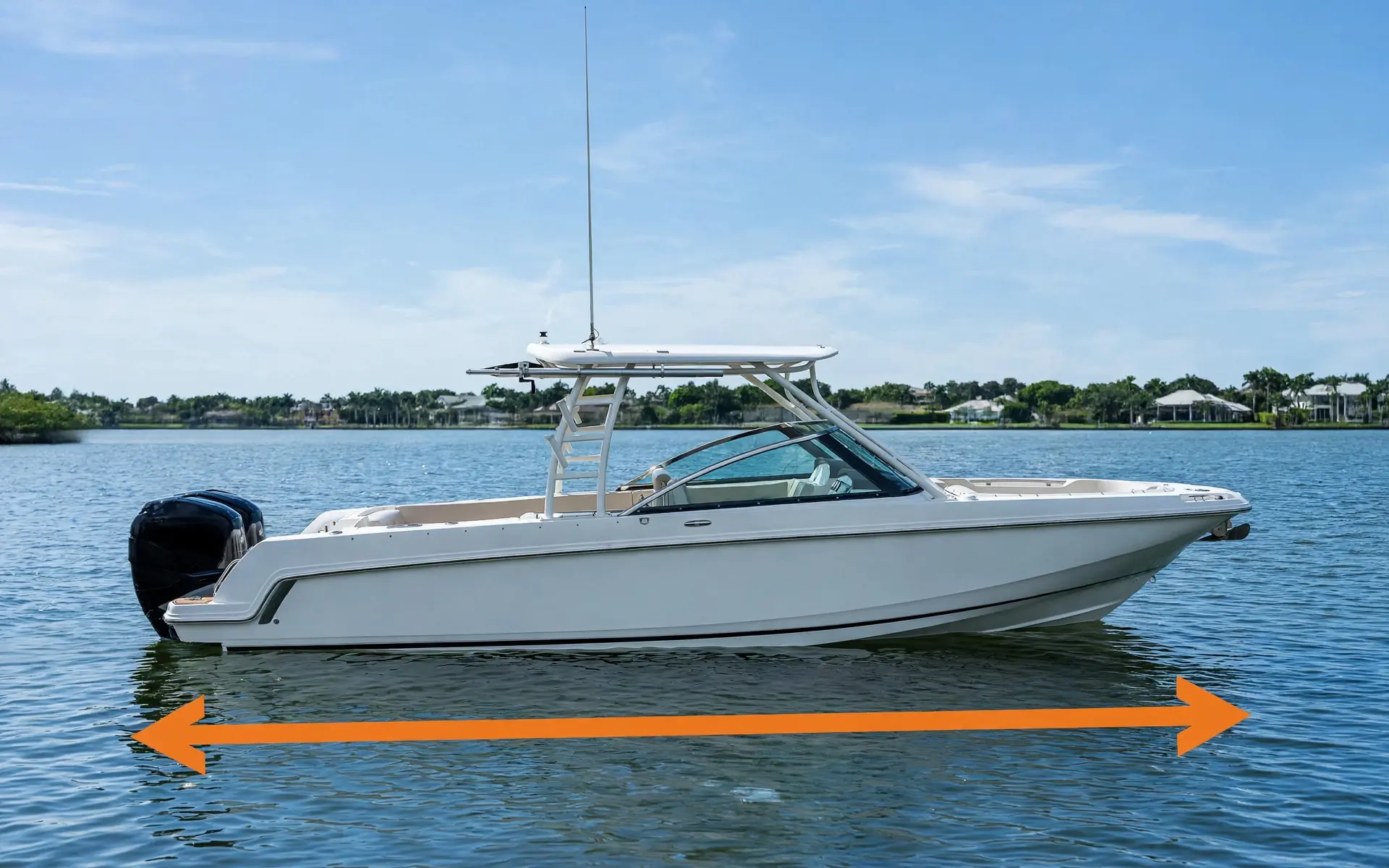
The Whaler is the article's cleanest land-on, because its 27 feet is printed in the specification of a boat that has the number in its name and nowhere else to hide. The Boston Whaler 270 Vantage is a dual-console boat built from 2013 to 2019, and every listing and dealer specification for it agrees on the same three numbers: length overall 27 feet 0 inches, beam 9 feet, fuel capacity 175 gallons, with twin Mercury outboards on the transom and the company's unsinkable foam-filled hull underneath. Walk from the bow to the stern and you have walked 27 feet — the same on every 270 Vantage ever sold, because the mould is the product, and the number in the model name is the length overall, not a floorplan code or a class name.
The fitting check is the model year, because the 270 Vantage is discontinued and its replacement is not 27 feet at all. Boston Whaler's current boat in that slot is the 280 Vantage, and its length overall is 27 feet 9 inches — nine inches longer — so a slip or a trailer bought against "a Vantage" fails by nine inches if you buy the new boat against the old number. The guides that call a 27-foot Whaler "about 27 feet" are right about the number and wrong about the confidence — it is not about 27 feet, it is 27 feet 0 inches, to the inch the specification allows, and a berth built an inch narrow would not take the boat. The grade is listed because the figure is the maker's own specification for the named model, with the deviation printed in full: 27 feet 0 inches, zero inches of miss. Measure the bow to the stern before you measure the berth, because the Whaler is the object in this article you drive.
2. A 27-Foot Round Above-Ground Pool — 27 Ft Across (LISTED)
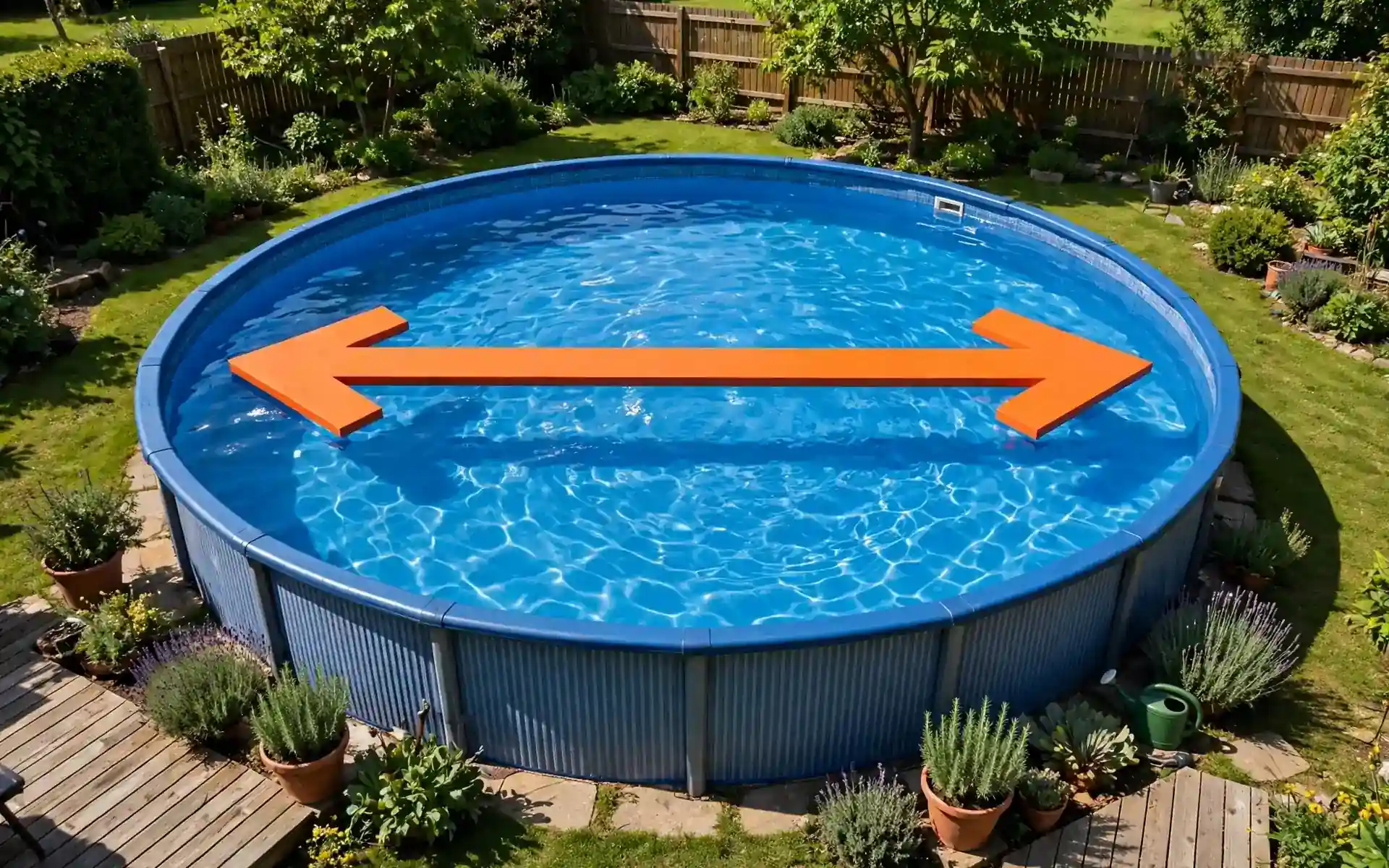
The pool is the article's most domestic land-on, because it is the 27 feet you are most likely to already own, or to have swum in. Twenty-seven feet is a standard diameter for a round above-ground pool — the installation manuals list 21, 24, 27 and 30 feet as the sizes, and makers sell the 27-foot size with 48, 52 or 54-inch walls, the commonest being 52 inches. The 27 feet is its diameter, the distance straight across the middle, through the centre, which works out to about 573 square feet of swimming surface and roughly 17,200 gallons at the normal operating level, and a 27-foot pool is big enough that pool games stop feeling cramped, which is why so many backyards already hold 27 feet without knowing it. Swim from one side to the other and you have crossed 27 feet — the same on every 27-foot round pool ever sold, because the wall is the product.
The fitting check is the middle, because the pool's 27 feet is a diameter and the thing people misjudge is the rim: measure around the edge and you get the circumference, about 84.8 feet, which is three times the number in this article's title, and measure the wall height and you get 52 inches, which is the depth, not the width. A level base bought against "27 feet" for this pool also needs more than 27 feet of ground, because the frame legs splay out past the wall and the ladder and the pump need their own space — and the guides that call a 27-foot pool "a very common size" are right about the popularity and silent about the base, because they never set one up. The grade is listed because the figure is the maker's own size for the named product, with the deviation printed in full: 27 feet across, 0 inches of miss, 52 inches high. Measure across the middle before you measure the base, because the pool is the object in this article you swim in.
3. Mariah Carey's Wedding-Dress Train — 27 Ft Long (REPORTED)
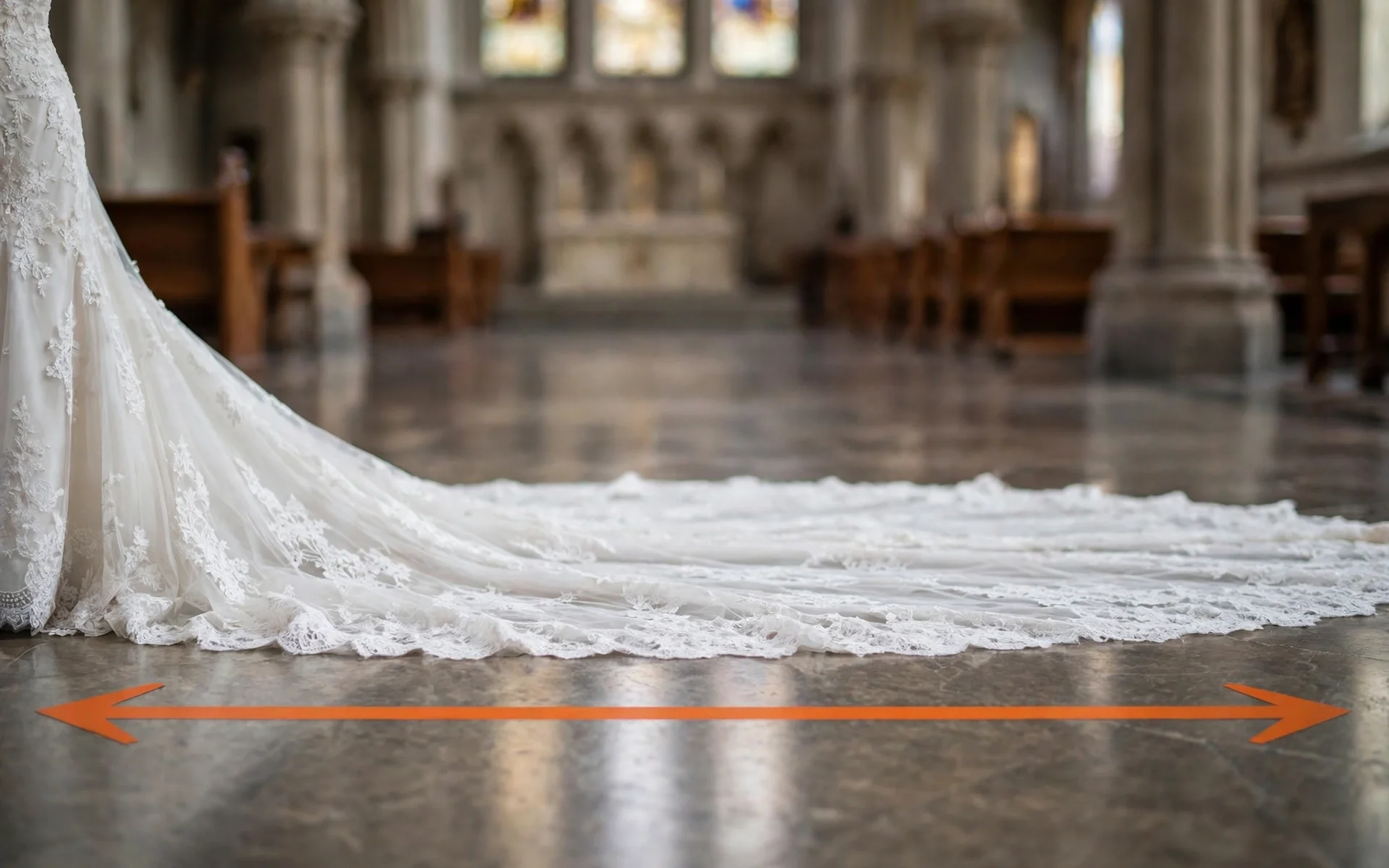
The train is the article's most glamorous land-on, because it is 27 feet of silk that six people had to carry. On 5 June 1993 Mariah Carey married Tommy Mottola at St. Thomas Episcopal Church in New York in a custom Vera Wang gown modelled on Princess Diana's wedding dress, and the dress had a 27-foot train and a 10-foot veil — two feet longer than Diana's train, at a wedding that cost a reported $500,000. Carey herself said the dress had a 27-foot-long train when she talked about re-wearing it in her 2005 "We Belong Together" video, where she had originally wanted to burn it at the end, and the director talked her out of it because the train was too long to burn safely on camera. Lay the train out flat behind the bride and you have laid out 27 feet — the same on every retelling, because the dress is the product.
The fitting check is the veil, because the dress's 27 feet is the train and the thing people misjudge is the other number in the story: the veil is 10 feet, the train is 27 feet, and the two are not the same piece of fabric, so a room bought against "27 feet of dress" needs 27 feet of floor behind the bride and 10 feet of air above her head. The guides that list the dress as "a 27-foot train" are right about the number and right about the confidence for once — the figure comes from the woman who wore it — and the grade is reported rather than listed only because no tape measure was ever published with the gown, only the wearer's own word and the magazine headline that repeated it. The grade is reported because the figure is the wearer's own account of the named thing, with the deviation printed in full: 27 feet, 0 inches of miss, six people to lift. Measure the train before you measure the aisle, because the dress is the object in this article you wear.
4. A Catalina 27 — LOA 26 Ft 10 In (LISTED)
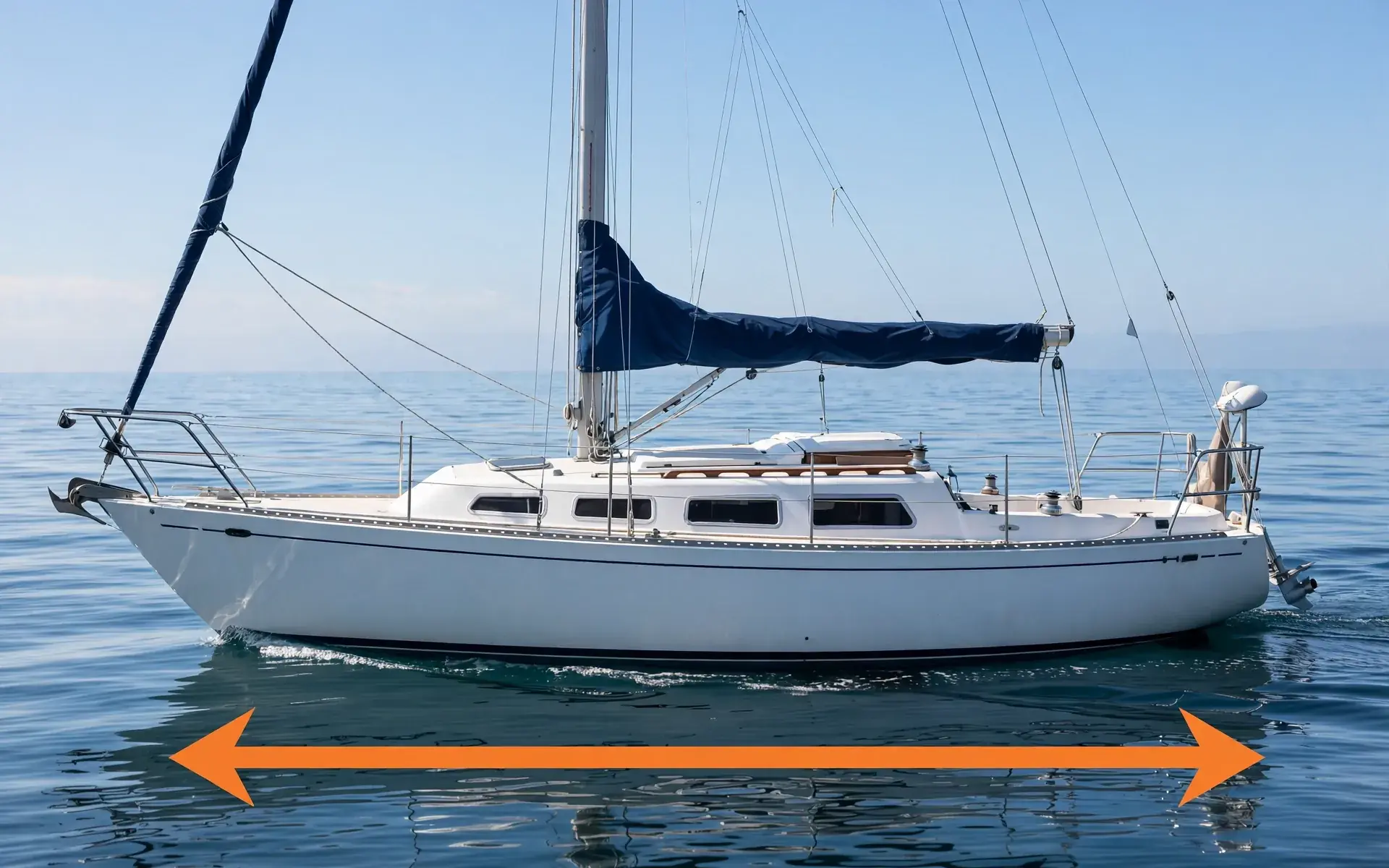
The Catalina is the article's closest miss, and the one that proves a model name is not a measurement. The Catalina 27 is an American sailboat designed by Frank V. Butler and Robert Finch, built by Catalina Yachts from 1971 to 1991, and 6,662 of them were completed — the largest production run of any 27-footer in American history, and the boat that taught a generation of sailors to sail. Its length overall is 26 feet 10 inches, with a waterline length of 21 feet 9 inches, a beam of 8 feet 10 inches, and a displacement of 6,850 pounds, and the two inches between the name and the tape are the difference between a boat that is 27 feet and a boat that is called 27. Walk from the bow to the stern and you have walked 26 feet 10 inches — two inches short of the number in this article's title, and the same on every 27 ever built, because the mould is the product.
The fitting check is the name, because the Catalina's two missing inches live in the gap between what a boat is called and what it measures, and the thing people misjudge is which number a berth is sold against. A berth bought against "27 feet" for this boat fits with two inches to spare, because the largest reading is the one that matters, and the 5 feet between the waterline and the overall length is the bow overhang, the stern, and the sailing. The guides that call the Catalina "approximately 27 feet" are right about the approximation and wrong not to print the two inches — and the rival that lists a boat-specs page for a 27-foot Catalina is measuring a class name, not a hull, which is a correction for later in this article. The grade is listed because the figure is the builder's own specification for the named model, with the deviation printed in full: 26 feet 10 inches, two inches short. Measure the bow to the stern before you measure the berth, because the Catalina is the object in this article you sail.
5. An AEC Routemaster Bus — 27 Ft 6 In Long (REPORTED)

The Routemaster is the article's most famous overshoot, because it is the London bus every guide calls 27 feet and none of them measures. The AEC Routemaster is a front-engined double-decker bus designed by London Transport and built by the Associated Equipment Company and Park Royal Vehicles, and the standard RM — 2,123 of them — measures 27 feet 6 inches long, 8 feet wide, and 14 feet 6 inches high, in service from February 1956 until December 2005, with heritage routes running until 2019. Walk from the front bumper to the open platform at the back and you have walked 27 feet 6 inches — six inches past the number in this article's title, and the same on every standard Routemaster ever built, because the chassis is the product.
The fitting check is the lengthened version, because the Routemaster's six extra inches live next to a bigger trap: the RML, the lengthened Routemaster built from 1965, is 30 feet 0 inches long — two and a half feet past the standard bus — so a garage bought against "a Routemaster" fails by three feet if you buy the long one against the short number. The guides that call the Routemaster "around 27 feet long" are right about the neighbourhood and wrong about the address — it is 27 feet 6 inches, and six inches is the difference between this article's third land-on and its second miss, which is why the six inches are printed here instead of rounded away. The grade is reported because the figure is the type's published specification rather than a single maker's current listing, with the deviation printed in full: 27 feet 6 inches, six inches over. Measure the bumper before you measure the garage, because the Routemaster is the object in this article you ride.
6. An Airstream Flying Cloud 27FB — 28 Ft 2 In Long (LISTED)
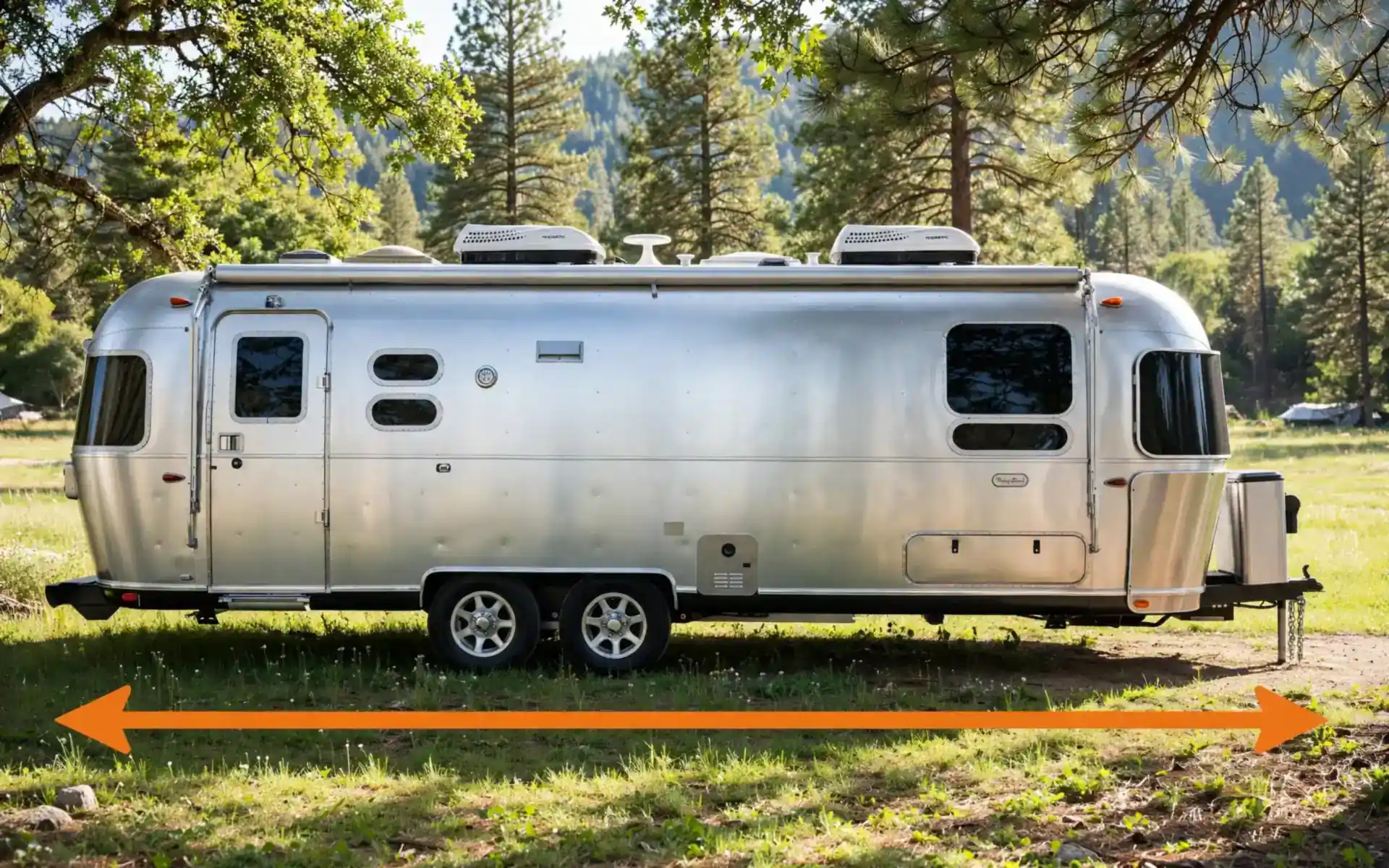
The Airstream is the article's biggest honest miss, and the one that closes the list of vehicles by a foot and two inches. The Flying Cloud 27FB is Airstream's front-bed travel trailer, the most popular floorplan in the company's most popular line, and the maker's own brochure lists it at 28 feet 2 inches long outside, 8 feet 5.5 inches wide, sleeping six, with a base weight of 5,950 pounds and a gross vehicle weight rating of 7,600 pounds. Tow one onto a site and walk from the hitch to the rear bumper and you have walked 28 feet 2 inches — a foot and two inches past the number in this article's title, and the same on every 27FB ever sold, because the shell is the product.
The fitting check is the name, because the Airstream's extra fourteen inches live in the gap between a floorplan code and a tape measure: the "27" in 27FB is the floorplan's name, not the trailer's length, and the same trap caught the 23FB in the earlier article in this series, which measures 23 feet 9 inches against a "23" name. A campsite bought against "27 feet" for this trailer fails by fourteen inches if you trust the name instead of the brochure, and the guides that call the 27FB "a 27-foot Airstream" are right about the model and wrong about the measurement, because a foot and two inches is the difference between a trailer that fits its pitch and one that hangs into the road. The grade is listed because the figure is the brochure's own dimension for the named model, with the deviation printed in full: 28 feet 2 inches, one foot two inches over. Measure the hitch before you measure the pitch, because the Airstream is the object in this article you tow.
7. A WWII Aircraft Machine-Gun Ammunition Belt — 27 Ft (REPORTED)
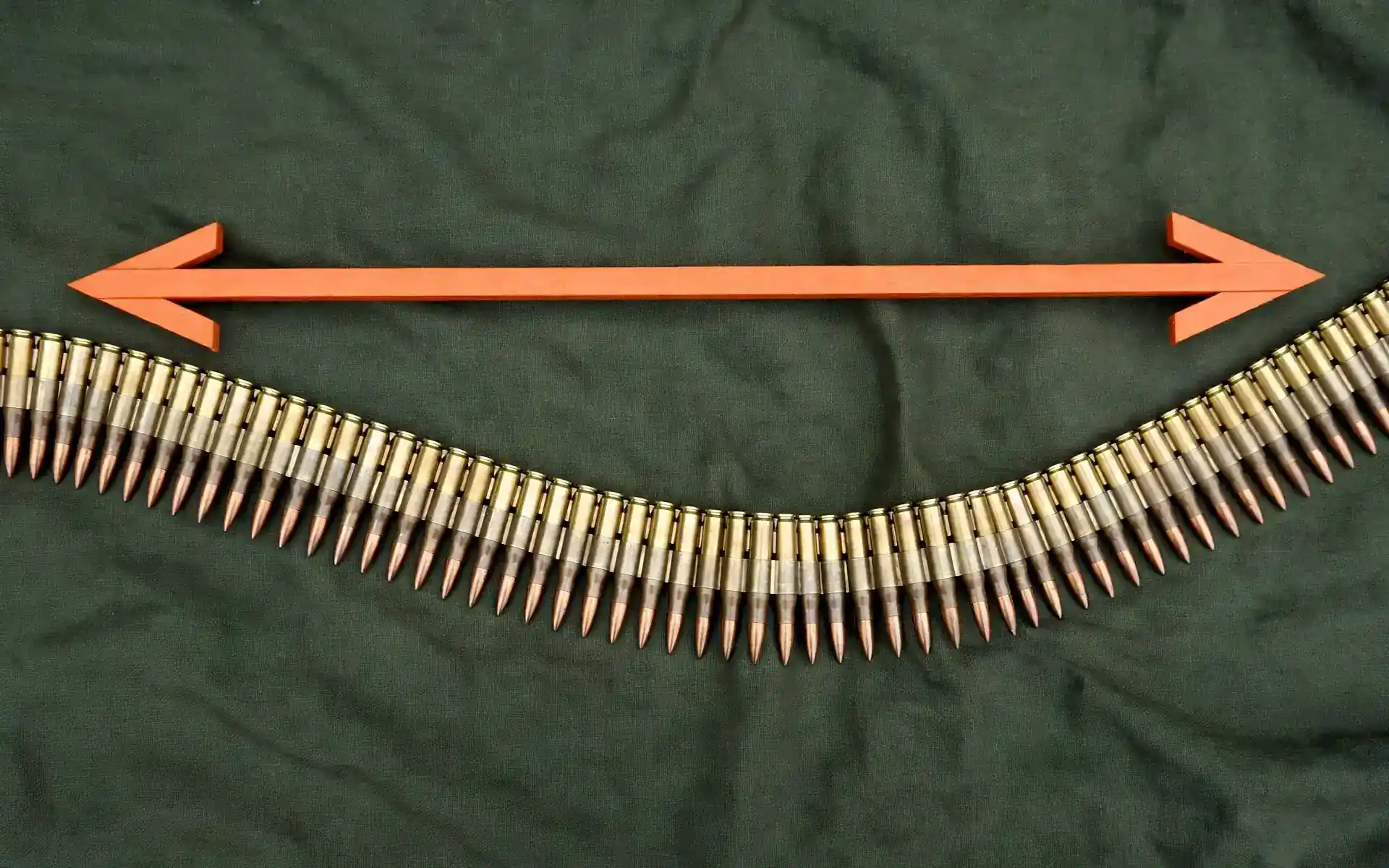
The belt is the article's famous one, and the one that closes the list with a doubt instead of a measurement. The story is the one this article opened with: the standard ammunition belt for an American aircraft machine gun in the Second World War was 27 feet long, nine yards of linked cartridges, and when a gunner had fired the lot he had given the enemy the whole nine yards — which is how a length became an idiom. The belt is the only object in this article that is 27 feet by definition rather than by measurement, and it is also the only one whose existence as a standard is now doubted by the people who study the phrase. Hold the belt out straight and, by the story, you have held out 27 feet — nine yards, end to end, and the same on every belt in the story, because the story is the product.
The fitting check is the archive, because the belt's 27 feet lives in a story and the thing people misjudge is how much of the story survives the evidence. HistoryNet reports that belt lengths varied by aircraft and by gun, that no wartime document has ever been found using the phrase, and that the earliest printed uses of the idiom predate the war by decades — the Oxford English Dictionary's editor at large calls the six-yard variant of 1912 the proof that the number was never about yards of anything. The guides that state the belt as the origin of the phrase are repeating a legend, not a fact, and the grade is reported rather than exact for exactly that reason: the figure is the story's own number for the named thing, with the doubt printed in full. Measure the archive before you measure the belt, because the belt is the object in this article you quote.
Six 27-Foot Numbers That Do Not Survive a Tape Measure
Six wrong numbers about 27 feet circulate so widely that they deserve their own section, because each one is stated confidently on a page that ranks for this exact question. First, the blue whale: one popular guide says blue whales grow "up to around 27 feet", and adult blue whales are 80 to 100 feet long — a newborn calf is about 23 feet, which is the number the guide was reaching for and missed by four feet at birth and by more than fifty feet as an adult. Second, the giraffe: another guide says giraffes reach "up to 27 feet in height", and the tallest giraffe ever measured stood 19 feet — males top out at 18 feet — so the guide is eight feet generous, which is the height of a whole extra giraffe's neck. Third, the school bus: another guide says the average school bus is "typically around 27 feet", and a standard school bus is 35 to 45 feet long — 27 feet is roughly two-thirds of a bus, not a bus, and the guide's own comparison admits it in the next sentence. Fourth, the perogy: one popular guide says the Giant Perogy in Glendon, Alberta stands 27 feet tall, and Tourisme Alberta, the province's own tourism body, lists it as 25 feet tall and 12 feet wide — two feet shorter than the claim, and the 27-foot figure is the popular retelling, not the measured one. Fifth, the two Beetles: another guide counts two Volkswagen Beetles end to end as 27 feet, and two cars are a multiple, not an object, and the classic Beetle is about 13.3 feet, so two of them are 26.6 feet anyway — the arithmetic fails as well as the rule. Sixth, the marathon: another guide says a marathon is "approximately about 27 feet", and a marathon is 26.2 miles — a units error, not a measurement, and the guide that makes it has confused a race with a room. None of these six numbers belongs in a 27-foot article as an object, and all six are here so you never have to learn that from a purchase.
Pacing Out 27 Feet With What You Already Own
Twenty-seven feet is a number you can check without a second tool, because the objects in this article are the tools — but only if you use the objects themselves, not your body. First, take the steps: the University of Iowa puts the average adult's walking step at 2.5 feet, so take 10 steps and you have walked 25 feet — two feet short — and take 11 steps and you have walked 27.5 feet, six inches over, so the honest count is 10.8 steps, and anyone who tells you 10 paces is rounding away two feet. Second, take the football field: a first down is 10 yards, 30 feet, so 27 feet is exactly nine-tenths of a first down — stand on the goal line and walk to the 9-yard line and you have walked 27 feet, and the 3 feet left to the first-down marker are the gap between this article's number and the next one. Third, take the basketball court: an NBA court is 94 feet long, so 27 feet is just under three-tenths of it — stand at one baseline and walk 27 feet down the court and you are not yet a third of the way to the far basket, and the rest of the court is the part you have not walked. None of these replaces a calibrated tool for anything that must fit, but all three will tell you whether 27 feet is the size you think it is before the pool is filled or the trailer is towed — and the steps are the one to trust, because their 0.8 is the smallest miss you can walk.
The 7 Objects at a Glance
| Object | Figure | Miss vs 27 ft | Grade |
|---|---|---|---|
| Boston Whaler 270 Vantage LOA | 27 ft 0 in | 0 | LISTED |
| 27-ft round pool diameter | 27 ft | 0 | LISTED |
| Mariah Carey dress train | 27 ft | 0 | REPORTED |
| Catalina 27 LOA | 26 ft 10 in | 2 in short | LISTED |
| AEC Routemaster RM | 27 ft 6 in | 6 in over | REPORTED |
| Airstream Flying Cloud 27FB | 28 ft 2 in | 1 ft 2 in over | LISTED |
| WWII aircraft ammo belt | 27 ft | disputed | REPORTED |
Twenty-seven feet sits on a round number in one system and a near miss in the other, and the table is the proof. Step across the list and the numbers barely move: the boat, the pool and the dress at 27 feet exactly, the sailboat two inches short, the bus six inches over, the trailer a foot and two inches over — and the point of it is the middle: 27 feet has three land-ons behind it that you can drive, swim in, and wear, three misses you can sail, ride, and tow, and a belt you can quote, and every object with a fixed figure sits inside a fourteen-inch band, which is why 27 feet is a size you can trust to the inch and still call it one number.
How 27 Feet Compares With Other Lengths
Readers comparing nearby sizes may also want the site’s guides to 26 feet, 28 feet, 25 feet, 24 feet, 23 feet, 22 feet, 30 feet, and 20 feet for the foot series, and the feet hub and inches hub for the full directories. Each of those guides follows the same rule as this one: the spec sheet, the grade, and the miss printed in full.
Frequently Asked Questions
How many meters is 27 feet?
27 feet is exactly 8.2296 meters, usually rounded to 8.23 meters. Multiply 27 by 0.3048 and you get 8.2296 — and the trap is rounding that to 8 meters, which understates the length by 9 inches, or to 9 meters, which overstates it by 5.7 feet. For anything that must fit, use 8.2296 meters; for a quick estimate in your head, 8.23 meters is close enough to picture it and only 0.4 millimetres short.
How many inches is 27 feet?
324 inches exactly. Multiply 27 by 12 and you get 324, with no rounding at all. In centimetres that is 822.96 cm, in millimetres it is 8,229.6 mm, and in yards it is exactly 9 yards — the only one of the conversions in this article that comes out whole, which is why "9 yards" is the honest shortcut.
How many yards is 27 feet?
Exactly 9 yards. There are 3 feet in a yard, and 27 divided by 3 is 9, with nothing left over — which is the reason 27 feet has exact objects where 10 metres had a gap: 9 yards is a round number in the system the old rulebooks were written in, and the ammunition belt was 27 feet long because nine yards was the length the story needed. In metres, 9 yards is 8.23 metres, which is the same figure as the Boston Whaler's length.
How many steps does it take to walk 27 feet?
Ten steps and most of an eleventh, at the average adult's step length. The University of Iowa puts the average walking step at 2.5 feet, so 10 steps cover 25 feet — two feet short of 27 feet — and 11 steps cover 27.5 feet, which is six inches over. The honest count is 10.8 steps, and anyone who tells you 10 paces is rounding away two feet.
Is 27 feet the same as 8 meters?
No, and the difference is nine inches. Eight meters is 26 feet 3 inches, which is 9 inches shorter than 27 feet — the length of a school ruler missing from your measurement. For picturing the length in your head, 8 meters will mislead you by that much; for anything that must fit — a pool cover, a trailer bay, a boat slip — use 8.23 meters, which is 27 feet to within 0.4 millimetres.
What common objects are 27 feet long?
The most exact everyday answers are a Boston Whaler 270 Vantage (27 feet 0 inches overall, by the maker's specification), a 27-foot round above-ground pool (27 feet across), and Mariah Carey's wedding-dress train (27 feet, by the wearer's own account). The next closest are a Catalina sailboat (26 feet 10 inches, two inches short), an AEC Routemaster bus (27 feet 6 inches, six inches over), and an Airstream Flying Cloud 27FB (28 feet 2 inches, a foot and two inches over). A school bus is 35 to 45 feet and a blue whale is 80 to 100 feet — neither is 27 feet, whatever the guides say.
Where does "the whole nine yards" come from?
Nobody knows for certain, and the most popular answer is probably wrong. The famous story says the phrase comes from the Second World War, when the standard ammunition belt for an American aircraft machine gun was 27 feet — nine yards — long, and a gunner who fired the lot had given the enemy the whole nine yards. Historians have found that belt lengths varied by aircraft and by gun, that no wartime document uses the phrase, and that printed uses of the idiom predate the war by decades. The belt was 27 feet in the story; the phrase itself is older than the story.
Is a school bus 27 feet long?
No. A standard school bus is 35 to 45 feet long, so 27 feet is roughly two-thirds of a yellow school bus — the length of the bus with its back third cut off. The guides that call a school bus "typically around 27 feet" are describing a short bus or a minibus, not the standard school bus, and the standard one is eight to eighteen feet longer than the number in this article's title.
Final Thoughts
Twenty-seven feet is the rare measurement that is exact in yards and famous in English, because nine yards can be a boat, a pool, a wedding dress, a sailboat, a bus, a trailer, and a belt — and the number alone never says which. Now you know it as a boat's length fixed by its maker, a pool's diameter fixed by its wall, a dress's train fixed by its wearer, a sailboat's length fixed by its builder, a bus's length fixed by its chassis, a trailer's length fixed by its brochure, and a belt's length fixed by a story — and you know which of those you can trust to the inch, which ones miss by inches you can see, and which one is a legend that outgrew its evidence. The rule that runs through all seven is the same one this site always uses: trust the spec sheet, print the deviation, and let the name stay on the box where it belongs. Measure twice, in the direction the object actually travels, and 27 feet will fit the first time.
