
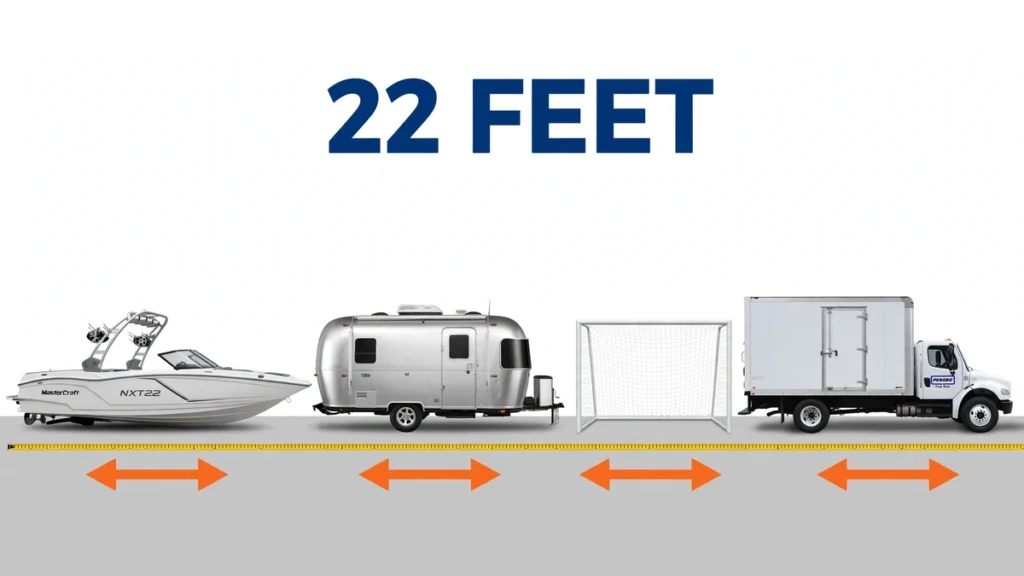
The woman at the rental counter slides the keys across and says the words every mover hears once: "twenty-two foot truck, bay three." You walk out to bay three and the truck is enormous — far longer than twenty-two feet, cab to bumper, and the box on the back is not twenty-two feet either. It is twenty-one feet eleven inches inside, and that missing inch is the whole story of how long is 22 feet. Twenty-two feet is a size with a name on it, and the name is usually one inch of marketing. It is also the first length in this series that the factories actually build to: boats, trailers, and trucks are sold in twenty-two-foot classes, and three of the eight things below are twenty-two feet by their maker's own sheet, not by a rounding.
The second thing to know is that twenty-two feet has two traps, and both of them are in the name. The first trap is the name itself: a "22" on the side of a boat or a trailer is a class, not a measurement, and the class is allowed to be an inch short. The Airstream Bambi 22FB is twenty-one feet eleven inches long. The Penske twenty-two-foot truck's box is twenty-one feet eleven inches long. The Catalina 22's hull is twenty-one feet six inches long, and the only way to get twenty-two feet out of it is to count the fittings. The second trap is the box versus the vehicle: the Penske truck's box is twenty-two feet, but the truck is about thirty feet.
The One-Inch Club: Why 22-Foot Things Measure 21 Feet 11 Inches
Two of the eight objects in this article are twenty-one feet eleven inches long, and that is not a coincidence — it is how American manufacturing names things. A foot is 0.3048 metres by international agreement, so twenty-two feet is 6.7056 metres, and nobody builds a trailer or a truck box in 6.7056-metre classes. They build in foot classes, and the class is named for the nearest round number, and the thing itself is built a fraction under it so it fits the roads, the ramps, and the campsites the class was designed for. The inch is not a mistake; it is the clearance, and the name is the promise that the clearance is included.
That is also why twenty-two feet is a friendlier length than the ten metres of the last article in this series, where nothing standard landed on the number at all. At ten metres the classes were thirty feet and thirty-five feet, and the number fell in the gap between them. At twenty-two feet the classes land on the number and then shave an inch off it, which is a much smaller lie and a much more useful one: an inch is the thickness of a thumb, and a campsite, a driveway, or a loading bay bought against twenty-two feet for either of these two will still fit, because the thing is shorter than the number, not longer.
Quick Answer
22 feet is 6.7056 metres exactly — 264 inches, 670.56 centimetres, and 7.33 yards. But do NOT call it 7 metres: 7 metres is 22.97 feet, which is eleven and a half inches longer than 22 feet, and do NOT measure the truck when you mean the box: a "22-foot" Penske truck is about 30 feet long bumper to bumper, and only its cargo box is 22 feet. The honest shortcut is 6.71 metres — and the honest object is the MasterCraft NXT22, 22 feet bow to stern by the maker's own spec sheet.
The 8 Objects
The eight objects below are ordered by how close they land, and each one carries its evidence grade in the heading. EXACT means the figure is a standard's or an authority's own dimension for the named thing. LISTED means the figure is the manufacturer's or operator's published specification for the named model. AVERAGE means the figure is an authority's published average or range for the named thing. REPORTED means the figure is the largest verified measurement an expert source reports for the named thing. Three of the eight are twenty-two feet by the sheet that built them, two more are an inch short, and the widest miss in the whole article is two feet.
1. A MasterCraft NXT22 — 22 Ft 0 In (LISTED)
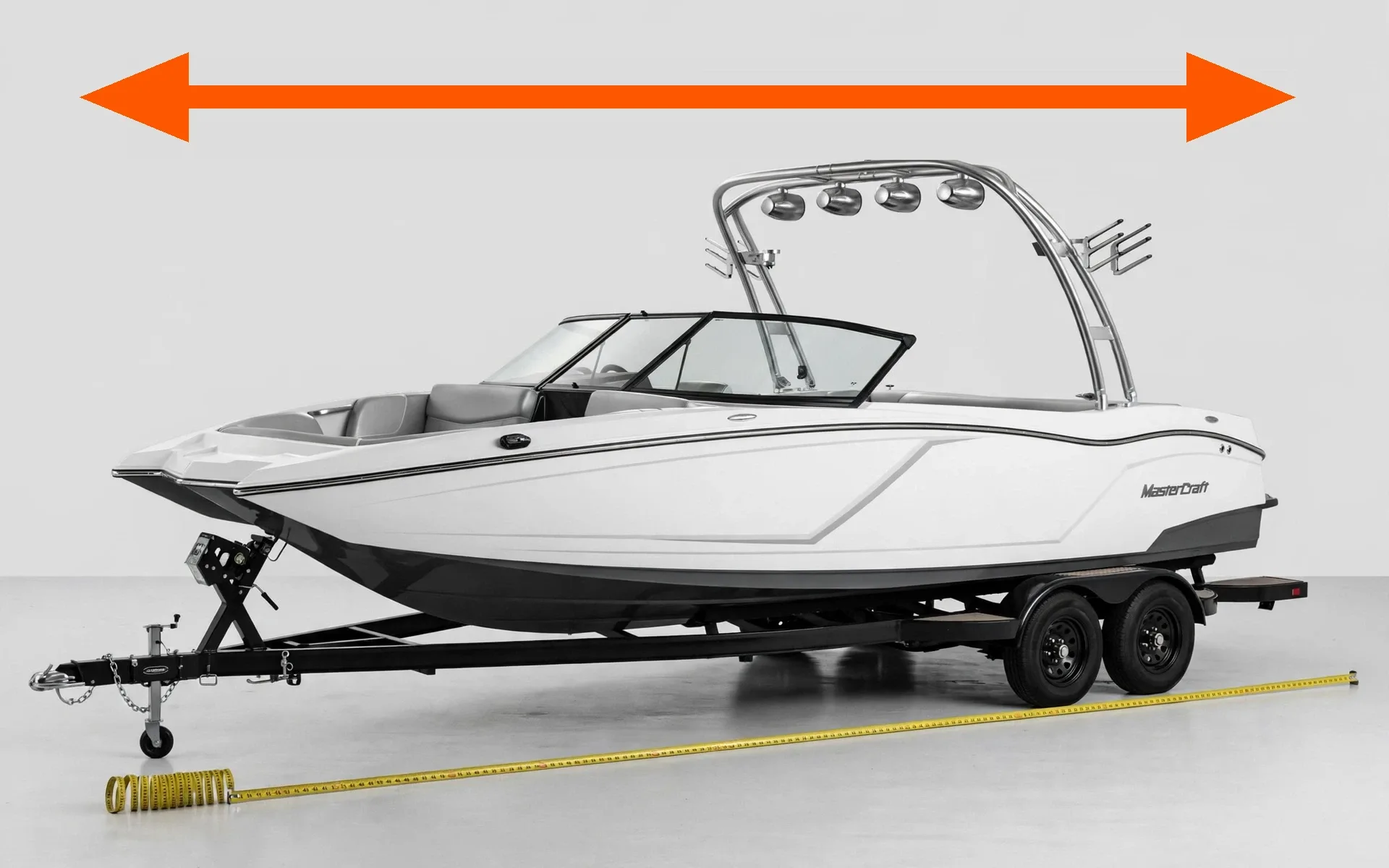
The MasterCraft NXT22 is the article's cleanest exact-length object, because it is twenty-two feet long and its name says twenty-two and both of those things are true at the same time. MasterCraft's own spec sheet lists the boat length at 22 feet, or 6.7 metres, with a beam of 98 inches and a dry weight of 4,760 pounds — so walk from the bow to the stern and you have walked twenty-two feet, the same on every NXT22 ever built, because the mould is the product.
The fitting check is the one number that disagrees, because one review site prints the NXT22 at twenty-three feet ten inches long overall, and that figure is wrong against the maker's own sheet. The maker's spec sheet is the authority for the boat's length, and it says twenty-two feet; the twenty-three-foot-ten figure appears to count the swim platform or the trailer, and neither of those is the boat. A berth, a garage, or a tow vehicle bought against twenty-two feet for this boat fits, because the boat is twenty-two feet and the name is not a rounding. The grade is listed because the figure is the maker's own listing for this named model: 22 feet, 6.7 metres, bow to stern. Measure the hull before you measure the trailer, because the boat is the object in this article that every other object is judged against.
2. An Airstream Bambi 22FB — 21 Ft 11 In (LISTED)
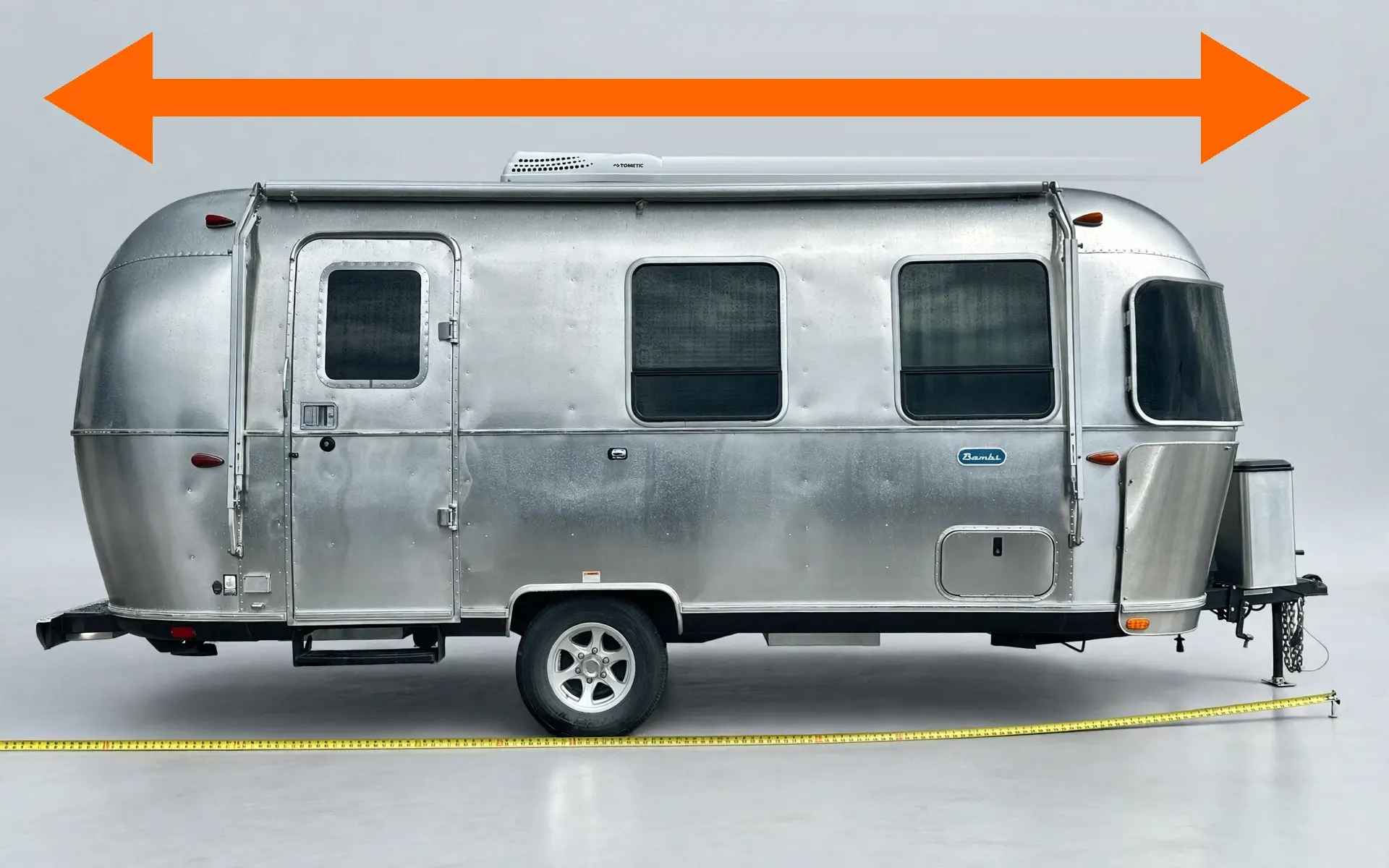
The Airstream Bambi 22FB is the article's first member of the one-inch club, because it is sold as a twenty-two-foot trailer and it is twenty-one feet eleven inches long. Colonial Airstream's spec table lists the 22FB at 21 feet 11 inches long, 8 feet wide, and 9 feet 5 inches high, with a dry weight of 3,850 pounds — and the twenty-one feet eleven inches is the figure that matters: the distance from the hitch to the rear bumper, the length the campsite measures. Tow one into a site and you have walked twenty-one feet eleven inches — one inch short of the number in this article's title, and the same on every Bambi 22FB ever built, because the factory jig is the product.
The fitting check is the name, because the "22" in 22FB is a floorplan class, not a measurement, and the guides that call the Bambi "twenty-two feet long" are right about the class and wrong about the tape by exactly one inch. A campsite or a driveway bought against twenty-two feet for this trailer fits, because the trailer is shorter than the number rather than longer. The grade is listed because the figure is the dealer's published specification for this named model, with the deviation printed in full: 21 feet 11 inches, one inch short. Measure the hitch before you measure the site, because the trailer is the object in this article you tow.
3. A Penske 22-Foot Box Truck — Cargo Box 21 Ft 11 In (LISTED)
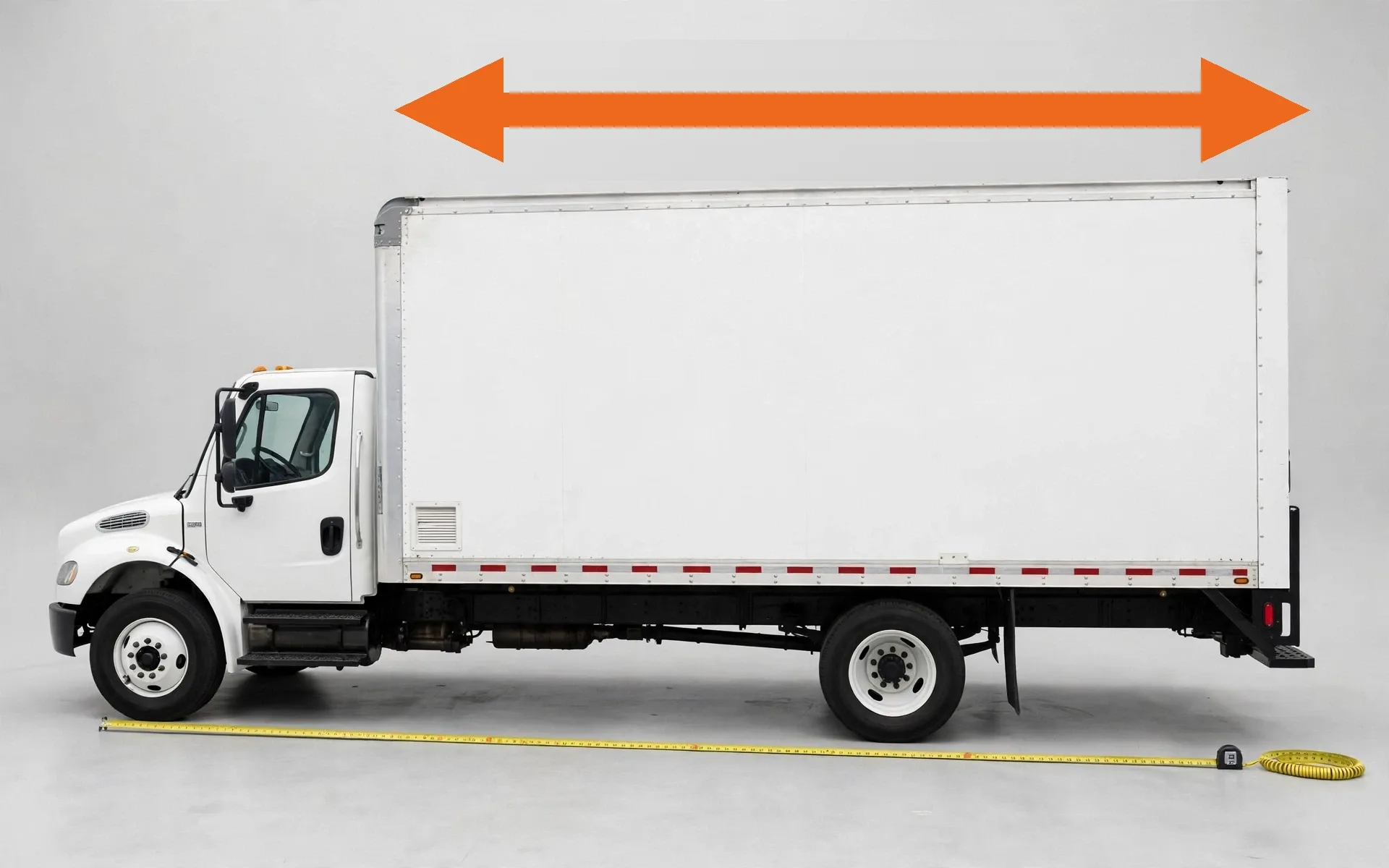
The Penske twenty-two-foot truck is the article's second member of the one-inch club, and the one that proves the box and the vehicle are two different measurements. Penske's own page for the truck lists interior dimensions of up to 21 feet 11 inches long, 8 feet 1 inch wide, and 8 feet 1 inch high, with up to 164 square feet of floor, up to 1,200 cubic feet of loading space, and up to a 10,000-pound load capacity — and the twenty-one feet eleven inches is the cargo box, the space your furniture actually occupies.
The fitting check is the cab, because the truck itself, cab included, is roughly thirty feet long bumper to bumper, and anyone who measures the whole vehicle will tell you a "twenty-two-foot truck" is thirty feet long. Both numbers are true and neither is the other: the twenty-two feet is the box, the thirty feet is the truck, and a loading bay, a driveway, or a moving-day plan bought against the wrong one fails by eight feet before the first box is carried. Penske publishes the interior figure as "up to" because the fleet spans several makes and model years, so the truck you are assigned may be a fraction shorter. The grade is listed because the figure is the operator's own published specification for this named class, with the deviation printed in full: 21 feet 11 inches of box, one inch short. Measure the box before you measure the truck, because the truck is the object in this article you move house with.
4. A Catalina 22 — Hull 21 Ft 6 In (LISTED)
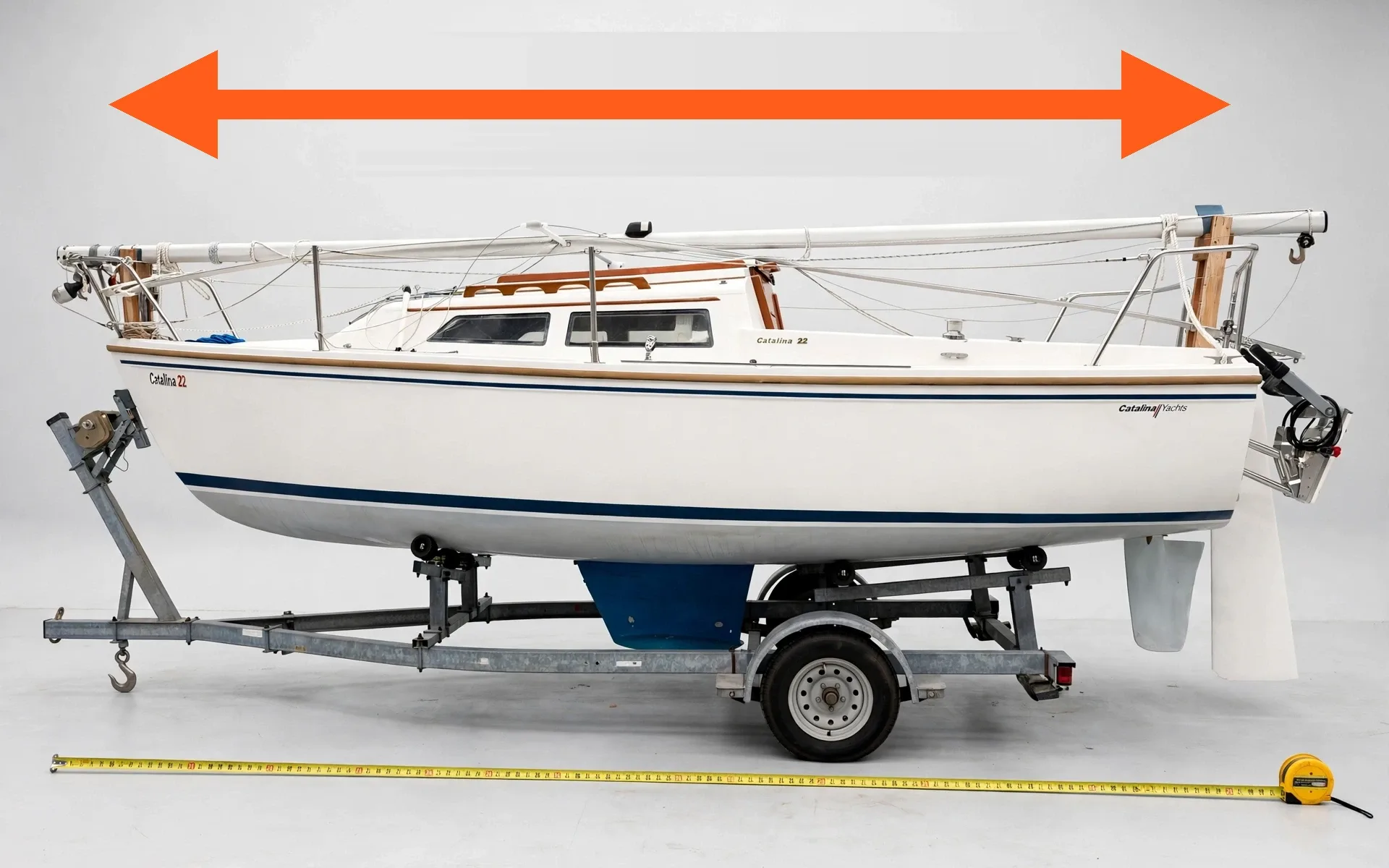
The Catalina 22 is the article's honest two numbers, because it is sold as a twenty-two and it is twenty-one feet six inches long — and then it is twenty-three feet ten inches long, depending on what you count. The class data lists the hull at 21 feet 6 inches, with a waterline length of 19 feet 4 inches and a beam of 7 feet 8 inches, and the Catalina MkII spec sheet lists the length overall at 23 feet 10 inches against a hull length of 21 feet 6 inches — and the two feet four inches between those figures is the bow pulpit and the rudder, the fittings that stick out past the hull.
The fitting check is the two numbers Catalina prints, because the hull is the boat and the overall length is the boat plus its furniture, and a berth bought against "twenty-two feet" for this boat fits on the hull reading and fails on the overall reading by one foot ten inches. The original Catalina 22, built from 1969 to 1995 with more than fifteen thousand hulls, is one of the most produced sailboats in its size range, and every one of them is twenty-one feet six inches of hull. The grade is listed because the figure is the maker's own listing for this named model, with both readings printed in full: 21 feet 6 inches of hull, 23 feet 10 inches overall. Measure the hull before you measure the berth, because the sailboat is the object in this article you sail.
5. A Human Small Intestine — Average 22 Ft (AVERAGE)

The small intestine is the article's strangest object, because it is twenty-two feet long and it is inside you, and you will never see it laid out straight. StatPearls, the medical reference on the NCBI Bookshelf, puts the average adult length at 22 feet, or 7 metres, making it the longest portion of the gastrointestinal tract — and the older measurement behind that average, Treves' count of one hundred bodies in 1885, put the adult male at 22 feet 6 inches and the adult female at 23 feet 4 inches. Uncoil one and lay it end to end and you have twenty-two feet of gut.
The fitting check is the living body, because the twenty-two feet is the dissection average: the bowel measured after death, when its muscle has relaxed and lengthened. In a living person the small intestine is far shorter — about ten feet, or three metres, by the in-life figures — because the muscle in its wall holds its tone and keeps it coiled tight inside the abdomen. That does not make the twenty-two feet wrong; it makes it a measurement of the relaxed organ, not the working one, and the guides that call the small intestine "usually twenty-two feet long" are right about the textbook and silent about the living body. The grade is average because the figure is an authority's published average for the named thing, with the range and the in-life correction printed in full: 22 feet on average, 15 to 32 feet across adults, about 10 feet in life. Measure the textbook before you measure the body, because the gut is the object in this article you carry.
6. An Adult Male Orca — Up to 22 Ft (AVERAGE)

The orca is the article's only animal, and the one that proves twenty-two feet can be the top of a range rather than the middle of it. SeaWorld's figures, carried on the Aquarium of the Pacific's species page, put adult males at 5.8 to 6.7 metres — 19 to 22 feet — long, and adult females at 4.9 to 5.8 metres, or 16 to 19 feet, with the largest recorded male at 9.8 metres, or 32 feet. A male orca at twenty-two feet is therefore not an average animal and not a record: it is a big adult male at the very top of the ordinary range, and the same in every ocean on the planet, because the species is the product.
The fitting check is the sex, because the orca's twenty-two feet belongs to the male and the female never gets there: a female tops out at nineteen feet, three feet short of the number in this article's title, and a guide that calls "an orca" twenty-two feet long without saying male has given you the male's maximum as the species' size. In the North Pacific the males run larger still, up to about twenty-seven feet — so the twenty-two-foot male is an ordinary big male in most waters and a small male in the North Pacific, and the range is the number, not the single figure. The grade is average because the figure is an authority's published range for the named thing: males 19 to 22 feet, females 16 to 19 feet, by SeaWorld. Measure the range before you measure the whale, because the orca is the object in this article you cannot measure at all without a boat.
7. A Soccer Goal — 24 Ft 0.2 In Wide (EXACT)
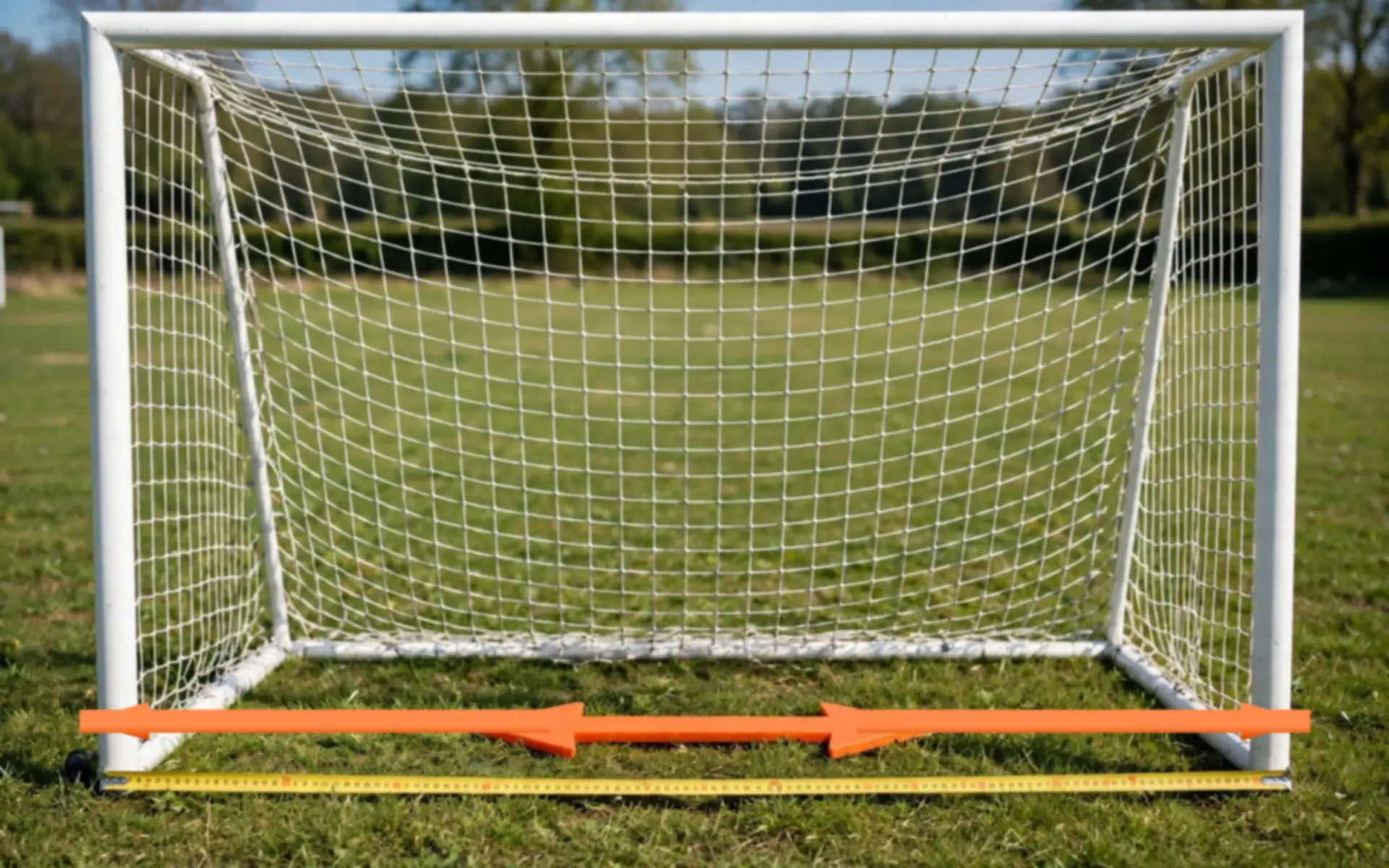
The soccer goal is the article's only exact, and the one that proves twenty-two feet can be a miss written into a rulebook. Law 1 of the Laws of the Game fixes the distance between the inside of the goalposts at 7.32 metres — eight yards — and the distance from the lower edge of the crossbar to the ground at 2.44 metres, or eight feet, and every full-size goal on Earth that hosts a senior match is the same 7.32 metres wide, because the rulebook is the product. Stand in the mouth of the goal and you are spanning 24.02 feet — two feet and a fifth of an inch past the number in this article's title.
The fitting check is the yards, because the goal's 7.32 metres is eight yards, and eight yards is a round number in the system the Laws were written in and an awkward number in feet. The guides that call a soccer goal "about twenty-two feet wide" have rounded eight yards down to a number that feels close, and the rounding costs two feet — the width of a doorway. A goal bought, built, or painted against twenty-two feet fails by that much before the first shot is taken, and the Laws do not negotiate: a goal a centimetre narrow would not host a senior match. The grade is exact because the figure is the governing body's own dimension for the named thing: 7.32 metres between the posts, by the International Football Association Board. Measure the posts before you measure the goal, because the goal is the object in this article that every other object is judged against.
8. A 20-Foot Shipping Container — 19 Ft 10.5 In (LISTED)
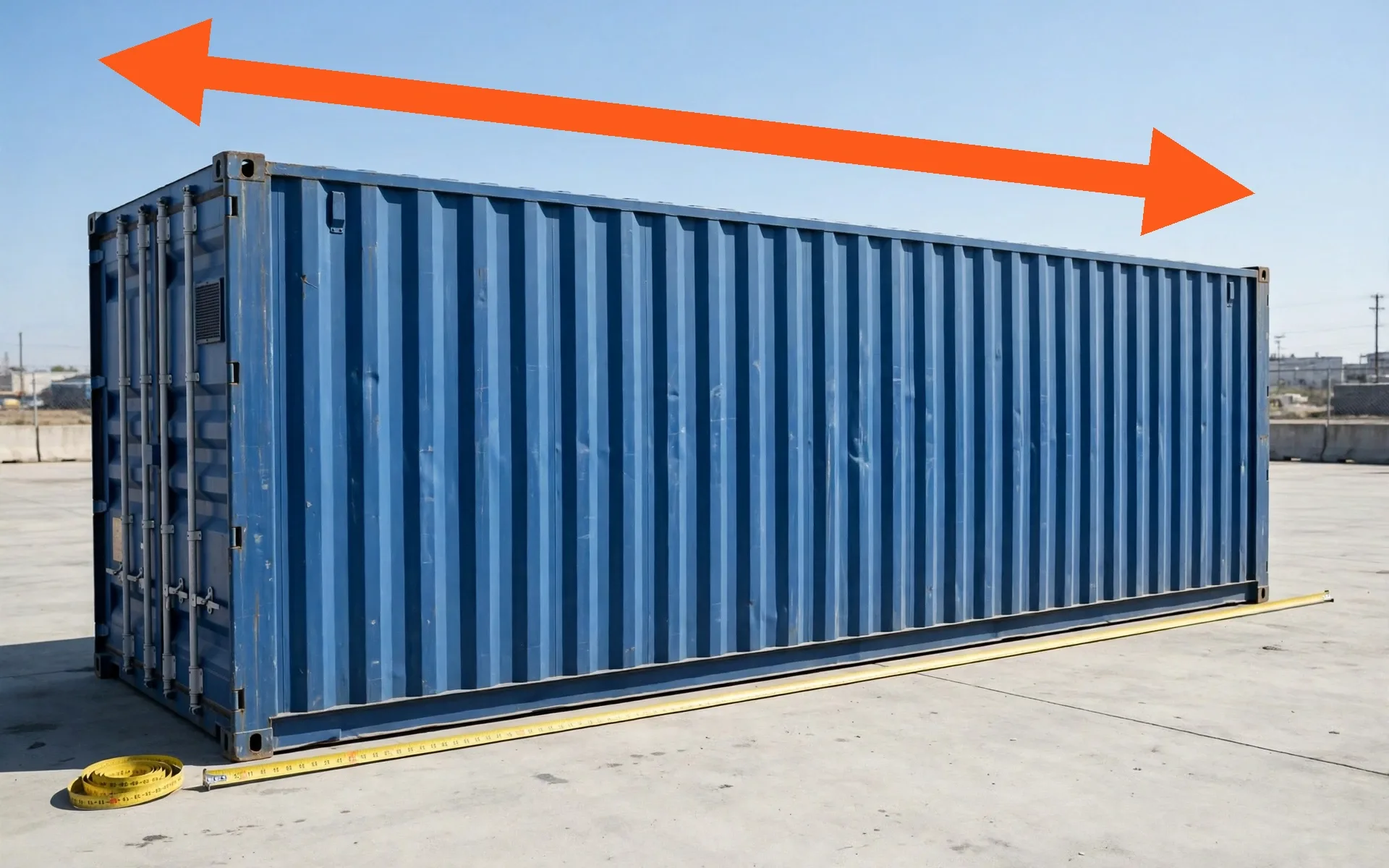
The shipping container is the article's largest miss, and the one that closes the list from the other side. ISO 668, the standard that classifies Series 1 freight containers, fixes the external length of a twenty-foot container at 6.058 metres — nineteen feet ten and a half inches — and the internal length is shorter still, 5.898 metres, or nineteen feet four inches, because the corrugated steel walls and the door assembly take eight inches.
The fitting check is the name, because the "twenty-foot" in a twenty-foot container is a nominal class, and the class is nineteen feet ten and a half inches of steel: the standard shaves thirty-eight millimetres off each end so the boxes stack with clearance, and the guides that call a standard container "around twenty-two feet" have added the height to the length, which is not a measurement of anything. A forty-foot container is 12.192 metres, or forty feet, and the middle of the two is 9.13 metres, not 6.71 — and neither container is twenty-two feet long in any case. The grade is listed because the figure is the standard's own dimension for the named thing: 6.058 metres external, 19 feet 10.5 inches. Measure the standard before you measure the box, because the container is the object in this article you ship.
Six Numbers the Other Lists Get Wrong
Six wrong numbers about twenty-two feet circulate so widely that they deserve their own section, because each one is stated confidently on a page that ranks for this exact question. First, the shipping container: one popular guide says a standard container is "around 22 feet in length when considering the additional height", and a twenty-foot container is 19 feet 10.5 inches long externally and 8 feet 6 inches high — and adding the height to the length is not a measurement, it is arithmetic performed on the wrong numbers. Second, the tennis court: another guide says a standard court is "approximately 22 feet in width", and a tennis court is 27 feet wide for singles and 36 feet wide for doubles, and 78 feet long — and no dimension of a tennis court is twenty-two feet. Third, the school bus: another guide says a school bus is "approximately 22 feet in length", and school buses span 20 to 45 feet, with the mini buses at 20 to 25 feet and the full-size buses at 35 to 40 feet — so a twenty-two-foot bus is a mini bus, and "a school bus" without the type is a class, not a measurement. Fourth, the giraffe and the grey whale: another guide lists a giraffe at 16 to 18 feet and a grey whale at 45 to 55 feet in an article about twenty-two-foot things, and neither animal is twenty-two feet in any dimension. Fifth, the ladder: the Werner MT-22 is sold as a "22-foot ladder", and the twenty-two feet is the reach height — you, standing on it — while the ladder itself reaches 19 feet as an extension ladder. Sixth, the halves and the doubles: one guide offers half a Brachiosaurus, half a semi-trailer, and two woolly mammoths, and a half of a thing is not a thing and two of a thing are not a thing. One number the guides get nearly right is worth noting because it is the orca: a rival list says orcas run "up to 22 feet", and that is true of adult males at the top of their range — but it never says male, and never says top of the range, which is the difference between a fact and a useful fact.
Checking 22 Feet With What Is Already Around You
Twenty-two feet is a number you can check without a second tool, because the objects in this article are the tools. First, take the steps: the University of Iowa puts the average adult's walking step at 2.5 feet, so take nine steps and you have walked 22.5 feet — six inches past the number in this article's title — and eight steps cover 20 feet, which is two feet short, so the honest count is nine steps and a half-step back. Second, take the car: an average car is about 14.7 feet long, so park one and a half cars nose to tail and you have twenty-two feet. Third, take the goal: a full-size soccer goal is 24.02 feet wide between the posts, so stand in the mouth of one and shave off two feet — the width of a doorway — and you have twenty-two feet. Fourth, take the trailer: an Airstream Bambi 22FB is 21 feet 11 inches long, so walk from the hitch to the bumper and add one inch — the thickness of a thumb — and you have twenty-two feet. None of these replaces a calibrated tool for anything that must fit, but all four will tell you whether twenty-two feet is the size you think it is before the truck is hired or the trailer is towed.
The 8 Objects at a Glance
| Object | Figure | Miss vs 22 ft | Grade |
|---|---|---|---|
| MasterCraft NXT22 | 22 ft 0 in | 0 | LISTED |
| Airstream Bambi 22FB | 21 ft 11 in | 1 in short | LISTED |
| Penske 22-ft box truck (cargo box) | 21 ft 11 in | 1 in short | LISTED |
| Catalina 22 (hull) | 21 ft 6 in | 6 in short | LISTED |
| Human small intestine (average) | 22 ft | ~0 (average) | AVERAGE |
| Adult male orca | 19–22 ft | top of range | AVERAGE |
| Soccer goal (between posts) | 24 ft 0.2 in | 2 ft 0.2 in over | EXACT |
| 20-ft shipping container (ISO 668) | 19 ft 10.5 in | 2 ft 1.5 in short | LISTED |
Twenty-two feet sits in the narrowest band this series has ever printed, and the band is the story. Step up the ladder and the rungs crowd together: the twenty-two-foot boat, the two twenty-one-foot-eleven-inch boxes on wheels, the twenty-one-foot-six-inch hull, the twenty-two-foot gut, the twenty-two-foot whale at the top of his range, the twenty-four-foot goal, the nineteen-foot-ten-inch container.
How 22 Feet Compares With Other Lengths
Readers comparing nearby sizes may also want the site’s guides to 21 feet, 23 feet, 20 feet, 30 feet, and 10 feet for the foot series, 7 meters, 6 meters, and 1 meter for the metre series, and the inches hub and feet hub for the full directories. Each of those guides follows the same rule as this one: the spec sheet, the grade, and the miss printed in full.
Frequently Asked Questions
How many meters is 22 feet?
22 feet is 6.7056 metres exactly, or 6.71 metres rounded — 6 metres 71 centimetres. Multiply 22 by 0.3048 and you get 6.7056. The trap is calling it 7 metres: 7 metres is 22.97 feet, which is eleven and a half inches longer than 22 feet, so for anything that must fit, use 6.71 metres, and for a quick estimate in your head, "six and three-quarter metres" is close enough to picture it.
How many inches is 22 feet?
264 inches exactly. Multiply 22 by 12 and you get 264, with no rounding that matters for anything you will ever measure by hand. In centimetres that is 670.56 cm, in millimetres it is 6,705.6 mm, and in yards it is 7.33 yards rounded — exactly 7 and a third yards.
How many steps does it take to walk 22 feet?
Nine steps, at the average adult's step length. The University of Iowa puts the average walking step at 2.5 feet, so nine steps cover 22.5 feet — six inches past 22 feet — and eight steps cover 20 feet, which is two feet short. The honest count is nine steps and a half-step back.
How long does it take to walk 22 feet?
About five seconds at a normal walking pace. At 3 miles an hour — an ordinary walk — 22 feet takes 5 seconds, and at a relaxed pace it takes closer to six or seven. A car at highway speed crosses it in under half a second, which is why 22 feet feels long on foot and invisible from a motorway.
Is 22 feet long?
It depends on what you are measuring, and that is the honest answer. Twenty-two feet is long for a room — most living rooms are 12 to 18 feet — and short for a road, where it is less than two car lengths. It is the length of a wake boat, a travel trailer, and a moving truck's cargo box, and the width of a soccer goal plus two feet.
What common objects are 22 feet long?
The most exact everyday answer is the MasterCraft NXT22 wake boat (22 feet bow to stern by the maker's spec sheet). The next closest are the Airstream Bambi 22FB travel trailer and the Penske 22-foot box truck's cargo box (both 21 feet 11 inches), then the Catalina 22 sailboat's hull (21 feet 6 inches), the average adult's small intestine (22 feet), a big adult male orca (up to 22 feet), a full-size soccer goal (24.02 feet wide between the posts), and a 20-foot shipping container (19 feet 10.5 inches).
How long is a 22-foot Penske truck really?
The cargo box is up to 21 feet 11 inches long inside, 8 feet 1 inch wide, and 8 feet 1 inch high — one inch short of the name, with up to 1,200 cubic feet of loading space and a 10,000-pound load capacity. The truck itself, cab included, is roughly 30 feet long bumper to bumper. So the "22-foot" is the box, not the truck: measure the box for your furniture and the whole vehicle for your driveway.
Is 22 feet the same as 7 meters?
No, and the difference is small enough to matter. Seven metres is 22.97 feet, which is eleven and a half inches longer than 22 feet — almost a foot. For picturing the length in your head, 7 metres is the closest round number; for anything that must fit — a berth, a campsite, a loading bay — use 6.71 metres.
Final Thoughts
Twenty-two feet is the rare measurement that is exact and still has a name on it that lies by an inch, because 6.71 metres can be a boat, a trailer, a truck box, a sailboat, a gut, a whale, a goal, or a container — and the number alone never says which. Now you know it as a boat's length fixed by its maker, a trailer's length fixed by its factory, a truck box's length fixed by its fleet, a sailboat's hull fixed by its mould, a gut's length fixed by its anatomy, a whale's size fixed by its species, a goal's width fixed by its rulebook, and a container's length fixed by its standard. The rule that runs through all eight is the same one this site always uses: trust the spec sheet, print the deviation, and let the name stay on the box where it belongs. Measure twice, in the direction the object actually travels, and twenty-two feet will fit the first time.
