
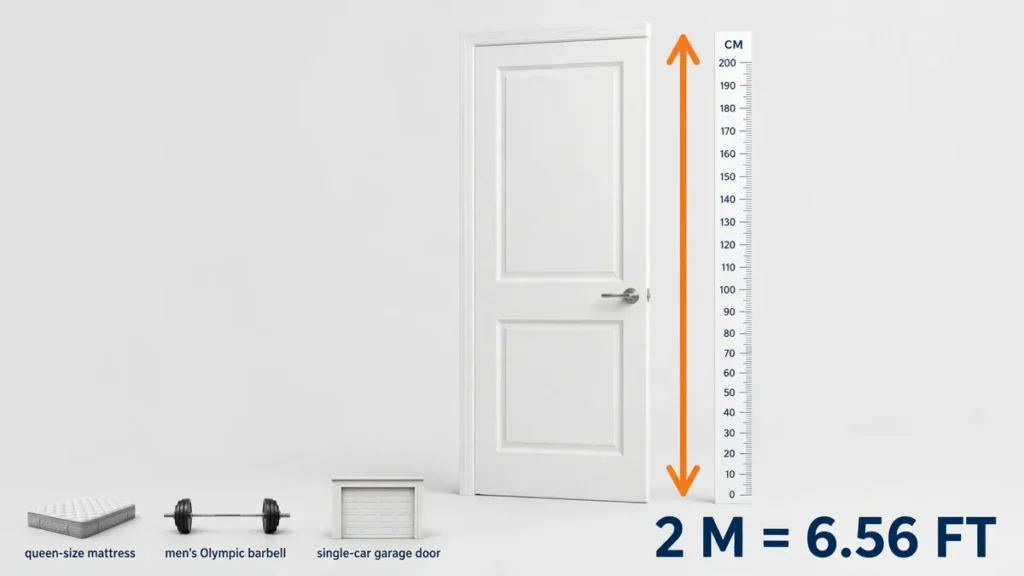
If you have ever wondered how long is 2 meters, the short answer is 6.56 feet — and the longer answer is that 2 meters is the size of a person who is taller than almost everyone alive. It is 200 centimetres exactly, 6 feet 6.74 inches, 78.74 inches all told, and 2.19 yards, and it is the length of the doorway you walk through every morning, the bed you sleep on every night, and the barbell in the gym down the street. The guides that tell you to “just call it 6 feet” are handing you an error of 17.12 centimetres — nearly seven inches, the length of a hand — and calling it close enough, and the guides that tell you a 2-metre person is 6 foot 6 are handing you a person 1.88 centimetres shorter than 2 metres and calling him the match. The honest numbers are cleaner and better: 6 feet is 182.88 cm, which is 17.12 cm short of 2 metres, and 6 foot 6 is 198.12 cm, which is 1.88 cm short, and 6.7 feet is 204.22 cm, which is 4.22 cm over — and 6.7 feet is not the same as 6 foot 7, because 6 foot 7 is 200.66 cm, which is only two-thirds of a centimetre over, while 6.7 feet is a different number wearing the same digits.
Below are four single, named things, each checked against its own specification, with the miss printed wherever a thing misses. Two of them land 3.2 centimetres over 2 metres — a standard interior door and a queen-size mattress, both built to the same 80-inch standard, which is itself the nearest thing America has to 2 metres — and the other two land further out, a garage door 13.36 centimetres over and a men’s Olympic barbell 20 centimetres over, and every miss is printed in the heading so you never have to guess which object you can trust to the centimetre and which you must measure yourself. Every object’s image sits immediately after its heading, and no object is a stack, a multiple, a fraction, or a category guess. You will not find seven rulers laid end to end here, because seven 30-centimetre rulers are 210 centimetres, and you will not find one-and-a-half pool cues, because half a cue is a fraction, not a measurement. By the end you will know 2 metres as a door, a bed, a barbell, and a garage door — and you will know how to walk through it, lie down on it, and stand under it.
Quick Answer
2 meters is 6.56 feet exactly — 200 centimetres, 78.74 inches, and 2.19 yards. But do NOT call it 6 feet: 6 feet is 182.88 cm, which is 17.12 cm short, and do NOT call it 6 foot 6 either: 6 foot 6 is 198.12 cm, 1.88 cm short. The honest shortcut is 6 foot 7 — 200.66 cm, two-thirds of a centimetre over — and the honest object is a standard interior door, 80 inches tall, 203.2 cm, just 3.2 cm past 2 metres.
2 Metres Is Taller Than Almost Everyone Alive
Two metres is the human scale, and that is why it is so hard to picture from the number alone. The average adult man in the world stands about 171 centimetres tall, and the average adult man in the United States stands about 175 centimetres, so 2 metres is 25 to 29 centimetres above the average man — a full head and then some — and it is taller than 99 out of 100 adults you will ever meet. Michael Jordan, the player every height comparison reaches for, is listed at 6 foot 6, which is 198.12 centimetres, and he is 1.88 centimetres short of 2 metres — the most famous tall man in the world does not reach it. LeBron James, listed at 6 foot 9, is 205.74 centimetres, which clears 2 metres by 5.74 centimetres, and the very tallest players in basketball history stand 2.24 and 2.31 metres. So the honest human picture of 2 metres is not “a tall man” — it is a man taller than Michael Jordan, a man you would notice across a crowded room before you noticed anything else about him, a man who has to think about doorways.
The second reason 2 metres is hard to picture is that the imperial system has no round number for it, and the guides fill the gap with rounding that quietly lies. Two metres divided by 0.3048 is 6.56168 feet, a number with five decimal places and no round form anywhere in it, so the guides round to the nearest whole foot and print “about 6 feet” — and 6 feet is 182.88 centimetres, which is 17.12 centimetres short, the length of a hand, the width of a paperback and a half. The guides that round the other way print “about 6 foot 7” without saying whether they mean 6.7 feet or 6 foot 7 inches, and those are two different lengths: 6.7 feet is 204.22 centimetres, 4.22 centimetres over 2 metres, while 6 foot 7 inches is 200.66 centimetres, only 0.66 centimetres over. The decimal and the feet-and-inches look the same on the page and differ by three and a half centimetres in the world, and that is the trap that catches people filling in forms, ordering furniture, and cutting timber. The honest way to picture 2 metres, then, is not to convert it at all — it is to walk through a thing that is 2 metres by its own standard. The door in your hallway is 80 inches tall because the industry settled on 80 inches, it has been 80 inches since the house was built, and it will still be 80 inches when every conversion guide on the internet has been rewritten.
The 4 Objects
Each object below carries its evidence grade in the heading. EXACT means the figure is a standard’s or an authority’s own dimension for the named thing. LISTED means the figure is the manufacturer’s or industry’s published specification for the named thing. The grade is the whole point: a list that never grades its numbers is asking you to trust it, and this article would rather show you the receipt.
1. A Standard US Interior Door — 80 Inches Tall, 203.2 Cm (EXACT)
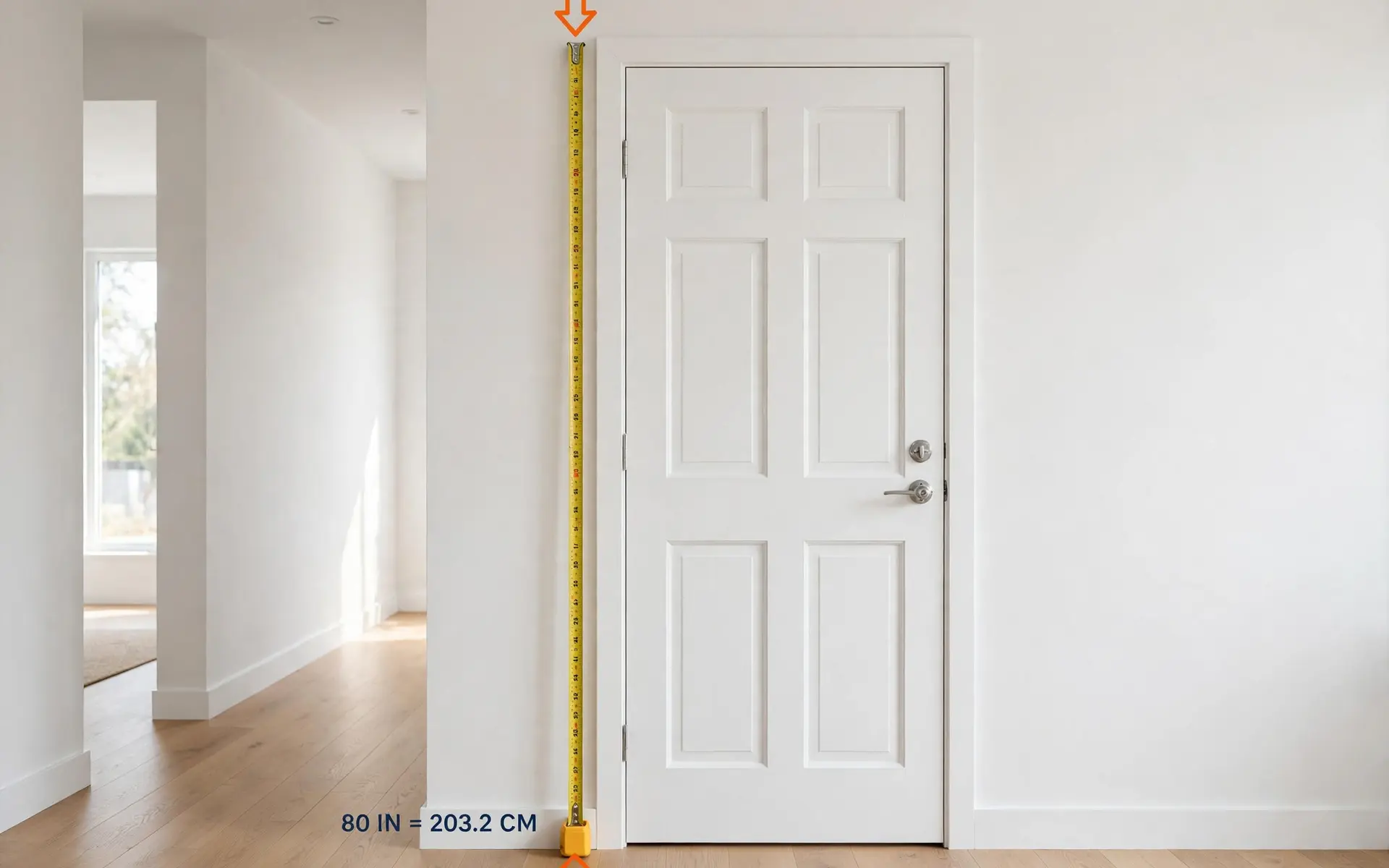
The door is the article’s cleanest near-exact, because its 80 inches is the number the whole American housing stock is built around. The standard interior door in the United States is 80 inches tall — 6 feet 8 inches, 203.2 centimetres — and the same 80 inches governs exterior doors, because the dimension does not shift based on where the door lives in the house. The 2010 ADA Standards for Accessible Design use 80 inches as the clear-height figure for a doorway, with a narrow exception down to 78 inches where a door closer is fitted, and the International Residential Code sets the minimum clear height for a home’s required exit door at 78 inches, so the 80-inch slab clears the code minimum by two inches and the accessibility figure exactly. It is the door in your hallway, the door to your bedroom, and the door to your bathroom, and every one of them is the same height, because the manufacturers settled on 80 inches decades ago and the houses were framed around it.
The fitting check is the slab against the opening, because the door and the doorway are two different measurements and the guides that call a doorway “2 metres” never say which one they mean. An 80-inch door slab needs a rough opening of about 82.5 inches, so the hole in the wall is two and a half inches taller than the door that fills it, and the clear height you actually walk through is the slab’s 80 inches minus the stop and the threshold, not the rough opening and not the frame. A 2-metre person walking through an 80-inch doorway has 3.2 centimetres of clearance — about the width of a thumb — and a 2-metre person walking through a doorway with a closer fitted has only 1.88 centimetres, because the exception drops the clear height to 78 inches. The grade is exact because the figure is the industry’s own standard for this named thing: 80 inches, by the market standard, the accessibility standard, and the code minimum together, and the 3.2-centimetre miss is printed in the heading itself. Stand in your own doorway and look up: the top of the frame is 3.2 centimetres past 2 metres, and you have been walking through 2 metres every day of your life.
2. A Queen-Size Mattress — 60 by 80 Inches, 203.2 Cm Long (LISTED)
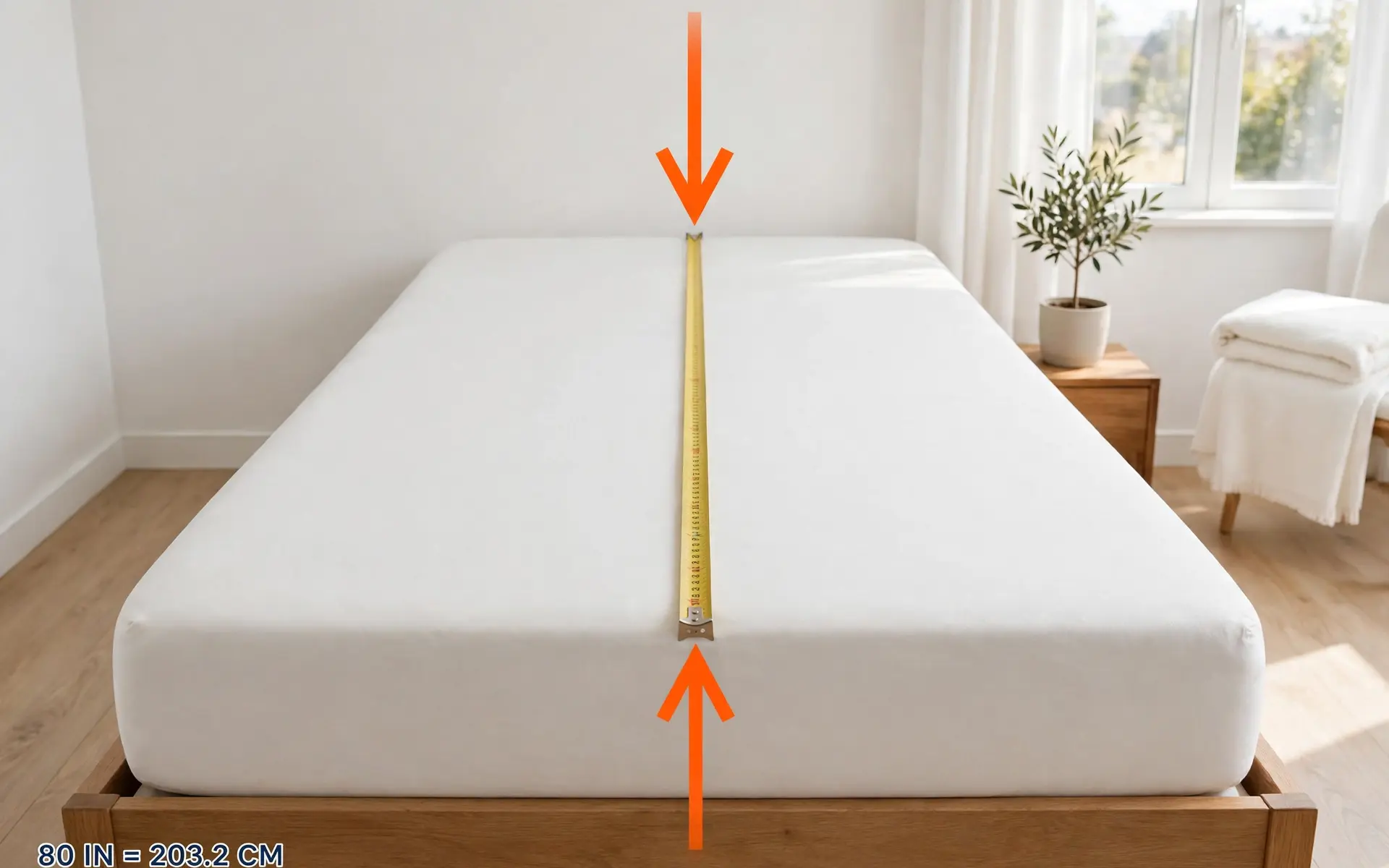
The queen mattress is the article’s most slept-on near-exact, and the one that shares its number with the door. The standard queen mattress in the United States measures 60 inches wide by 80 inches long — 152.4 by 203.2 centimetres — and the size is standardized across brands, so a queen from one maker is the same 60 by 80 as a queen from any other, and the frames, foundations, sheets, and protectors are interchangeable. The 80-inch length is the same 80 inches as the door, and that is not a coincidence: the American bedroom was built around the same 80-inch standard twice over, once for the thing you walk through and once for the thing you sleep on. It is the bed in the primary bedroom, the bed in the guest room, and the bed in the hotel, and every one of them is the same length, because the standard is the product. Lie down on one and you are lying on 203.2 centimetres — 3.2 centimetres past the number in this article’s title, and the same in every shop you will ever buy a bed in.
The fitting check is the length against the frame and the room, because the mattress is 80 inches and the bed it sits on is not. A queen bed frame adds several inches of headboard and footboard beyond the mattress, so a room measured against “2 metres” fails if you measure the frame instead of the mattress, and a fitted sheet bought for a queen fits the 60-by-80 mattress and no other size. A king mattress is also 80 inches long — the king’s extra 16 inches are all width, not length — so the king sleeps two people wider, not longer, and a full-size mattress is 75 inches long, 190.5 centimetres, which is 9.5 centimetres short of 2 metres. Some makers build a fraction short — one major maker’s queen is listed at 79.5 inches, a half inch under the standard — and the foam, the quilting, and the pillow top can shift the finished measurement by about an inch either way, so the 80 inches is the standard, not a promise about any single mattress off the line. The grade is listed because the figure is the industry’s published standard size for this named product, with the deviation printed in full: 203.2 cm, not 200 cm, and the 3.2 centimetres is the whole story. Measure your mattress, not your bed, because the bed is the object in this article you spend a third of your life on.
3. A Men’s Olympic Barbell — 220 Cm Long (EXACT)
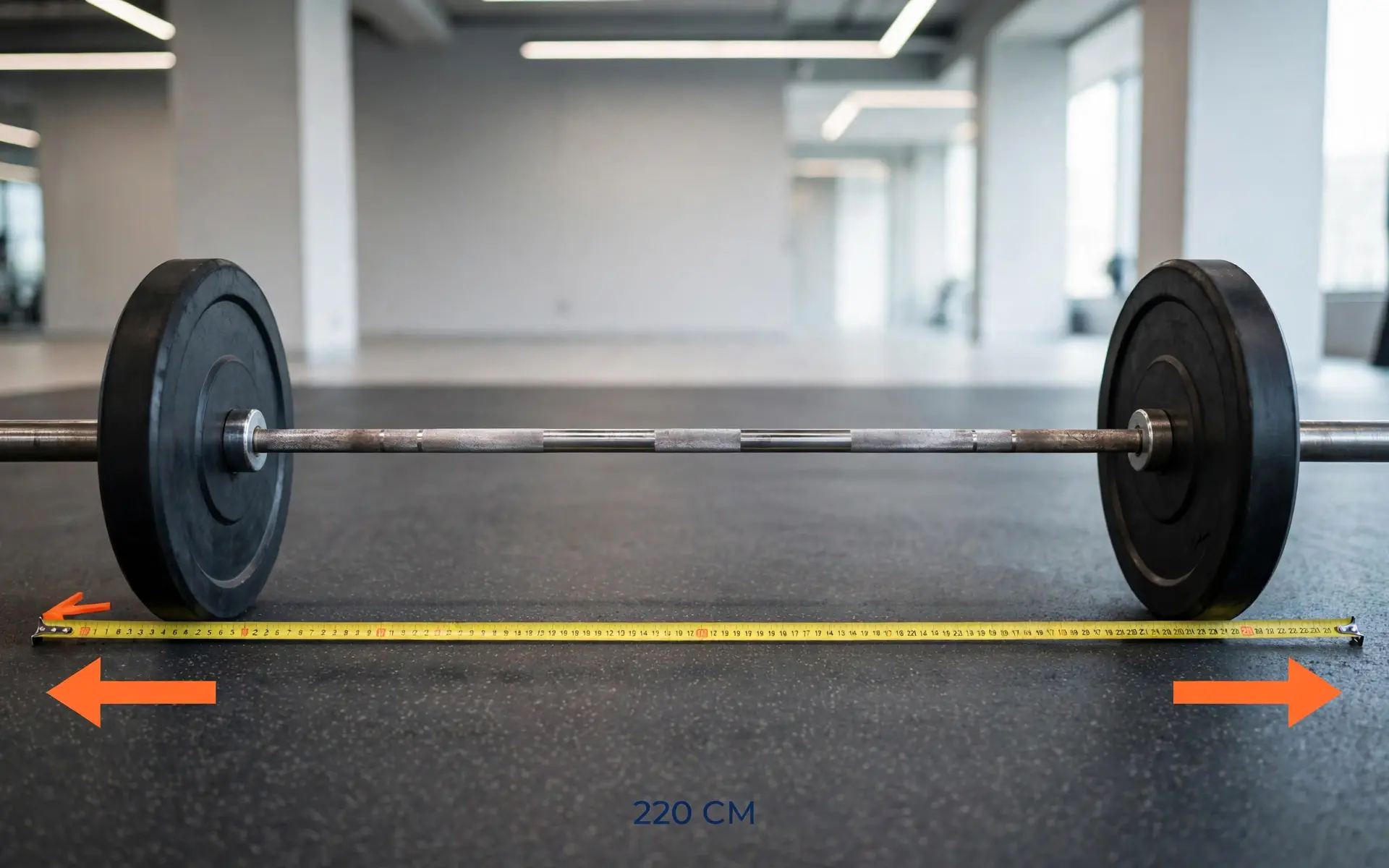
The barbell is the article’s largest miss, and the one with the strongest rulebook behind it. The International Weightlifting Federation’s Technical and Competition Rules and Regulations fix the men’s competition barbell at 220 centimetres long overall — 20 kilograms in weight, a 28-millimetre shaft, 50-millimetre sleeves, and 131 centimetres between the collars — so the bar in every Olympic weightlifting competition on Earth is 220 centimetres from end to end. It overshoots 2 metres by exactly 20 centimetres, and the same number holds whether the bar is on the platform in Paris or on the rack in your gym, because the specification is the sport. It is the bar the lifters snatch overhead, the bar they clean to their shoulders, and the bar they drop from above their heads, and all three lifts use the same 220 centimetres.
The fitting check is the competition bar against the gym bar, because the bar in your gym is probably not the bar in this article, and the guides that call a barbell “2.2 metres” never say which bar they mean. The common 7-foot bar found in most commercial gyms is 213.36 centimetres long — 6.64 centimetres shorter than the competition bar, and 13.36 centimetres past 2 metres — and the women’s competition barbell is 201 centimetres long, 15 kilograms, with a 25-millimetre shaft, which is only one centimetre past 2 metres and the closest any barbell comes to it. A rack, a platform, or a barbell case bought against “2 metres” fails by 20 centimetres if you buy for the competition bar and by 13.36 centimetres if you buy for the gym bar, and the plates make the confusion worse: the competition bumper plates are 450 millimetres across, so a loaded bar is wider than the bar itself in every direction except length. The grade is exact because the figure is a federation’s own specification for this named thing: 220 cm, by the rulebook, and the 20-centimetre miss is printed in the heading itself. Hold a barbell across your shoulders and you are holding 220 centimetres — 20 centimetres past the number in this article’s title, and the same in every gym that follows the rulebook.
4. A Standard Single-Car Garage Door — 7 Feet Tall, 213.36 Cm (LISTED)
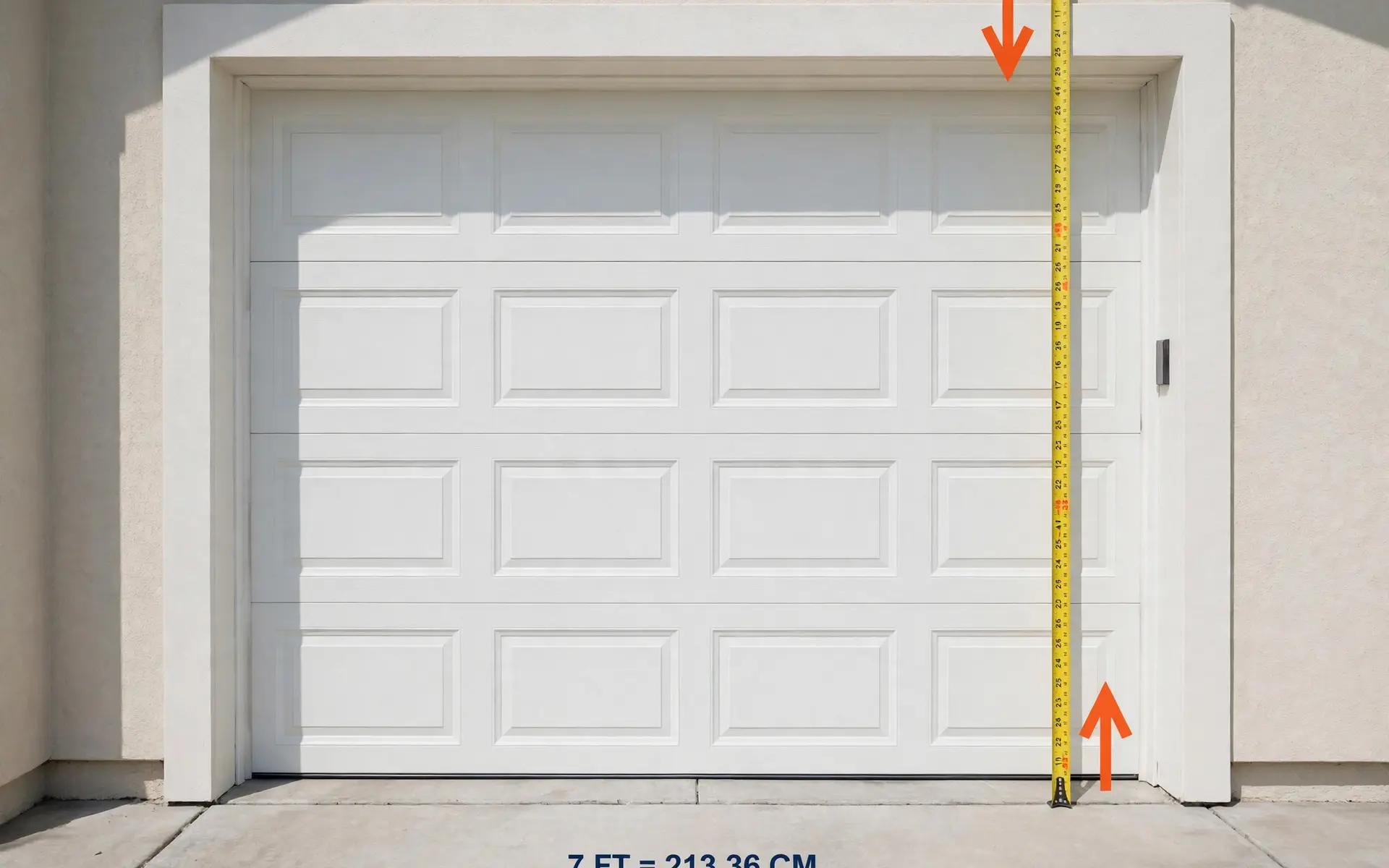
The garage door is the article’s most driven-through near-miss, and the one that proves how far the 80-inch standard reaches. The standard residential garage door height is 7 feet — 84 inches, 213.36 centimetres — and the most common single-car sizes are 8 feet wide by 7 feet tall and 9 feet wide by 7 feet tall, with the double-car standard at 16 feet wide by 7 feet tall. The 7-foot height has been the default for decades, because it clears most sedans, small SUVs, and standard pickup trucks with room to spare, and the door makers build it in four 21-inch panels, four times 21 being 84. It is the door your car drives through every morning, the door that closes behind you at night, and the door the delivery driver waits in front of, and every one of them is the same height, because the houses were built around it. Stand under one and you are standing under 213.36 centimetres — 13.36 centimetres past the number in this article’s title, and the same on every street you will ever drive down.
The fitting check is the door against the vehicle, because the door is 7 feet and the opening it fills is not, and the guides that call a garage door “about 2 metres” never say whether they mean the door, the opening, or the car. The rough opening runs taller than the door itself, and a vehicle with a roof rack or a lifted suspension needs the 8-foot door, which is the common upgrade in newer builds and measures 243.84 centimetres — 43.84 centimetres past 2 metres, nearly half a metre of clearance you do not need for a sedan. A 2-metre person standing under a 7-foot garage door has 13.36 centimetres of clearance — about the length of a hand — and a 2-metre person standing under an 8-foot door has nearly 44 centimetres, which is why the taller door feels cavernous and the standard door feels exactly right. The grade is listed because the figure is the industry’s published standard height for this named product, with the deviation printed in full: 213.36 cm, not 200 cm, and the 13.36 centimetres is the whole story. Measure the door, not the opening, and measure the car with its roof rack on, because the garage door is the object in this article you drive through every day.
The Door Test: Walk Through 2 Metres
Two metres is a number you can check without a second tool, because the objects in this article are the tools — but only if you use them in the order your body already knows. First, walk through your interior doorway: a standard door is 80 inches tall, so stand in the frame and reach up — the top of the frame is 3.2 centimetres past 2 metres, which is about the width of your thumb, and if your fingertips brush the frame you are standing at the height this article is about. Second, lie down on your bed: a queen mattress is 80 inches long, so stretch out flat and look at your feet — the end of the mattress is 3.2 centimetres past 2 metres, and if your heels reach the foot of the bed with nothing to spare, you are lying on 2 metres. Third, stand under your garage door: a standard single-car garage door is 7 feet tall, so stand in the opening and reach up — the top of the door is 13.36 centimetres past 2 metres, about the length of your hand, and the gap between your fingertips and the door is the 13.36 centimetres printed in this article. Fourth, pick up a barbell: a men’s competition barbell is 220 centimetres long, so hold it across your shoulders and look at the ends — the bar sticks out 10 centimetres past 2 metres on each side, and the 20 centimetres is the reason the bar feels longer than the doorway and the bed, because it is. None of these replaces a calibrated tool for anything that must fit, but all four will tell you whether 2 metres is the size you think it is before the sofa is ordered, the bed is bought, or the garage is built — and the doorway is the one to trust, because its 3.2 centimetres is the smallest miss you can walk through.
Where the Other Lists Get 2 Metres Wrong
Five wrong numbers about 2 metres circulate so widely that they deserve their own section, because each one is stated confidently on a page that ranks for this exact question. First, the 6-foot-6 person: one popular guide says a person who is 2 metres tall stands about 6 foot 6, and 6 foot 6 is 198.12 centimetres — 1.88 centimetres short, which is the difference between clearing a doorway and ducking under it, and the guide’s own conversion table says 6.56 feet in the same article. Second, the seven rulers: another guide tells you to lay seven standard 30-centimetre rulers end to end and calls that almost exactly 2 metres, and seven times 30 is 210 centimetres — 10 centimetres over, which is the width of a hand, and the guide admits the 10 centimetres in the same sentence and calls it “just a touch”. Third, the two baseball bats: a third guide tells you two adult baseball bats placed end to end stretch to about 2 metres, and a standard adult bat is about 86 centimetres long, so two of them are about 172 centimetres — 28 centimetres short, more than a foot, and the bats are a multiple, not a single thing, which is the same error as the rulers wearing a uniform. Fourth, the pool cue and a half: a fourth guide tells you one and a half pool cues will get you very close to 2 metres, and a standard pool cue is about 147 centimetres long, so one and a half cues is about 221 centimetres — 21 centimetres over, and half a cue is a fraction, not a measurement, and no pool hall in the world sells half a cue. Fifth, the kitchen counter: a fifth guide calls a medium refrigerator or a kitchen counter about 2 metres tall, and a standard kitchen counter is 36 inches high — 91.44 centimetres, less than half of 2 metres — so the guide’s own fix, stacking two counters, gives 182.88 centimetres, which is still 17.12 centimetres short, and a stack of counters is not a measurement either. None of these five numbers belongs in a 2-metre article, and all five are here so you never have to learn that from a purchase.
2 Metres Against the Sizes Around It
Two metres sits at the top of the human ladder, and the rungs below it crowd together as they climb. Six feet is 182.88 centimetres, the number everyone rounds 2 metres down to, and the rounding costs 17.12 centimetres. A full-size mattress is 75 inches long, 190.5 centimetres, which is 9.5 centimetres short, and a 6-foot-6 person is 198.12 centimetres, which is 1.88 centimetres short — the most famous tall man in the world, and still short of the mark. Then comes 2 metres itself, 200 centimetres, and just past it the women’s Olympic barbell at 201 centimetres, one centimetre over, the closest any barbell comes. Then the two 80-inch standards together, the door and the queen mattress at 203.2 centimetres, 3.2 centimetres over, and the garage door at 213.36 centimetres, 13.36 over, and the men’s Olympic barbell at 220 centimetres, 20 over. The ladder runs 182.88, 190.5, 198.12, 200, 201, 203.2, 213.36, 220 — and the point of it is the middle: 2 metres is the only rung with no object standing exactly on it, a doorway and a bed 3.2 centimetres past it on one side and a famous basketball player 1.88 centimetres short of it on the other, and all four objects in this article sit inside a 20-centimetre band, which is why 2 metres is the tightest human-scale size in the series to walk through. One more rung deserves a mention, because it is the only exact one in the whole ladder: a UK king-size bed is sold as 150 by 200 centimetres, so its length is 2 metres exactly, by the metric label, and it is the one bed in the world that needs no miss printed beside it.
How 2 Meters Compares With Other Lengths
Readers comparing nearby sizes may also want the site’s guides to how long is 6 feet, how long is 7 feet, how long is 12 feet, how big is 17 cm, how big is 15 cm, and how big is 10 cm for the foot and centimetre series, 1 meter and 3 meters for the metre series, and the inches hub and the feet hub for the full size directories. Each of those guides follows the same rule as this one: the spec sheet, the grade, and the miss printed in full.
Frequently Asked Questions
How many feet is 2 meters?
2 meters is 6.56 feet, or 6 feet 6.74 inches in feet-and-inches form. Divide 2 by 0.3048 and you get 6.56168 feet — and the trap is rounding that to 6 feet, which understates the length by 17.12 centimetres, or writing 6.7 feet when you mean 6 foot 7 inches, which overstates it by 3.56 centimetres. For anything that must fit, use 6.56 feet; for a quick estimate in your head, 6 foot 7 inches is 200.66 cm, which is close enough to picture it and only two-thirds of a centimetre over.
How many inches is 2 meters?
78.74 inches. Multiply 2 by 39.3701 and you get 78.7402 inches — and the trap is rounding that to 79 inches, which adds a quarter of an inch, or to 78 inches, which takes a quarter of an inch away. In feet that is 6 feet 6.74 inches, in yards it is 2.19 yards rounded, and in centimetres it is exactly 200, because the metre is defined in centimetres and the inch is defined as exactly 2.54 centimetres.
How many centimeters is 2 meters?
Exactly 200 centimetres, because 1 metre is 100 centimetres by definition, with no rounding involved. In millimetres that is 2,000 mm, in metres it is 2.00 m, and in feet it is 6.56 ft. The metric conversions are the clean ones in this article: every imperial figure in it is a rounding of an exact metric number, which is why measuring in centimetres first is the honest way to work at this size.
Is 2 meters the same as 6 feet?
No, and the difference matters. Six feet is 182.88 cm, which is 17.12 centimetres shorter than 2 metres — nearly seven inches, the length of a hand. If you order a 2-metre sofa as 6 feet, it will not fit the wall; if you buy a 2-metre bed as 6 feet, your feet will hang off the end. The honest shortcut is 6 foot 7 inches, which is 200.66 cm — two-thirds of a centimetre over, which is close enough for anything you will ever measure by hand.
Is 2 meters tall for a person?
Yes. Two metres is taller than 99 out of 100 adults you will ever meet, and the average adult man in the world stands about 171 centimetres — 29 centimetres shorter. Michael Jordan, listed at 6 foot 6, is 198.12 centimetres, which is 1.88 centimetres short of 2 metres, so even the most famous tall man in the world does not reach it. A person who is 2 metres tall has to think about doorways: a standard 80-inch door gives them 3.2 centimetres of clearance, about the width of a thumb.
Is a standard door 2 meters tall?
Almost. A standard US interior door is 80 inches tall, which is 203.2 cm — 3.2 centimetres taller than 2 metres. The same 80 inches governs exterior doors, and the 2010 ADA Standards use 80 inches as the clear-height figure for a doorway. Measure the slab, not the rough opening: the hole in the wall runs about 82.5 inches, two and a half inches taller than the door that fills it, and the clear height you walk through is the slab’s 80 inches minus the stop and the threshold.
How long is a queen mattress in meters?
A standard queen mattress is 2.032 metres long — 80 inches, 60 inches wide — and a king mattress is the same length, because the king’s extra 16 inches are all width. A full-size mattress is 1.905 metres long, 75 inches, which is 9.5 centimetres short of 2 metres. Some makers build a fraction short, and the foam and quilting can shift the finished measurement by about an inch, so the 80 inches is the industry standard, not a promise about any single mattress off the line.
How do I measure 2 meters without a tape measure?
Walk through your interior doorway: the top of a standard 80-inch door frame is 3.2 centimetres past 2 metres, about the width of your thumb. Or lie down on a queen mattress: the end of the bed is 3.2 centimetres past 2 metres, and if your heels reach the foot of the bed with nothing to spare, you are lying on 2 metres. Or stand under your garage door: the top of a standard 7-foot door is 13.36 centimetres past 2 metres, about the length of your hand. For anything that must fit — a sofa, a bed, a garage — borrow or buy a real tape measure, because at 2 metres the misses in this article run from 3.2 to 20 centimetres, and guessing throws every one of them away.
Final Thoughts
Two metres is the rare measurement that is human and still misunderstood, because 6.56 feet can be a doorway, a bed, a barbell, or a garage door — and the number alone never says which. Now you know it as a door’s height fixed by the industry’s own standard, a mattress’s length fixed by the industry’s own size chart, a barbell’s length fixed by its federation’s rulebook, and a garage door’s height fixed by the industry’s own standard — and you know which of those you can trust to 3.2 centimetres and which you must measure yourself. The rule that runs through all four is the same one this site always uses: trust the spec sheet, print the deviation, and let the name stay on the box where it belongs. Measure twice, in the direction the object actually travels, and 2 metres will fit the first time.
