
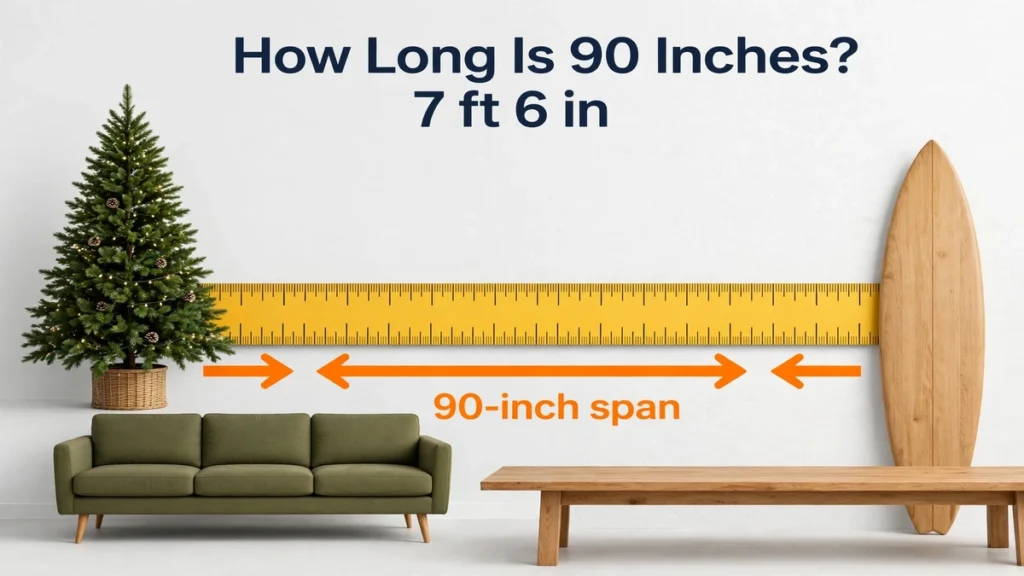
If you have ever wondered how long is 90 inches, the clean answer is 7 feet 6 inches — and the messy part is everything people do with that half foot afterward. Ninety inches is the height of the big Christmas tree in the corner, the width of a grand sofa, the length of a funboard surfboard, and the long side of a dining table that seats eight. It is also the number on a projector screen that is not 90 inches wide at all, the number on a rug whose 90-inch side is the short side, and the number that turns into “7 feet 5 inches” in more shopping carts and text messages than any other measurement on this site. This article gives you six single, named things, each checked against its own specification, with the miss printed wherever an object misses. For the wider range, see the complete inches size guide.
Below are six objects, and the count itself is part of the honesty. Four are exact at 90 inches for the dimension stated, one more is listed at exactly 90 inches with a reviewer warning attached, and one is a labelled near-miss that misses by nearly a foot. Every object’s image sits immediately after its heading, and no object is a stack, a multiple, or a category guess. By the end you will know 90 inches as a tree, a sofa, a board, a table, a rug, and a screen that is not what its name promises — and you will know which of those you can trust to the inch and which you must measure yourself.
Quick Answer
90 inches = 7 feet 6 inches exactly = 228.6 cm = 2.286 m = 2.5 yards exactly. Do NOT write it as 7 feet 5 inches — the .5 in 7.5 feet is half a foot, which is 6 inches, not 5. And do NOT buy wall space for a “90-inch screen” without checking the spec sheet: the screen below measures only 78.4 inches wide, because screens are sold by the diagonal.
The Half-Foot Trap: 7.5 Feet Is Not 7 Feet 5 Inches
The trap in this article is not a decimal misread like the 6.67-foot mistake in our earlier article — it is a digit misread, and it is more common. Someone sees “7.5 feet” and writes “7 feet 5 inches,” as if the 5 after the point were inches. It is not: the point-five is half of one foot, and half of 12 inches is 6 inches, so 7.5 feet is 7 feet 6 inches, a full inch longer than the misreading. That inch is the difference between a tree topper that clears the ceiling and one that bends against it, and between a sofa that slides into an alcove and one that jams an inch proud of the wall.
The second trap is direction, and 90 inches is where direction starts to cost real money. Ninety inches of height is a tree that may not fit under your ceiling; 90 inches of width is a sofa that may not fit through your door; 90 inches of length is a dining table that may not leave walking room on both sides. The fitting question changes with the direction — vertical clearance for the tree, doorway diagonal for the sofa, floor length for the table — which is why this article never prints “90 inches” without saying 90 inches of what.
The third trap is the name on the box, and it runs in both directions. A rug sold as “7 by 9” is 90 inches on its short side, not its long one; a screen sold as “90-inch” is 90 inches on the diagonal, not across the wall. The rule for the whole article is therefore simple: trust the spec sheet, print the deviation, and let the name stay on the box where it belongs.
The 6 Objects
1. A Balsam Hill BH Balsam Fir Christmas Tree, 7.5 Feet Tall — 90 Inches Tall (EXACT)
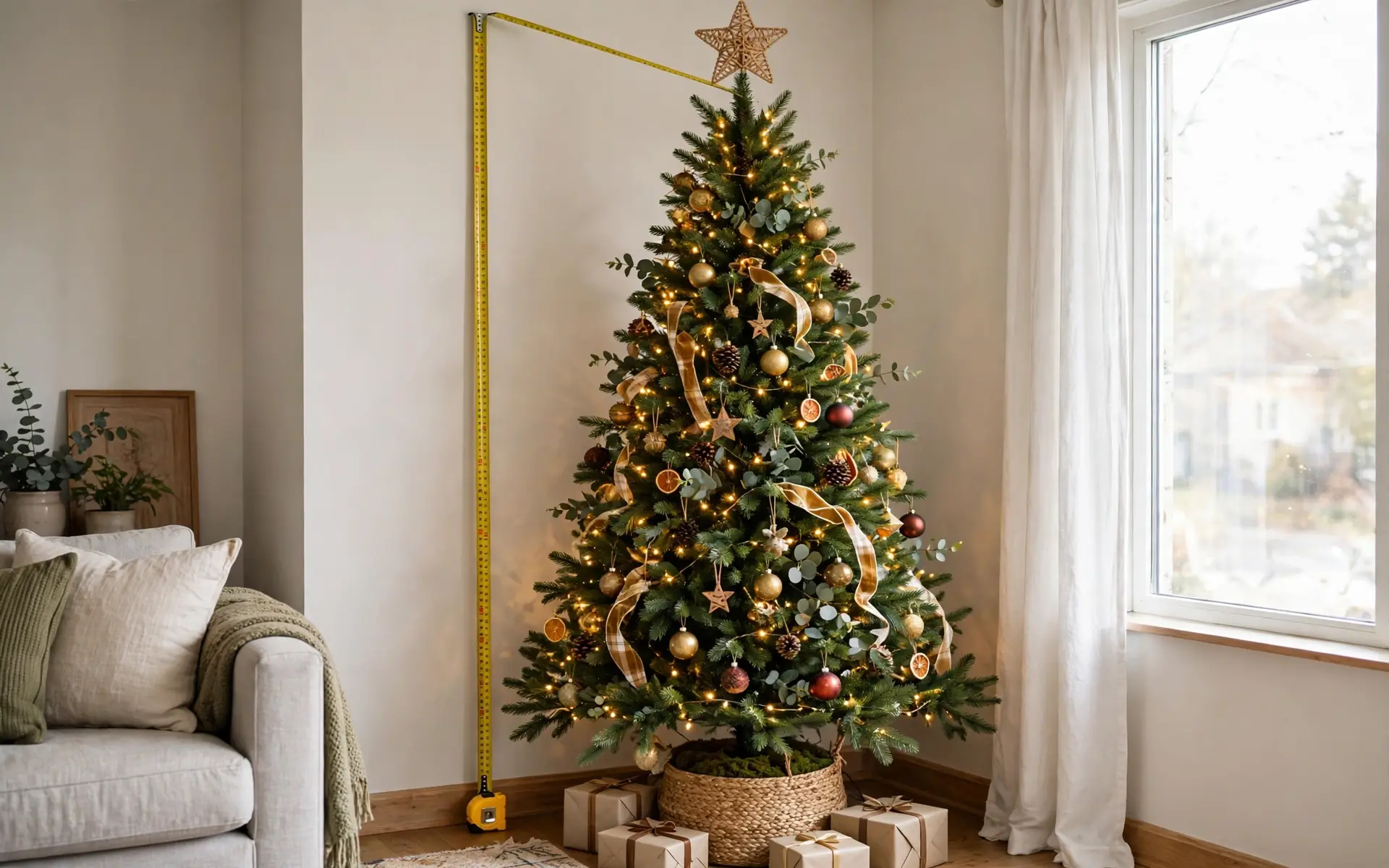
The tree is the article’s anchor, because it is the 90 inches most readers will stand next to this winter. The manufacturer’s specification for the Balsam Hill BH Balsam Fir in its 7.5-foot size lists the product dimensions as 60 inches deep by 60 inches wide by 90 inches high — and 7.5 feet times 12 inches is exactly 90, with no rounding, no qualifier, and no conversion fudge. It is the large residential tree size, the one sellers call the sweet spot: tall enough to dominate a living room, short enough, in theory, to leave room for a star under a standard 8-foot ceiling.
The fitting check is the ceiling, and it is tighter than the theory. An 8-foot ceiling is 96 inches, so a 90-inch tree leaves 6 inches of air — and a tree topper eats most of that, while a thick tree skirt or a raised stand can eat it from below. The honest advice is to measure from the floor your tree actually stands on to the ceiling it actually stands under, then subtract the topper before you buy, because “7.5 feet” on the box does not include the star. The height itself is exact as specified, but the finished display is taller than the spec, and that is the one place this object can still surprise you. Under a 9-foot ceiling, by contrast, the same tree leaves 18 inches of breathing room and looks almost modest — which is why the same 90 inches reads as grand in one house and restrained in another.
2. A WyndenHall 90-Inch Chloris Mid-Century Sofa — 90 Inches Wide (LISTED)
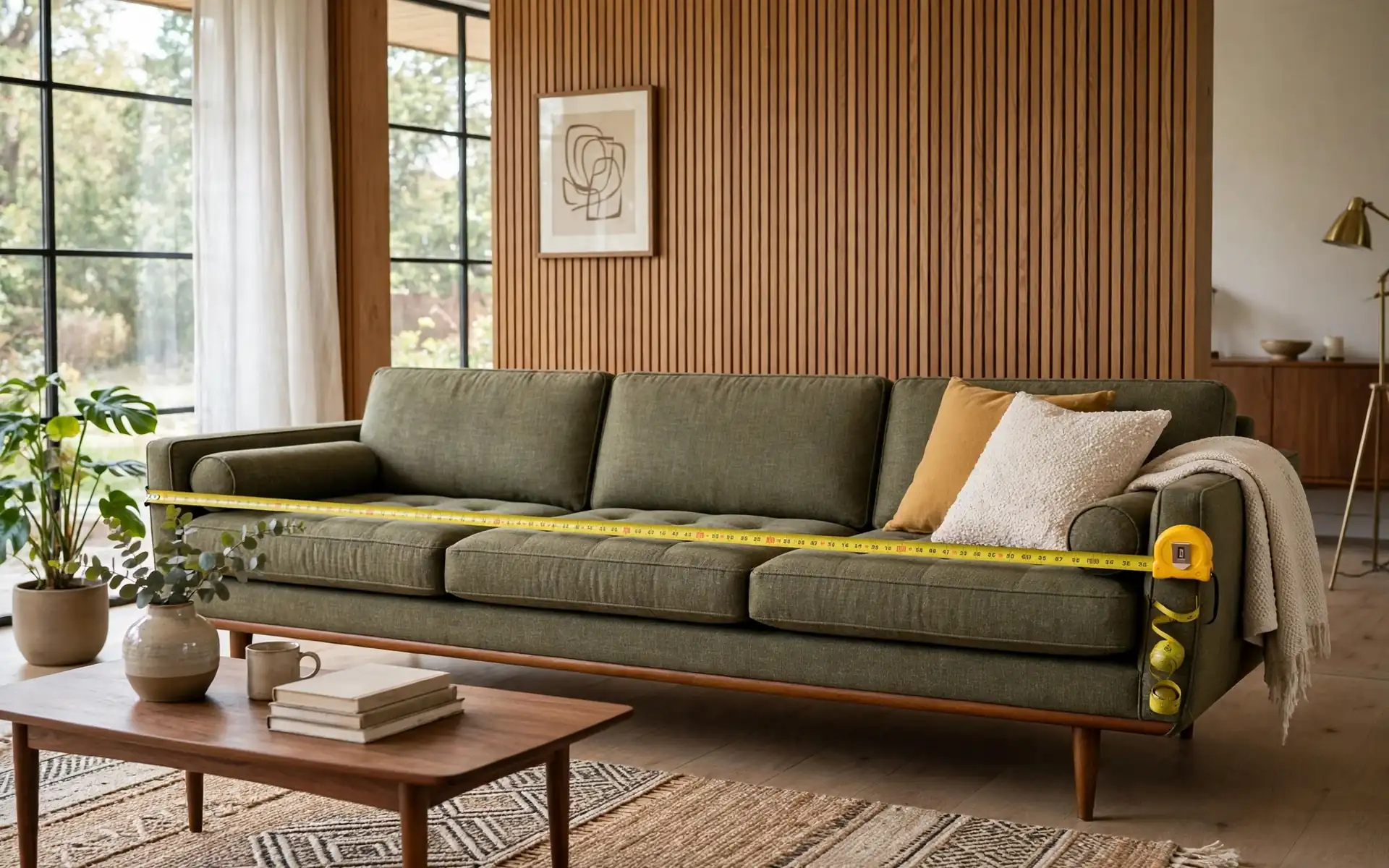
The sofa is the article’s widest seat and its lesson in showroom scale. The Chloris is sold as a 90-inch sofa, a three-seater in mid-century style with two wide back and seat cushions, and 90 inches of sofa is six inches past the standard three-seater range: this is the size sellers call a grand sofa, built for a long wall rather than a snug corner. Ninety inches of sofa seats three adults with room to spare, and it anchors a living room the way a 7-foot sofa never quite does — it is the first size at which a sofa becomes the room’s horizon line.
The fitting check is the doorway, and it is stricter than the wall. A 90-inch sofa needs a wall at least 90 inches long before a single side table is added, but it also needs a delivery path: a standard interior doorway is only about 32 inches wide, so a 90-inch sofa arrives on its end, tilted, and turned, and a tight hallway corner can defeat it entirely. It is graded listed rather than exact because the figure comes from the retailer’s listing for the 90-inch model rather than a manufacturer’s dimensioned drawing, and at least one buyer review notes the sofa feeling slightly smaller than expected — so the tape, as always, is the final judge. Measure the wall, measure the doorway diagonal, and measure the elevator if there is one, in that order, before the delivery truck arrives.
3. A Torq Mod Fun 7-Foot-6 Surfboard — 90 Inches Long (EXACT)
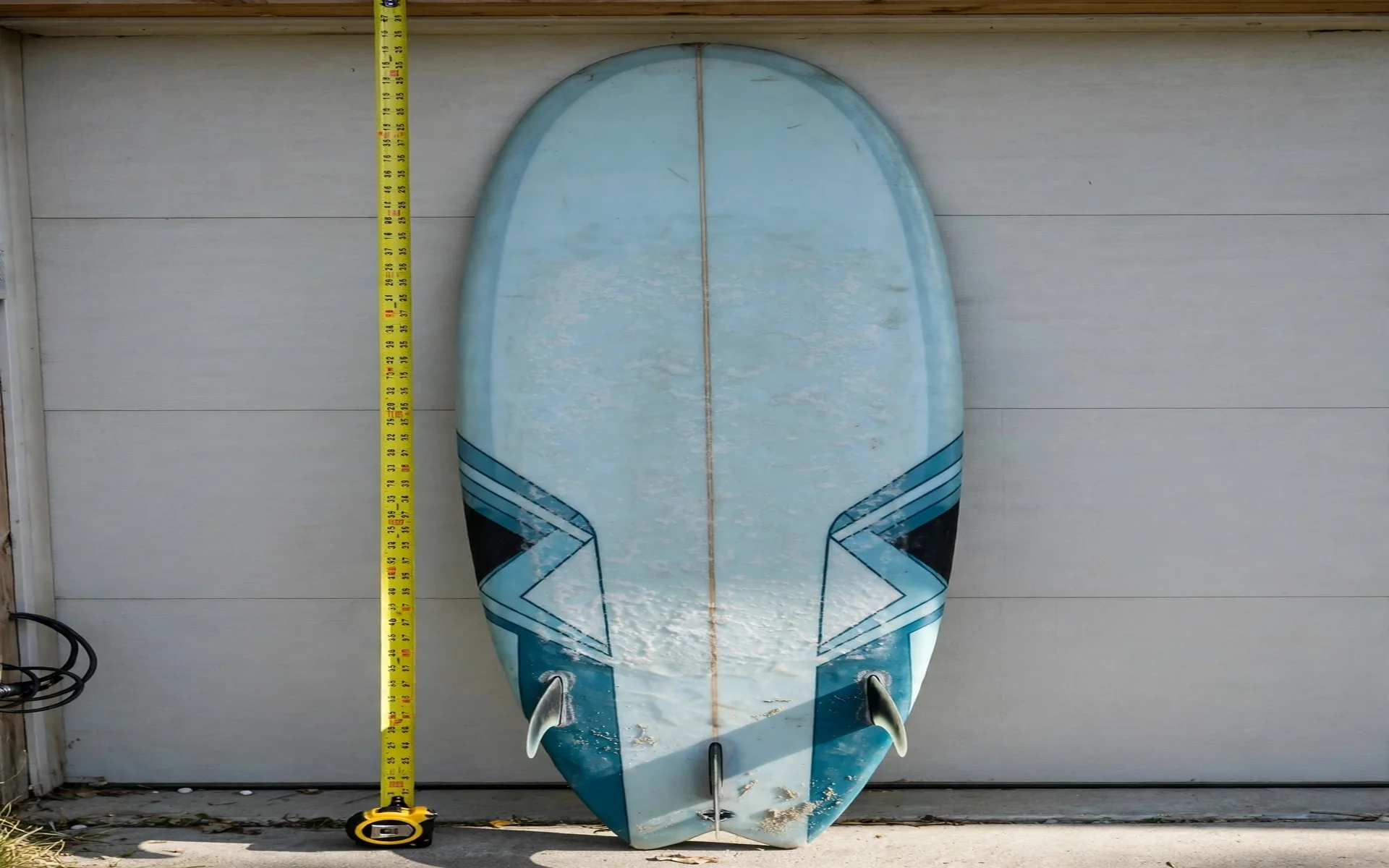
The surfboard is the article’s most elegant exact, because its name is already the measurement. The Torq Mod Fun is sold in a 7-foot-6 size, listed at 21 and a half inches wide and 2 and 7/8 inches thick with about 52 litres of volume — and 7 feet 6 inches is 90 inches, with no conversion, no rounding, and no qualifier. It is a crossover funboard, built to paddle like a longer board and turn like a shorter one, and its length is the whole point: long enough to catch waves early, short enough to turn where a longboard would not.
The fitting check is transport, and it is where 90 inches bites. A 90-inch board fits diagonally across most car roofs and inside many wagons and vans with the seats down, but it does not fit inside a typical sedan trunk, and a roof-rack setup needs crossbars spaced to support a board of this length without letting either end bounce. It is also the article’s best portable yardstick — stand it on its tail next to a Christmas tree and the two 90-inch objects line up exactly, board against branches, with nothing to spare. Measure the board against your car before you buy the board against the waves: a 90-inch board that cannot get to the beach is a wall decoration, and a handsome one, but not the purchase you meant.
4. A Jensen Outdoor Foundations 90-Inch Rectangular Dining Table — 90 Inches Long (EXACT)
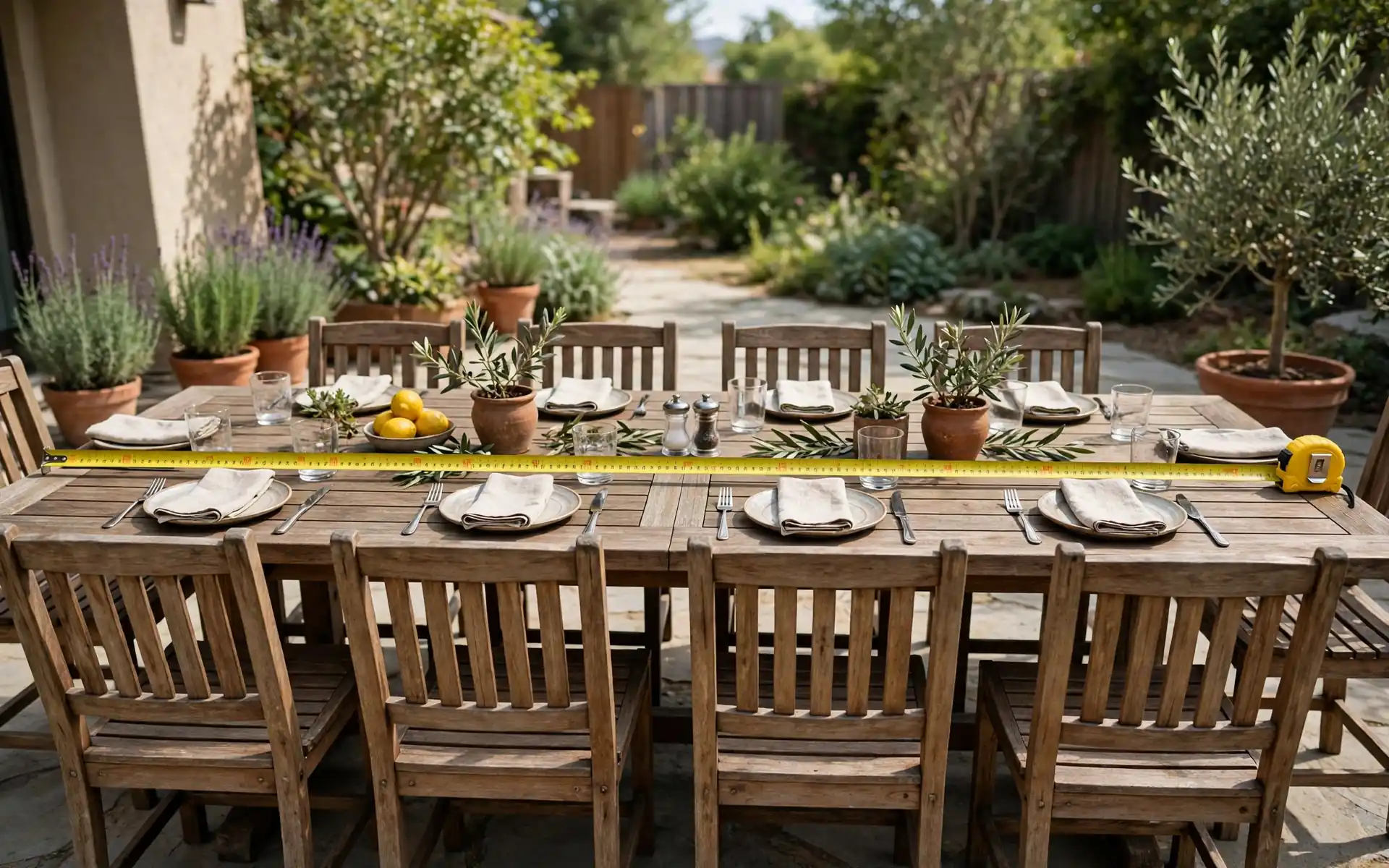
The dining table is the article’s most sociable 90 inches. The manufacturer’s own tear sheet for the Jensen Outdoor Foundations rectangular dining table lists it at 90 inches long, 39 inches wide, and 29 inches high, in ipe and powder-coated aluminium — and the length is unambiguous: 90 inches of tabletop, end to end, which is the size that seats eight adults with the standard 24 inches of elbow room per diner along the sides. It is the table size at which a dinner party stops being a squeeze and starts being a room.
The fitting check is the walking space, and it is stricter than it looks. A 90-inch table needs chairs pulled out on both long sides, which adds roughly 24 inches per side beyond the 39-inch width, so the dining zone needs a room at least 11 feet wide before a sideboard or a walkway is added — and at 90 inches long, the table plus end chairs needs a room at least 12 feet long to avoid diners backing into the wall. The grade is exact because the figure comes from the manufacturer’s own dimension sheet rather than a retailer’s listing, which is the strongest evidence this article can print. Check the room first, the table second, and the chair count third — and never order a 90-inch table against a room measured in feet, because rounding 7 feet 6 inches down to “about seven feet” loses six inches you do not have.
5. A nuLOOM 7-Foot-6 by 9-Foot-6 Area Rug — 90 Inches Wide (EXACT)
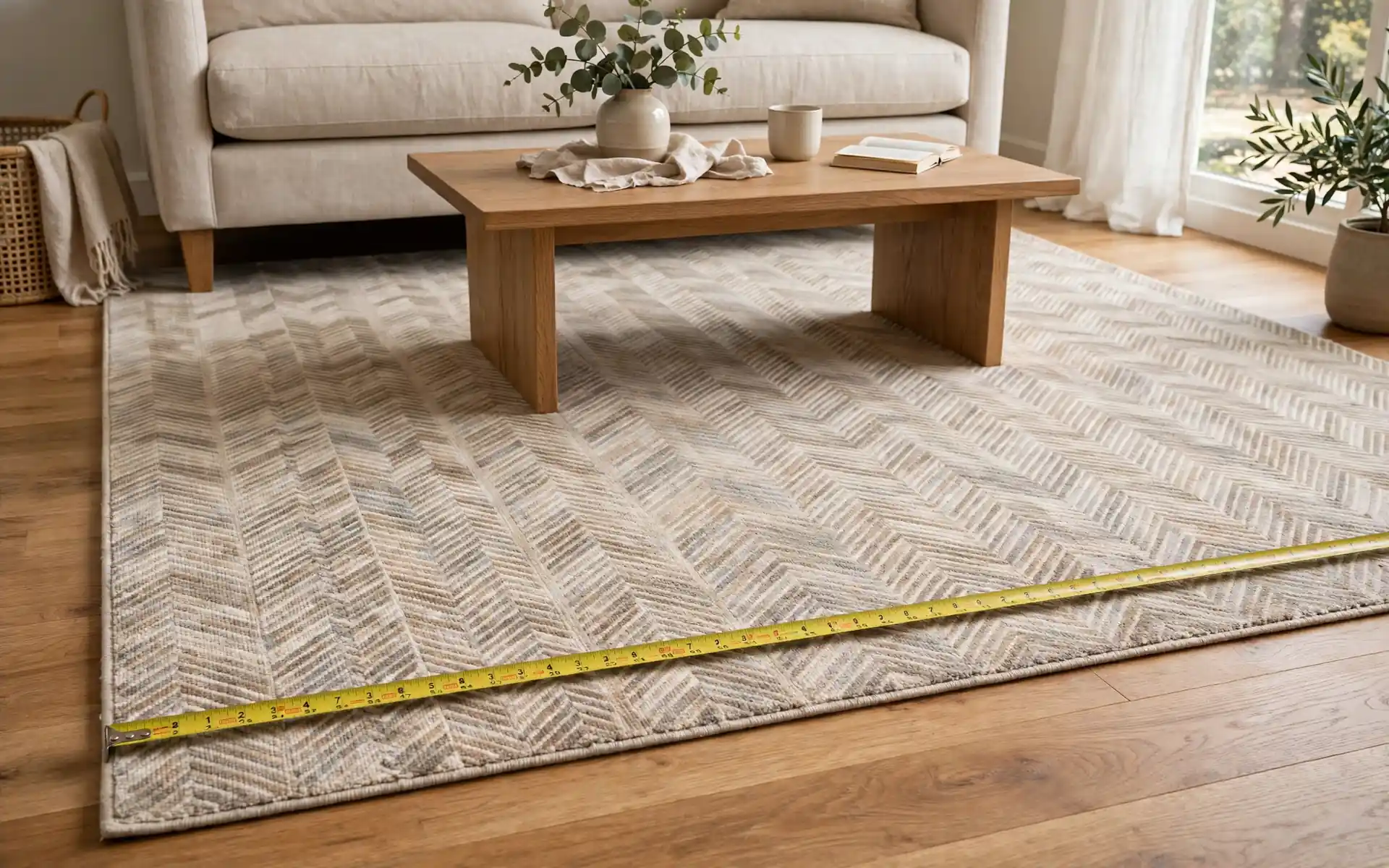
The rug is the article’s quietest trap, because its 90 inches is the side you are not looking at. A nuLOOM rug sold as 7 feet 6 inches by 9 feet 6 inches lists its product dimensions as 114 inches long by 90 inches wide — and the 90-inch side is the short side, the width, while the length runs 114 inches, a full two feet longer. Shoppers who hear “90-inch rug” and picture a 90-inch square are picturing the wrong shape entirely, and the rug that arrives is a rectangle with a long side they never budgeted floor for.
The fitting check is the furniture, not the floor. Under a dining table, a 90-inch-wide rug needs to extend at least 24 inches past the table on every side so chairs stay on the rug when pulled out, which means a 90-inch width suits a table no wider than about 42 inches; in a living room, the front legs of the sofa and chairs should sit on the rug, which makes the 114-inch length the dimension that decides the seating zone. The grade is exact because 7 feet 6 inches is 90 inches by definition and the listing confirms 90 inches as the width — but the honest warning is that rug sizes are nominal, and hand-finished edges can vary by a fraction of an inch, so the tape is still the final judge. Measure the zone the rug must cover, not the number on the label, and remember that for this rug the 90 inches is the width, not the length.
6. An Elite Screens Yard Master 2 90-Inch Projector Screen — 78.4 Inches Wide, 11.6 Inches Short (LISTED Near-Miss)
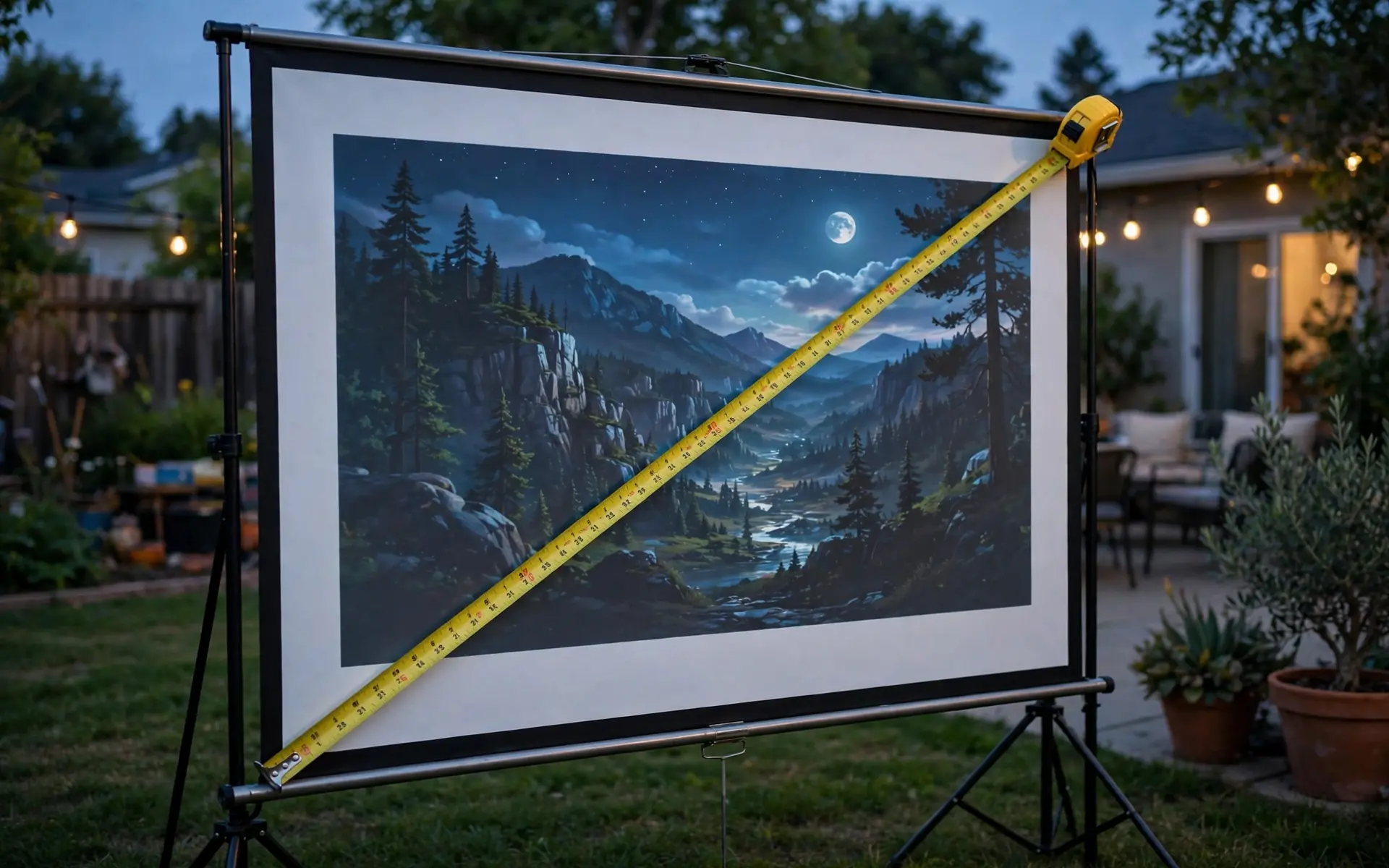
The screen is the article’s best trap, because its name is the measurement and the measurement is not what you think. The Elite Screens Yard Master 2 model OMS90HR3 is sold as a 90-inch screen, and its specification gives a viewing area of 78.4 inches wide by 44.1 inches high in a 16:9 aspect ratio — which is 11.6 inches short of 90 across the wall, nearly a full foot of missing width. The overall width including the frame is 83.6 inches, which is still 6.4 inches short of 90. The 90 inches is the diagonal, corner to corner, and a diagonal is not a width.
The geometry is worth working once, because it generalises to every screen you will ever buy. For a 16:9 screen, the width is the diagonal times 16 divided by the square root of 337 (16 squared plus 9 squared), which for 90 inches gives 78.5 inches — matching the manufacturer’s 78.4 within rounding. The same formula is why a 90-inch television would also be about 78 inches wide, not 90, and why a buyer who budgets 90 inches of wall for a “90-inch screen” over-budgets by nearly a foot while a buyer who budgets 78 inches of wall gets it exactly right. The fitting check is therefore the wall width in the horizontal direction only, plus the viewing distance: a 90-inch screen wants roughly 9 to 12 feet of seating distance, and a room shorter than that turns a cinema into a front row. Print the diagonal, print the width, and never quote the name.
The 90-Inch Delivery Test
Before you buy anything in this article, run the delivery test, because 90 inches fails in transit more often than it fails in the room. First, the doorway: a standard interior door is about 32 inches wide and 80 inches tall, so a 90-inch object never goes through flat — it goes on its end, on its diagonal, or not at all, and a hallway corner tighter than 36 inches can stop a sofa or a table cold. Second, the elevator: many apartment elevators run about 7 feet deep, which is 84 inches, six inches short of a 90-inch box, so a boxed sofa or tree may have to travel vertically or take the stairs. Third, the vehicle: a 90-inch object fits a wagon or a van with the seats down and defeats a sedan trunk, and a roof rack needs crossbars spaced for a 90-inch load. Tape the object, tape the doorway diagonal, tape the elevator, and tape the vehicle — in that order — and the 90 inches that fits the room will also reach the room.
Conversion Table
| Unit | 90 inches equals |
|---|---|
| Feet and inches | 7 ft 6 in exactly |
| Feet (decimal) | 7.5 ft |
| Centimetres | 228.6 cm exactly |
| Millimetres | 2,286 mm |
| Metres | 2.286 m |
| Yards | 2.5 yd exactly |
| Compared with 8 feet (96 in) | 6 inches short |
| Compared with 7 feet (84 in) | 6 inches longer |
| Compared with 80 inches | 10 inches longer |
| Compared with a standard door (80 in) | 10 inches taller than the door |
| Square area 90 in by 90 in | 8,100 sq in (56.25 sq ft) |
| Wrong figures to reject | 7 ft 5 in, 8 ft, a 90-inch screen width of 90 in, and a 90-inch rug that is square are all wrong |
Measuring 90 Inches With What You Already Own
A standard tape measure usually runs 25 feet, so 90 inches is well within it: stretch it to 7 feet 6 inches and mark the spot. Without one, use the objects in this article: a 7.5-foot Christmas tree’s height, a 7-foot-6 surfboard stood on its tail, or the short side of a 7-foot-6 by 9-foot-6 rug are all 90 inches you can stand beside. A yardstick is 36 inches, so two yardsticks plus 18 inches reaches 90, and seven feet of floor tiles plus six inches of the eighth tile does the same in a tiled room. For anything that must fit — a tree under a ceiling, a sofa through a doorway, a table in a dining room, a screen on a wall — use a real tape measure, because at 90 inches the misses in this article run from a fraction of an inch to nearly a foot, and guessing throws every one of them away.
How 90 Inches Compares With Other Lengths
Ninety inches is ten inches past 80 inches and twenty past 70 inches, thirty past 60 inches and fifty past 40 inches — and forty past 50 inches in between. Against the foot series it is far shorter: 21 feet is nearly three times as long, and 20 feet and 19 feet all run well past it — 90 inches is 7 feet 6 inches, not a foot length at all. A step up to 100 inches is ten inches longer.
Frequently Asked Questions
How many feet is 90 inches?
Exactly 7 feet 6 inches. Divide 90 by 12 and you get 7 with a remainder of 6, so 90 inches is 7 feet 6 inches — six inches past seven feet, six inches short of eight.
Is 7.5 feet the same as 7 feet 5 inches?
No, and this is the most common 90-inch mistake. The .5 in 7.5 feet is half of a foot, and half of 12 inches is 6 inches, so 7.5 feet is 7 feet 6 inches. Reading .5 as 5 inches loses a full inch and breaks every fitting decision that follows.
How many centimetres is 90 inches — and how many metres?
228.6 centimetres exactly, which is 2.286 metres. Multiply 90 by 2.54 to get 228.6 cm, with no rounding involved; divide by 100 for metres.
How many yards is 90 inches?
Exactly 2.5 yards. Divide 90 by 36 to get 2.5, so “2 and a half yards” is exact, not rounded — one of the few inch measurements that converts to yards cleanly.
Is a 7.5-foot Christmas tree really 90 inches tall?
Yes, as specified: the manufacturer’s dimensions for the 7.5-foot Balsam Hill tree list 90 inches high. Remember the topper is extra, so measure from the floor to the ceiling and subtract the topper before you buy.
Is a 90-inch sofa really 90 inches wide?
As listed, yes — but check the tape. The Chloris is sold as a 90-inch sofa, and at least one buyer found it slightly smaller than expected, so measure the wall and the doorway diagonal rather than trusting the name alone.
Is a 90-inch projector screen really 90 inches wide?
No. Screens are measured diagonally, and a 90-inch 16:9 screen is about 78.4 inches wide and 44.1 inches high. Budget wall space for the width, not the diagonal, and allow roughly 9 to 12 feet of viewing distance.
What is 90 inches compared with a standard door?
Ten inches taller. A standard interior door is 80 inches tall, so a 90-inch object stood upright rises 10 inches above the top of the door frame — which is why a 90-inch tree, board, or rug roll never fits through a doorway flat.
Final Thoughts
Ninety inches is 7 feet 6 inches, not 7 feet 5 inches and not eight feet — and once the arithmetic and the direction are right, the objects fall into place: a Christmas tree that really is 90 inches tall, a sofa listed at 90 inches wide with a reviewer’s warning attached, a surfboard whose name is already the measurement, a dining table whose manufacturer sheet says 90 inches plainly, a rug whose 90 inches is the short side, and a projector screen that is 90 inches only on the diagonal and 11.6 inches short across the wall. Six objects, one honest near-miss, one listed grade, and one diagonal trap, each with its dimension named and its grade printed. That is what 90 inches looks like when it is measured instead of repeated — and the next time a box tells you something “is 90 inches,” you now know the questions to ask first: 90 inches of what, and measured how?
